And when you come to the beauty industry, people like Wema Sepetu, Happyness Magese, and Faraja Kota among others are famous for their roles in representing the country in international beauty pageants like Miss World.
Names like Lady Jaydee (Judith Wambura), Ray C (Rehema Charamila), Mwasiti (Mwasiti Almasi) to name but a few are known all over the country for their great music.
And when you come to the beauty industry, people like Wema Sepetu, Happyness Magese, and Faraja Kota among others are famous for their roles in representing the country in international beauty pageants like Miss World.
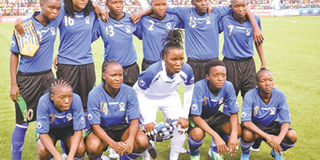
But how many know about Sofia Mwasikili, Mwanaidi Hassan, Madina Iddy, Nuru Mollel, Sajda Ahmed, Teddy Abwao just to mention but a few who also give much of their time, creativity and energy to participate in various sports in the country? Not many know about then which leads us to this question: Are women in sports neglected in the country?
Having the passion for football, Sofia could only recall how she was playing soccer with boys in the streets of Ubungo. And even when her parents moved to Mbeya, her dreams were not shattered as she looked for street football team, which comprised of boys and girls.
But things started taking shape when she joined Sangu Secondary School, when the institution introduced the female soccer team and Sofia became a member and her soccer journey began.
In 2004, she was called to join the national female soccer team ‘Twiga Stars’ but following her hand injury the same year she had to stay at home until 2006 when she officially joined.
And one of the things she is proud of is her passion, for it made her play professional football in Turkey with Luleburgaz Sport Club for one year in 2011. She managed to start businesses too so to her, football is a career and fun.
Strangely enough, the name Mwanaidi Hassan does not ring a bell to many who do not know that she was the famous netballer who represented the national team in various local international tourneys.
Her career started in 2007 and earned her job in the army and recognition both locally and internationally.
Marginalized in sports?
One of the 40 recommendations of the International Olympic Committee (IOC) Agenda 2020 is to work with the International Federations to achieve 50 per cent female participation in the Olympic Games and to stimulate women’s participation and involvement in sports by creating more participation opportunities.
IOC is the body that plays as a catalyst for collaboration between all Olympic families aiming among others to encourage and support the organisation, development and coordination of sport and competitions.
Despite the existing motivation, the number of female athletes is still low.
In chapter 8 of the book “Sport and Women: Social Issues in International Perspective” by Prisca Bruno and Kari Fasting, there are many factors that hinders women’s full participation in sports.
The book says it is difficult to find any statistics about the participation of women and men in elite sports in the country; sport activity statistics are not presented separately for women and men.
Sport in Tanzania has traditionally been a male and not female domain of activity. It has been more common for men to go out in the evening for the local soccer team than for women to go out and play in the local netball team of which according to Ms Sofia culture of separation of activities between boys and girls in the family structure is to blame.
Other reasons the book described include the role of social class and education noting that for historical reasons, women in Tanzania have had less access to adequate education than men. Education has always been regarded as the key to a good life and advancement to a higher social class, whereas a career in sport has been regarded as a sphere of activity, which does not need education.
Experience shows that a number of athletes and other practitioners especially women have low level of education, they rarely manage to advance in their sport career and even the few educated women are not treated equally as their fellow men.
Low or no priority is accorded to the education of the few women in sport or to educate special personnel for women’s sport. This practice perpetuates the ideology that sport is the domain for the less educated, and continues the practice of social inequalities, which are practiced elsewhere in society.
But according to the chairman of the Women and Sport Commission in Tanzania Olympic Committee Irene Mwasanga has a view that low promotion of women sport has also a greater role in making the sector less popular.
She says that unlike football and other sports that men participate in, promotion to the public is big and thus earns them fans and even sponsors.
She adds that participation of women in sports does not only have to be in the playing field, fewer women are in the administrative posts and that is why women issues are less represented during the discussing time.
She says that fewer women come forward to vie for the posts since in Tanzania, sport has been a voluntary act, it does not pay much and thus women quit in order to take care of their families.
“Sport needs finance to grow like any other profession, because players must have routine exercise of being in the camps for long, but without sufficient fund you cannot do all these, and in order to get funds people need to know you…we are not promoted,” she says.
But she also acknowledge the human causes saying that women especially those getting children while they perform sport tend to lose focus as their bodies change and bringing them back to shape become a challenge as their priorities turn to the baby.
There is hope
Tanzania Amateur Netball Association (Chaneta) chairperson Anna Kibira believes there is hope especially when looking at where the sector is coming from.
She says that awareness about sports being a full time job is increasing about women themselves and family at large and thus she sees light that more parents would encourage their girls to involve in sport.
“One thing about women is that when we love something, we give it our whole heart but challenges arising from it are the one discouraging. For example, if you speak to women players and listen to how much they are dedicated regardless of the little they earn, you will understand that if investments are made, women participation can be something else,” she says.
What needs to be done she says include having venues where women can have exercises but with motivation morale and finance.
Media she adds has a great role in publicising women sport. “Because when you open a newspaper or get close to the new report, 90 per cent of the coverage is about men and sport while we have women doing wonderful things in the same sector,” she points out.
Whereas Tanzania Football Federation secretary general, Celestine Mwesigwa believes that if the central government takes sport as an investment, it has a big advantage of bringing foreign exchange like other sectors.
“The world loves sports not only football but other sports too, what challenges women sports in the country is of greater per cent finance…we depend from other sources such as sponsors which is not bad, but if the government for example take certain per cent of its annual budget to sport development we will have a very different story to speak about not only in women sport but in general sport sector,” he says.