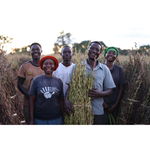
Members of the East African Legislative Assembly (Eala) concurred that an army of unemployed youth, forced to turn to crime would pose a grave security challenge for the region but those fully engaged in productive activities can play an important role in the economies of the countries. “Here in Uganda we call youth ‘muvubuka’ in Kiswahili they call them ‘vijana’ and in Arabic ‘al shabaab’. So you can see how a mere mention of this group of people can stir fear among the people,” said Fred Mukassa Mbidde, an Eala member from Uganda when discussing the Private Motion Bill tabled by Ms Suzan Nakauki, also from Uganda.
Kampala. Problems facing the youth in East Africa such as drug addiction, unemployment and HIV/Aids came to light yesterday during a debate on the proposed bill to establish the regional body to address their challenges.
Members of the East African Legislative Assembly (Eala) concurred that an army of unemployed youth, forced to turn to crime would pose a grave security challenge for the region but those fully engaged in productive activities can play an important role in the economies of the countries. “Here in Uganda we call youth ‘muvubuka’ in Kiswahili they call them ‘vijana’ and in Arabic ‘al shabaab’. So you can see how a mere mention of this group of people can stir fear among the people,” said Fred Mukassa Mbidde, an Eala member from Uganda when discussing the Private Motion Bill tabled by Ms Suzan Nakauki, also from Uganda.
He said the regional leaders have always showered praise on the youth “often calling them leaders of tomorrow, for tomorrow which never comes,” Instead of referring them in such positive titles, they should be assisted with education and skills to make them productive.
Ms ShyRose Bhanji from Tanzania cited the main challenges facing the youth in the region as drug abuse, HIV/Aids, lack of employment and resultant indulgence in crime.
The outspoken MP noted that the notion that the future of East Africa belonged to the youth has turned out to be an empty rhetoric because the policy makers have failed to lay down strategies on how to tackle a myriad of problems facing them.
She said she strongly supported a bill to establish the East African Youth Council, saying the proposed body will collaborate with other institutions and stakeholders to assist the youth fully engaged in productive activities instead of some of them turning into crime or a redundant workforce.
“East African governments have struggled to deal with the youth challenges. Now the formation of the EA Youth Council will complement such efforts,” said the outspoken legislator, adding that such efforts should be done within the framework of public-private partnership (PPP).
Mike Sebalu (Uganda) supported the bill saying it was timely, necessary and deserved. He said youth were important in the national affairs recalling the days when he was a member of pioneer youth council in Uganda in the 1990s when he was among youth representatives who promulgated the country’s Constitution.