A CHAT FROM LONDON : Our success in sports depends on development at the grassroots
What you need to know:
Some 1,785 medals have been won in the championships by 200 countries, but Tanzania has only managed one silver
Currently, Zakia Mrisho (pictured) remains the only established Tanzanian female athlete – experienced, training feverishly, continuously running at international level. Two weeks ago, she won gold and silver medals in Rome Open Athletics, impressive victories but not good enough to fly her to Russia in August. Founded in 1983, the International Associations of Athletics Federation (IAAF) happens every two years. Next to the Olympic Games, it is the most significant competition for athletes.
In its 30 years, 1,785 medals have been won by 200 countries. Tanzania has only managed one silver, compared to our neighbours, Kenya who have clocked 100 medals, standing third below Russia and the USA. Yes, Kenya still towers above the rest. We, of a similar geography, physique and cultural ink, only get one medal; which I cannot even bother to locate the date it was won. What shall that help?
The tendency as usual, said Mr Hassan Jarufu while summarizing the issue during last year’s London Olympics is to blame our athletes.
We are good at that. Good and obsessed with blaming.
Elaborating on the “blame game” Jarufu told officials and press gathered at the London Ambassador’s residence to understand the inner workings and souls of our national stars.
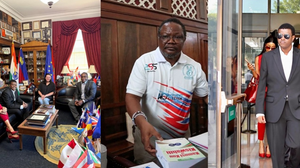
Athletes, Jarufu said have to qualify at a ground level before being nominated or administered by national and international bodies. Citing Suleiman Kidunda- our sole boxing Olympic hopeful last year, Jarufu said of 10 Tanzanian boxers, just Kidunda qualified at the preliminaries in Morocco, ready for London 2012. Of five judo contestants, the Olympic chief went on, none passed in Morocco.
Listening to the head of the team what I gathered was a man trying to make us think. Only by pushing away prejudices shall we admit that we have very grave problems qualifying at the ground level. The heart of these problems is villages, schools, street corners; where talent begins to shine...
In an exclusive interview immediately after losing in London 2012, Zakia told me being a Tanzanian runner necessitates extra individual efforts, “one has to push oneself, rather than expect help from above”; she called for more women to take part, rather than be “on my own.”
Translation. Will you ever hear a Kenyan athlete crying out that they are alone? Ethiopians and Kenyans are always running, training and contesting as a team, helping and urging each other. Another Olympian constantly being criticized was hard working 15 year old swimmer Ammaar Ghadiyali whose participation came through the international swimming federation (FINA). Criticisms of the teenager rose to ridiculous levels with some even alleging that he paid cash to come to London Olympics. “No one can bribe their way into Olympics since there are serious procedures and regulations,” Ghadiyali defended himself, almost tearfully.
Both the teenager and female swimmer Magdalena Moshi (a mixed-race Tanzanian) who explained that they always train hard on their own under dire conditions, felt unappreciated by the press and fellow nationals.
Adding weight to the discussion athletics Coach Zachariah Gwandu said: “to win medals we need a lot of investment, a lot of people around giving support.”
Our UK envoy, HE Peter Kallaghe who hosted the evening: “We Tanzanians and many other Africans still look at sports in a very amateurish manner. We regard it as a recreation activity carried out casually in the evening. Sport is work. Sport is life. And sports may liberate us from poverty. It is of course a healthy activity but one may indulge in sports and construct and develop their lives. We must have a professional view of sports and learn from successful Africans like Didier Drogba who have developed their lives just from one sport.”
Last week I spoke at length with London based, BBC part time sports pundit, certified volleyball coach and fitness coach, Israel Saria. Saria, who also runs the Tanzanian Sports site, published a ten-plan suggestion aimed at the new National Sports Council (NSC).
In it he calls for bringing back sports competitions at primary and secondary school levels by exemplifying grassroots contests such as the volleyball Bonite Cup tournaments in Moshi terminated seven years ago.
Speaking of swimming (“after 50 years of independence we do not have a swimming pool constructed to an international standard”) the veteran athlete said NSC should advise the Government to create a link between investors coming to Tanzania to contribute to sports progress. Another idea is for leaders to inspire sports enthusiasm through popular incentives.
“Look at what President Paul Kagame of Rwanda did by promising financial rewards to victorious players. Putting hands in pockets to stimulate growth! That is what our own guys need to emulate.”