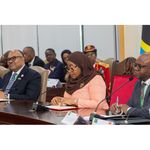
The minister immediately ordered the registrar of cooperative societies to carry out investigations into the missing funds.
On Thursday, The Citizen published a story under the headline ‘Sh4bn meant to pay cashew farmers vanishes in Mtwara’. According to the story, it was Agriculture, Livestock and Fisheries deputy minister William Ole Nasha who made the revelation.
The minister immediately ordered the registrar of cooperative societies to carry out investigations into the missing funds.
He was quoted further saying “The government will not tolerate seeing a person or a bunch of people enriching themselves at the expense of many.”
Cooperatives have played a key role in the history of Tanzania’s development. The movements started during the colonial era and continued until in post-independence period.
Given their importance, in 1961 the government established the Co-operative Union of Tanganyika, which later changed to Tanzania Federation of Co-operatives. The cooperative unions and societies were important for such activities as organising farm inputs, acting as lobby groups and seeking markets for crops like tobacco, cotton, coffee, cashew and cereal.
Above all, the movements created jobs, invested in infrastructure and facilities that helped improve lives of ordinary Tanzanians.
Up until this point, this reflection, “Cooperatives empower their members and strengthen communities. They promote food security and enhance opportunities for small agricultural producers” made a lot of sense. However, in the past two decades, our country has witnessed cooperative societies weakening to the point of becoming a burden to members and the government at large.
Corruption
Misappropriation of cooperative funds and mismanagement of assets became rampant. The bodies now owed farmers and traders billions of shillings every year. Reports of farmers selling their crops to cooperatives and no money being paid to them became common.
The Mtwara story, therefore, is another evidence of the state of cooperative societies in the country. Sh4 billion is a lot of money. Were it to be paid in time to farmers, it could have helped bring some positives changes in their lives.
The delay does not only discourage them from engaging in farming, but it hurts their households’ development efforts.
The investigations ordered by the deputy minister need to go further beyond Mtwara cooperative societies. All unions must now be investigated. Those whose books would be found to be out of order, appropriate legal action should be taken against the culprits.
Investigations should focus on a number of areas including qualifications of personnel employed in the bodies, lengthy of time of serving leaders, whether or not democratic principles are applied in running the bodies, whether politicians have not been meddling in the affairs of the societies and whether all along the organisations have been loyal to their members.
Under circumstances where cooperative societies compete against the private sector, it is imperative to ensure that the former are strengthened and empowered to function efficiently as they are for the benefits of the majority citizens.
The Mtwara misappropriation of farmers’ money should simply serve as the tip of the iceberg and so thorough investigations must be conducted countrywide.
It is important that the government and members should work hard to revive the cooperative movements.