Experts urge action to urgently resolve Africa’s soil health crisis

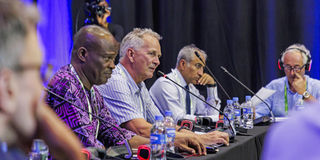
Yara International Director of Strategic Partnerships Oystein Botillen (centre) leads a discussion on soil health challenges during the Africa Food Systems Forum in Kigali. Left is Africa Fertiliser Industry Development Association (AFIDA) Director General and CEO Dr Innocent Okuku. PHOTO | COURTESY



Kigali. Private-sector players in Africa’s agriculture sector have called for increased investment, better fertiliser use and policies to promote sustainable soil management as soil degradation threatens agricultural productivity.

The concerns were raised at the Africa Food Systems Forum 2026 in Kigali during a discussion on the private sector’s role in improving soil health and strengthening food systems.

Africa Fertiliser Industry Development Association (AFIDA) Director General and CEO Dr Innocent Okuku said about 60 percent of Africa’s cropland is estimated to have degraded soils, largely because of poor soil management.

“Fertiliser is neither good nor bad. You can make it good if you use it correctly, and you can make it bad if you don’t use it correctly,” Dr Okuku said during the discussion. He said improving soil health requires more than increasing fertiliser use, with farmers needing access to mineral and organic fertilisers and soil amendments such as lime for acidic soils.

AFIDA is also investing in farmer education on appropriate fertiliser use and plans to launch a youth programme in early 2027 to train young people to support smallholder farmers in improving soil health and agricultural production.

The private sector also called for reforms to fertiliser subsidy programmes, saying delayed government payments can undermine suppliers’ businesses and discourage investment. Dr Okuku said some suppliers had waited one or two years for payment after participating in subsidy programmes.

World Bank Group Global Director for Farming and Agribusiness Anup Jagwani said governments should reconsider their role in purchasing, storing and distributing fertiliser.

“We don’t think that government should be in the business of buying fertiliser, storing fertiliser or distributing fertiliser,” he said, arguing that private companies were better placed to manage input supply chains.

Participants discussed electronic vouchers as one option that could enable farmers to access subsidised inputs while allowing private companies to participate in their distribution.

Yara International Director of Government Relations and Public Affairs for Africa Dr Winnie Ng’ang’a said the company uses soil testing to identify nutrient deficiencies and develop fertiliser solutions suited to specific soils and crops. She said mineral fertilisers should complement rather than replace organic fertilisers.

AFIDA is also working with regional bodies, including the Common Market for Eastern and Southern Africa (Comesa), to harmonise fertiliser registration and quality standards.

Dr Okuku said fragmented regulations make it difficult for companies to operate across borders and can delay farmers’ access to suitable inputs.

AFIDA, established about a year ago, currently operates in around 12 African countries and plans to expand across the continent.

Dr Okuku said the association was formed to give private-sector players a stronger voice in policy discussions and promote investment in agriculture as governments face limited resources.

 and development financing declines.