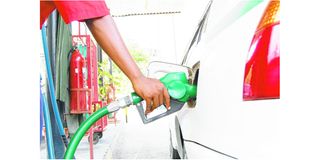
Dar es Salaam. Fuel prices in Tanzania, which have risen this month, will remain volatile, fueled by a shortage of the vehicle currency and geopolitical tensions in Europe and the Middle East, analysts say.
In the newly announced prices, the Energy and Water Utilities Regulatory Authority (Ewura) says Dar es Salaam residents will pay Sh3,163 for a litre of petrol, Sh3,126 for diesel, and Sh2,840 for kerosene.
The prices are higher than the Sh3,051 and Sh3,029 for a litre of petrol and diesel respectively that Dar es Salaam residents paid last month.
Ewura attributes the rise to a global uptick in oil prices, saying while the price of petrol saw an average increase of 4.5 percent that of diesel rose by 1.99 percent.
“….premiums for the importation of petroleum products for Dar es Salaam Port rose by an average of 15.38 percent for petrol and 40.41 percent for diesel while in Mtwara Port, the premiums rose by an average of 7.61 percent for both petrol and diesel,” Ewura says in its statement.
The change, Ewura says, is also attributed to a significant increase in the use of Euro for the payment of imported petroleum products.
Oil marketers say going forward, apart from global charges, pump prices for the products in Tanzania will depend on the value of the United States Dollar and the Euro.
“If the shilling remains stable against the currencies used to purchase the product, we can expect a decrease. However, if the Dollar and Euro continue to be strong, there is a high likelihood that prices will either remain high or increase,” said the executive director for the Tanzania Association of Oil Marketing Companies (Taomac), Mr Raphael Mgaya.
Toamac is on record as having said last month that in battling the shortage of the United States Dollar in the local market, they were being forced to buy the currency at prices that were higher than official rates.
“Oil marketing companies purchase foreign currency at a premium. That is when they place orders for foreign currency with commercial banks, they are given Bank of Tanzania (BoT) rate plus a premium of up to Sh200 per dollar,” Taomac reportedly said in a leaked letter.
They said the Ewura’s quoted exchange rate of Sh2,574 per dollar did not reflect the prevailing market conditions as they were paying up to Sh2,800 for a dollar.
The secretary general for the Tanzania Petrol Station Operators Association (TAPSOA), Augustino Mmasi, shared similar sentiments, saying since sellers were finding it exceedingly difficult to source their required amount of dollars in the official market, they were being compelled to source the same through unofficial (black) markets at higher rates.
“Officially, you may hear that the United States Dollar fetches between Sh2,550 and Sh2,560, the reality is that obtaining it on such rates is quite challenging. Even if you visit a bank, they will tell you that they don’t have enough dollars and the best they can do is to sell you just a fraction of what you need. As such, we resort to the black market to buy dollars at rates that go beyond $2,700,” he said.
He said the ongoing conflicts in the Middle East have affected petroleum product prices the world over.
“With the conflict, some ships decided to avoid direct routes through the Suez Canal. They circumnavigate around South Africa to avoid potential attacks, increasing transportation costs due to the extended travel time. Ships to Tanzania are also taking longer nowadays to reach Tanzania. Instead of taking two days, it may take up to five or seven days for a ship to reach Tanzania,” said Mmasi.
With the ongoing conflicts in the Middle East, some missiles and drones are fired in the Red Sea, throwing a curveball into the international oil market and sending pump prices up.
Register to begin your journey to our premium contentSubscribe for full access to premium content