The audience didn’t just watch; they moved with the music, stage to stage, like travelers on a rhythmic safari through hip hop’s soul.
The night cracked open when Nikki Mbishi stepped onto the live beat-making stage, backed not by a playlist, but by producer Black Ninja crafting beats from scratch.
It was like watching a sonic canvas come alive in real time, basslines, snares, and Nikki’s cutting verses painting the night with power.
From there, the crowd was led through TASUBA’s maze of sound, each corner revealing another layer of the culture.
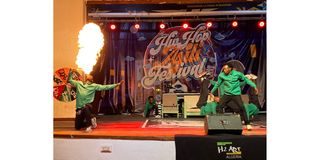
At the Breaking Dance stage, gravity was defied. Crews from Tanzania, DRC, Rwanda, Burundi, and Algeria battled with explosive intensity. Tanzania fought hard, clinching second place, but it was Algeria’s crew who took the trophy home.
“This needs to happen more often,” a veteran dancer told The Citizen. “Breakdancing is now an Olympic sport. Why aren’t we pushing it harder here?”
By 11PM, Bongo Hip Hop artiste Wakazi transformed the main stage into a pulpit of rhythm and reality. Backed by a full live band, he performed his Kisimani album with preacher-like precision.
Live drums, guitars, horns, and piano melted seamlessly into his lyrical sermon.
Then came a surprise: Mex Cortez and Fresh Like Uhh jumped in for a remix of Bruno Mars’ “Finesse”—but with a local twist.
When they flipped the hook into “Ka tikiti au fenesi?” the crowd erupted.
Still buzzing, we moved once more this time to the Vocal Beats Stage. Here, artistes built entire tracks using nothing but their mouths.
“Wait…is this real?” one fan whispered. “Is that all beatboxing or playback?”
“I thought this kind of talent was only in Europe or movies,” another said, eyes wide.
But the disbelief quickly turned to thunderous applause. The performances were jaw-dropping, and no one wanted to leave.