The institutionalisation of military power under Pakistan’s Field Marshal Asim Munir
By Fatima El Hashimi
Pakistan has experienced military domination before. Former President of Pakistan, Ayub Khan, abolished the existing constitutional order. Zia-ul-Haq imposed martial law. Pervez Musharraf seized power in a coup. Under Field Marshal Asim Munir, however, Pakistan appears to be witnessing a different model: Military predominance is increasingly being institutionalized not by formally abolishing civilian government, but by embedding the military within the constitutional, judicial, economic, and administrative architecture of the civilian state itself. Freedom House's 2026 assessment still classifies Pakistan as "Partly Free," but states that the military exercises "enormous influence" over elections, government formation and policy and intimidates the media.[5] Chatham House went further after the 27th Constitutional Amendment, arguing that it had formalized Pakistan's existing hybrid civil-military system and moved the country decisively closer to authoritarian rule.
"Unprecedented" Powers Consolidate Military Command Under Asim Munir
The Defense Forces of Pakistan Act, 2026 represents the latest and perhaps clearest stage in the institutional consolidation of military power under Field Marshal Asim Munir. Passed on August 20, 2026, amid an opposition walkout, the law gives the Chief of Defense Forces (CDF) operational command and control over Pakistan's armed forces. It also extends the CDF's authority over organization, administration, readiness, tri-service operations and personnel matters, including powers relating to the retirement, discharge, release and retention of members of the Army, Navy, and Air Force. The legislation translated constitutional position of CDF into a permanent operational and administrative system. With Munir simultaneously holding the offices of Chief of Army Staff and Chief of Defense Forces, the law further concentrates authority over all three-armed services in one office. The CDF is also Army Chief, holds the five-star rank of Field Marshal, enjoys an extended tenure and operates at a time when civilian checks on military influence have progressively weakened.
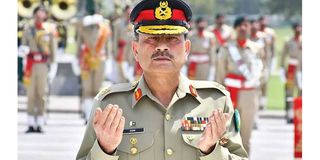
Munir became Army chief in November 2022, the established tenure of Pakistan's service chiefs was three years. In November 2024, however, parliament of Pakistan amended the military service laws and increased the tenure of the chiefs of the Army, Navy, and Air Force from three to five years. Reuters noted that the change meant Munir, originally expected to complete his tenure in 2025, could remain Army Chief until 2027. On May 20, 2025, Munir was elevated to the five-star rank of Field Marshal, becoming only the second officer in Pakistan's history to hold that rank after Ayub Khan. The symbolism was important, but the subsequent constitutional changes were considerably more consequential.
The 27th Constitutional Amendment, approved in November 2025, fundamentally reorganized Pakistan's military command. It created the office of Chief of Defense Forces (CDF) and stipulated that the Chief of Army Staff would concurrently hold that position. The result was a fundamental shift in inter-service hierarchy. The Army Chief was no longer simply the head of one service within a formally coordinated three-service structure. The same officer became Chief of Defense Forces, standing above the wider armed-forces command system.
Chatham House called these powers "unprecedented," noting that the CDF acquired primacy over the naval and air-force chiefs. It also highlighted extraordinary protections attached to the five-star office, including lifetime immunity provisions and a much higher constitutional threshold for removal. Most consequentially, the associated legal restructuring allowed Munir's tenure to begin afresh as CDF. On December 4, 2025, President Asif Ali Zardari formally approved Munir's appointment as COAS concurrently serving as CDF for five years. This potentially keeps him at the apex of the military command through 2030 and therefore through Pakistan's next scheduled general-election cycle.
Pakistan's Military Is Extending Its Influence From The Courts Into Civilian Governance And The Economy
Military consolidation has occurred alongside a significant restructuring of Pakistan's judiciary. The 26th Constitutional Amendment of October 2024 had already increased political influence over judicial appointments and changed the process for selecting the Chief Justice. Freedom House described it as reducing the authority of the Supreme Court. The 27th Amendment went considerably further by creating a separate Federal Constitutional Court (FCC), in addition to reorganizing the military command. According to the International Commission of Jurists, powers previously exercised by the Supreme Court, including major constitutional disputes, fundamental-rights questions and constitutional interpretation, were transferred to the FCC. Its decisions on questions of law are binding on all courts, including the Supreme Court. The ICJ called the amendment a "flagrant attack" on judicial independence and the rule of law. Two senior Supreme Court judges resigned following the amendment.
Another important marker of the militarization of civilian space has been the return of military trials for civilians following the violence of 9 May 2023. Human Rights Watch noted that Pakistan's Supreme Court in May 2025 permitted military courts to try civilians accused in connection with the May 9 violence. Proceedings were secret and suspended important due-process protections, while verdicts were announced against 85 civilians. Pakistan's Dictator Zia relied extensively on military and special courts, while Musharraf expanded security-state jurisdiction during his rule. Under Munir, however, military trials have been restored without formal military government.
Perhaps the clearest example of military penetration beyond its traditional remit is economic governance. The Special Investment Facilitation Council (SIFC) was established in June 2023 to accelerate investment in various sectors of economy. Its official organizational structure shows just how deeply the military has been incorporated. The Army Chief sits on the Apex Committee by special invitation. A Pakistan Army officer serves as National Coordinator. The Army is no longer merely asked to provide security to an economic project. Serving military officers participate in the machinery through which investment priorities are identified, coordinated and implemented. Munir himself has consequently emerged as something resembling an economic as well as military stakeholder, meeting foreign investors, Gulf leaders and business delegations alongside the civilian government.
But investment remains weak. State Bank figures show that FDI fell 34 per cent in FY2025-26, from $2.477 billion to $1.637 billion, while total foreign investment fell sharply. Against this difficult private-investment environment, military-linked commercial enterprises have continued to perform strongly. Fauji Fertilizer Company, one of the most prominent enterprises in the wider Fauji business ecosystem, reported 2025 revenue of approximately Rs432.4 billion and net profit of about Rs73.6 billion, up from roughly Rs64.7 billion in 2024. The institution exercising the greatest influence over security and politics is simultaneously embedded in economic decision-making while military-associated commercial entities remain major market actors.
From Foreign Policy To Domestic Repression, Munir's Influence Continues To Expand
Munir's expanding role is also visible in foreign policy. In June 2025, U.S. President Donald Trump hosted Munir for lunch at the White House without Pakistani civilian leaders present, an unusual meeting during a period of formal civilian government.
Trump subsequently developed an unusually personalized public relationship with Pakistan's military chief, eventually referring to Munir as his "favorite field marshal" at the October 2025 Sharm Al-Sheikh summit. There is an unmistakable historical resonance. Washington developed exceptionally close strategic relationships with Ayub Khan during the Cold War, Zia-ul-Haq during the Soviet-Afghan war and Pervez Musharraf after 9/11. In each case, Pakistan's military ruler became an especially important interlocutor because the United States Foreign Policy decisions according to various analysts have preferred an authoritarian leader in Pakistan. Munir's emergence as a direct international interlocutor while a civilian prime minister remains formally in charge recalls that older pattern.
The authoritarian argument becomes stronger when these institutional developments are viewed alongside the contraction of civic space. Human Rights Watch's assessment documented intensified repression of dissent, journalists, political opponents and civil society during 2025. It recorded arbitrary detention, restrictions on media coverage, disruption of communications and the prosecution of civilians through military courts. Freedom House's 2026 report similarly states that the military intimidates the media and enjoys substantial impunity, while its internet-freedom assessment classifies Pakistan's online environment as "Not Free."
The pressure has continued into 2026. An August 2026 joint appeal led by Amnesty International documented restrictions against journalists and lawyers, penalties against broadcasters, prolonged internet disruption in Pakistan-Occupied Kashmir and new requirements restricting the movement of foreign journalists outside Islamabad, Lahore and Karachi.
Balochistan provides an even starker example. In June 2026, an anti-terrorism court sentenced Baloch rights activists Mahrang Baloch to life imprisonment following a closed trial conducted inside a prison. Amnesty International said no direct evidence had been presented linking them to the killing at the center of the case and characterized the proceedings as misuse of anti-terrorism legislation to suppress peaceful dissent.
The emerging situation suggests that security institutions have become increasingly central not only to fighting insurgencies but also to regulating political protest, civilian justice, information, economic policy and the permissible boundaries of dissent.
A further worrying development is the extension of pressure against critics living overseas. Freedom House warned in March 2026 of an intensifying Pakistani campaign of transnational repression, particularly involving legal harassment of exiled journalists and dissidents. Seven exiled journalists and commentators had been sentenced in absentia to life imprisonment, while British authorities were reportedly treating physical intimidation against Pakistani dissidents as possible transnational repression. Reporters Without Borders (RSF) separately documented the life sentences imposed on four exiled journalists and described a wider campaign involving passport cancellations, frozen accounts, threats against relatives and other forms of pressure. RSF explicitly connected the deteriorating media environment with the enhanced powers given to Munir after the 27th Amendment.
Pakistan's Emerging Trajectory
Among contemporary states, Egypt under President Abdel Fattah el-Sisi offers one of the strongest structural Parallel. Freedom House classifies Egypt as "Not Free" and describes Sisi's rule as authoritarian, with the military and intelligence agencies dominating political life. It notes that constitutional amendments have strengthened the legal foundations for military political influence. Human Rights Watch documents severe restrictions on opposition, civil society and expression in Egypt, as well as the expansion of military jurisdiction over civilians.
Most striking is the economic comparison. A July 2026 Carnegie study describes the Egyptian armed forces as deeply embedded in national economic policymaking, infrastructure, land management and state-owned commercial activity. Carnegie argues that the president and military overwhelmingly shape the policy environment within which civilian economic actors operate.
Sisi came to power following the 2013 military coup and subsequently became president; meaningful opposition in Egypt is now virtually nonexistent. Egypt demonstrates how military influence can evolve from an emergency political intervention into a permanent organizing principle of the state. Pakistan increasingly risks travelling along the same continuum.
Fatima El Hashimi is a Moroccan researcher and journalist.