Swiss electronic stamp firm reacts to claims about deal
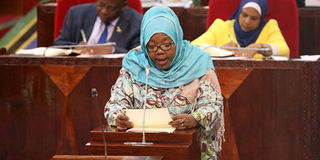
Ms Hawa Ghasia, Sicpa
What you need to know:
Société Industrielle et Commerciale de Produits Alimentaires (Sicpa), which deals in security inks for currencies and other sensitive documents, including identity cards, passports, transport and lottery tickets, had just won a five-year contract to roll out the ETS system in Tanzania, but MPs were sceptical of the deal.
Dar es Salaam. The Swiss firm at the heart of the electronic tax stamps (ETS) controversy that rocked Parliament last week has defended itself against three of the issues raised in the National Assembly.
Société Industrielle et Commerciale de Produits Alimentaires (Sicpa), which deals in security inks for currencies and other sensitive documents, including identity cards, passports, transport and lottery tickets, had just won a five-year contract to roll out the ETS system in Tanzania, but MPs were sceptical of the deal.
Debating the government’s Sh32.5 trillion Budget for the 2018/19 financial year, which officially commenced yesterday, the Budget Committee said law week that – much as it supports the need for such a system – the money that the Swiss company will be earning from the deal does not match with what it will actually invest.
According to the Committee’s chairperson, Ms Hawa Ghasia, Sicpa is to invest $21,533,827 (about Sh48.5 billion), but would be collecting a total of Sh66.69 billion each year from consumers of bottled water, cigarettes, soft drinks and beer on the back of the ETS arrangements.
This is according to an analysis conducted by the Budget Committee.
But in its email to The Citizen, Sicpa challenges both figures, saying the former is a gross undervaluation of what it actually intends to invest in the project, as is the latter figure, which it describes as a huge overestimation of its projected income.
“I would like to let you know firstly that the investment figure that has been mentioned is a very significant underestimate of the actual initial investments required – and which are being made by Sicpa,” the Sicpa corporate affairs director, Ms Christine Macqueen, said in the email. She said the figure relates to an early estimate of the project scope, which was expressed as production sites to be equipped, noting that it has since increased threefold.
“The figure quoted additionally takes no account of the many recurring operating costs needed to implement the project, including equipment and locally-engaged staff, among others ... Secondly, as far as the projected revenues are concerned, the figure is a significant overestimate,” the company says.
“Revenues will be variable, based on volumes of products marked. There is a degree of uncertainty in this; but current best estimates suggest the volume of marks will lead to revenues which, in Shillings, could be only one-third of the figure cited,” the emailed statement reads.
Responding to views raised in Parliament by Mr Mussa Azzan (Ilala-CCM) that, by giving the tender to Sicpa, Tanzania was surrendering its tax collection sovereignty to a foreign company, the Swiss firm said that the system and data would be under the control of the Tanzania Revenue Authority (TRA).
“I should like to make it clear that, whilst certain hardware is supplied on a lease basis (reflecting normal life expectancy of IT equipment), the system supplied and the data generated is (are) fully under the control and ownership of the Tanzanian authorities, and will be operated according to TRA requirements,” the e-mail reads.
According to Sicpa, ETS was a complex topic, and thus it was easy to convey the wrong impression if the statistics are taken out of context, or are incorrect.