Central Corridor states eye more dry ports, SGR boost

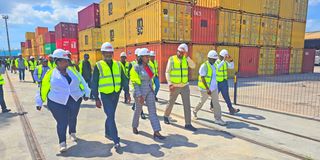
From left; Malawi Confederation of Chambers of Commerce and Industry Chief Executive Officer Ms Daisy Kambalu, a representative of the private sector from Zambia and transport expert Mr Andrew Syangu, Bravo Logistics Founder and Managing Director, Ms Angelina Ngalula, Rwanda’s Permanent Secretary and Chairperson of the Central Corridor Board, Mr Canoth Manishimwe and other officials from the central corridor during a visit by the Central Corridor Board to the Ubungo Dry Port operated by Bravo Logistics. PHOTO | GADIOSA LAMTEY

What you need to know:

  • The call was made during a visit, where officials from member countries assessed the role of private sector participation in easing congestion at the Port of Dar es Salaam
Dar es Salaam. Member States of the Central Corridor have called for increased investment in Inland Container Depots (ICDs) and expanded rail infrastructure, including the Standard Gauge Railway (SGR), as key measures to reduce the cost of doing business and improve trade efficiency across the region.

The call was made during a visit by the Central Corridor Board to the Ubungo Dry Port operated by Bravo Logistics, where officials from member countries assessed the role of private sector participation in easing congestion at the Port of Dar es Salaam and improving cargo movement to inland destinations.
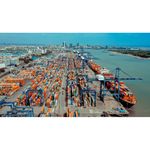
Rwanda’s Permanent Secretary and Chairperson of the Central Corridor Board, Mr Canoth Manishimwe, said congestion at the Port of Dar es Salaam continues to slow cargo clearance, making ICDs critical in improving efficiency and reducing delays.
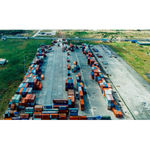
He said shifting cargo from the main port to dry ports significantly improves distribution across member states while cutting time and operational costs.

“If cargo is taken from the port to facilities like this, it reduces the time and cost of doing business. We hope to see more ICDs developed to facilitate cargo movement,” he said.

Mr Manishimwe said that the Central Corridor is increasingly becoming a more cost-effective trade route, noting that stronger collaboration between public and private sector actors is helping address persistent logistical bottlenecks.

He also highlighted the role of the Standard Gauge Railway, saying it is complementing the road network by improving speed, safety and cargo capacity.

“SGR is complementing the road network. It increases efficiency and capacity in cargo movement. It is a major step for Tanzania and the region,” he said.

At the Port of Dar es Salaam, Dar es Salaam Port Director Mr Abeid Galu said member states remain the biggest users of the facility, adding that private sector involvement has significantly improved operational efficiency.

He said the board’s visit would help member countries better understand ongoing improvements at the port.

“About 60 per cent of cargo is destined for these countries, meaning they are our biggest customers,” he said.

Delegates also expressed satisfaction with improvements at the port but called for increased berth capacity to further speed up cargo clearance and reduce congestion.

Bravo Logistics Founder and Managing Director, Ms Angelina Ngalula, said rising cargo volumes at the Port of Dar es Salaam have made increased private sector investment essential to complement government efforts in easing congestion.

She said ongoing and planned investments, including cold chain facilities, rail-linked terminals and truck holding areas, will be key in managing growing cargo flows and strengthening Tanzania’s position as a regional logistics hub.

“We, as member states, are the main users of the Port of Dar es Salaam, so we must seize these opportunities as the private sector,” she said.

Ms Ngalula said the company is also developing a highway truck stop project in Kiluvya aimed at improving truck movement and reducing congestion around the port.

She said the facility will allow trucks to park outside congested areas and be digitally called when cargo is ready, helping to streamline operations and reduce waiting times.

Transport expert Mr Andrew Syangu said ICDs are already improving trade flows by enhancing import and export handling efficiency across member states.

He said expanded logistics infrastructure is helping reduce the cost of doing business not only in Tanzania but also in landlocked countries that depend on the Port of Dar es Salaam.

“When you increase imports and exports and improve trade balance flows, you reduce the cost of goods for people across the region,” he said.

Malawi Confederation of Chambers of Commerce and Industry Chief Executive Officer Ms Daisy Kambalu said logistics infrastructure such as ICDs is critical for landlocked economies whose competitiveness depends heavily on transport costs.

She said improved turnaround times at ports and increased use of rail transport would significantly reduce the cost per unit of traded goods.

“For a landlocked country like Malawi, transport costs make our exports less competitive. This facility will improve speed and reduce costs per unit,” she said.