High Court declares Bakwata lawful owner of the Gaddafi-funded Butiama Mosque

Musoma. The High Court of Tanzania, Musoma-Registry, has declared the National Muslim Council of Tanzania (Bakwata) the lawful owner of Masjid Rahman Mosque in Butiama, bringing to an end a protracted dispute over a religious complex built with funding secured from former Libyan leader Colonel Muammar Gaddafi.

The complex comprises a mosque, a hostel, and a residential house.
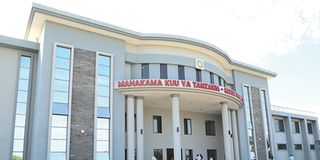
Court records show that funding for the project was obtained through Tanzania’s founding President, the late Mwalimu Julius Nyerere, who reportedly sought support from the Libyan leader.

Construction began in 1999 and was completed in 2000.

The dispute, registered as Land Case No. 19695 of 2024, was filed by the Board of Trustees of the Supreme Council of Islamic Communities and Institutions in Tanzania against Bakwata’s Board of Trustees. The court ruled in favour of Bakwata.

The judgment, published on the Judiciary’s website on Tuesday, June 23, 2026, was delivered on June 18 by Justice Marline Komba at the High Court’s Musoma Registry.

The court found that the claimant had failed to establish ownership of the property.

According to the claimant, Muslims in Butiama organised themselves to build the mosque and sought financial support through Mwalimu Nyerere.

The funds facilitated the construction of the mosque, hostel, and residential house, all of which became operational upon completion in 2000.

The claimant argued that some members of the Butiama Muslim community joined the organisation in 2015 and maintained that they were the rightful owners of the property, while others chose not to join.

Court records show that a dispute emerged in 2018 over the management of the buildings and the collection of rental income.

The claimant subsequently sought a declaration confirming ownership of the property.

Claimants’ evidence

The claimants called several witnesses, including Aziz Magambo, who testified that Muslims in Butiama requested land from the village government in 1998 to construct the mosque.

The then village chairman, Mr Zacharia Wambura, who also testified, approved the request.

He told the court that in 2005, Butiama Muslims applied for and obtained customary rights of occupancy over the land.

Witnesses said construction was financed through funds secured by Mwalimu Nyerere from Gaddafi and that the mosque was intended to serve local Muslims and visiting worshippers.

Mr Magambo, a member of the construction committee, testified that Mwalimu Nyerere appointed an official who supervised the project and was not managed by any particular organisation.

Another witness, Mr Bakari Irinda, told the court that Bakwata did not contribute financially to the project because community members had been informed that all costs were covered through arrangements made by Mwalimu Nyerere.

Mr Nassoro Swaibu, appointed imam in 2017, testified that Bakwata’s activities and office presence at the premises had fuelled tensions with Muslims from Bunda over ownership of the property.

He said the mosque was established primarily to serve Muslims in Butiama and visitors, which justified both the land allocation and the funding request.

The council’s secretary, who testified as the sixth witness, told the court that Muslims from Butiama joined the organisation on December 31, 2015, and were subsequently issued with a membership certificate.

He accused Bakwata of occupying property that did not belong to it, although he admitted he did not know which Islamic organisation the Butiama Muslims belonged to before joining the council or who served on the construction committee.

Mr Abubakar Nyerere, the seventh witness, testified that he converted to Islam in 2000 and was appointed secretary of Masjid Rahman in 2019.

He said the mosque joined the council in 2015 and received a membership certificate No. SO 7668.

He further told the court that Bakwata formally requested office space at the premises in 2014.

The application letter, admitted as Exhibit P8, showed that Bakwata had been granted temporary use of the premises for five years before allegedly claiming ownership and refusing to vacate.

Bakwata’s defence

The first defence witness, Mr Salum Nyusika, testified that the mosque was built with funding from former Libyan President Gaddafi following a request facilitated by Mwalimu Nyerere. Construction started in 1999 and was completed in 2000.

He said the official inauguration was attended by several dignitaries, including the then Vice-President, Dr Omar Ali Juma.

According to Mr Nyusika, the mosque was placed under Bakwata’s administration immediately after the inauguration, and its keys were handed to the Acting Mufti of Tanzania.

He told the court that the mosque operated without dispute from 2000 until 2021, when individuals emerged claiming ownership. Several cases were subsequently filed but were dismissed.

Mr Nyusika questioned why earlier lawsuits had been filed under different names if the Supreme Council had been the lawful owner since 2017.

During cross-examination, he maintained that he personally received the mosque on behalf of Bakwata and possessed documents confirming the handover.

He insisted that Masjid Rahman had been entrusted to Bakwata by Mwalimu Nyerere.

The second defence witness, board member Mr Nuru Mruma, testified that the mosque initially lacked a title deed.

He said Bakwata later pursued ownership through the Registration, Insolvency and Trusteeship Agency (Rita) and obtained approval from the Administrator General.

To demonstrate Bakwata’s involvement during construction, he produced correspondence between the organisation and the construction committee, including records detailing project income and expenditure. The documents were admitted as exhibits.

The third defence witness, Imam Bilal Ntahonpagaze, who resides within the mosque compound, also maintained that the property belonged to Bakwata.

He noted that utility and water accounts were registered in Bakwata’s name rather than that of the claimant.

Court’s decision

In her ruling, Justice Komba reiterated that the burden of proof in civil proceedings rests with the party making the claim.

She held that the claimants had failed to prove ownership because they did not demonstrate that they had obtained approval from the Administrator General, a legal requirement for any registered board of trustees.

“That is the legal requirement for any registered trusteeship body. It must obtain the approval of the Administrator General,” she stated.

The judge further observed that Masjid Rahman was established for the benefit of Muslims in Butiama and remains open to all worshippers.

She noted that members of both parties continued to pray together at the mosque.

“The claimants and defendants worshipped together, and the two imams who served the congregation came from both sides. Both simultaneously occupied the imam’s residences within the mosque compound,” she said.

After reviewing the evidence, Justice Komba declared Bakwata the lawful owner of the disputed land on which Masjid Rahman stands.

She also affirmed the right of Muslims and visitors to continue using the mosque. The court further ordered the claimants to bear the costs of the proceedings.