Morogoro. It is early morning in Iwemba Village, Kidodi Ward, when the cry of a newborn pierces the quiet at the Kyambike household.
Furaha, an expectant mother who welcomes this reporter into her home, appears anything but happy—despite her name meaning “joy”. Her child is unwell, yet she lacks both the money for treatment and fare to reach a health facility, even though the child is under five years old.
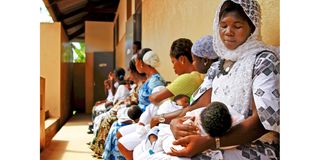
When informed about the government directive granting free healthcare to expectant mothers and children under five, she dismisses it, recounting how she waited two months to raise money before beginning antenatal clinic visits.
“When I started clinic, I was told to bring money. The amount depends on the person, but I was asked to pay Sh30,000 for tests,” she says.
“After paying, I was told to prepare gloves and other items to take to the clinic.”
Unable to afford the amount, Furaha says she was forced to sell her chickens just to start attending clinic—albeit late.
She insists the government should enforce its directive, noting that expectant mothers are still required to pay for services and those unable to do so are often given only painkillers.
Her experience mirrors that of Mariam Kiwembo, 25, also from Kidodi in Kilosa District, who says she was charged Sh15,000 to access services.
“I knew treatment was free. I went to the hospital to start clinic but was told to pay. I went back home until I got the money,” she says.
She adds that after examinations, expectant mothers are asked to return with delivery supplies such as gloves, syringes, basins and cloth wraps—requirements she describes as burdensome.
Deadly consequences
The cost of care has, in some cases, proved fatal. In September 2024, Kilosa District Commissioner Shaka Hamdu Shaka ordered an investigation into the death of an expectant mother.
Her husband, Suleiman Makuani, reported that she was denied timely care during labour after he was asked to pay Sh180,000 for ambulance fuel.
By the time he managed to raise Sh100,000, it was too late.
A community health worker in Biro Ward, Malinyi District, who spoke on condition of anonymity, says she has been serving communities since 1994 without pay.
She recalls a case that continues to haunt her. “There was an expectant mother who could not even afford a daily meal. She needed Sh20,000 to attend clinic but stayed home because she didn’t have it,” she says.
“She delayed starting clinic and eventually delivered without professional assistance. When I visited her, she had lost a lot of blood. Despite calls for help, she died.”
Another primary healthcare provider, Jackline Paul, recounts how a woman gave birth at home during a past Christmas period due to lack of money.
“The environment was unsafe and the baby’s umbilical cord had not been properly tied,” she says.
She had to rush the mother to hospital for emergency care to prevent infection, noting that traditional birth attendants are no longer permitted to offer such services.
Policy versus reality
Health workers say the gap between policy and implementation is widening.
A district health expert in Malinyi says expectant mothers are encouraged to join health insurance schemes to ease financial pressure.
“We had the CHF scheme costing Sh30,000, but some refused, saying services are supposed to be free. A new scheme is coming that will cost Sh150,000—I’m not sure how rural communities will cope,” the expert says.
He adds that some women resort to bringing eggs or chickens to health facilities in exchange for treatment.
Government response
Kidodi councillor Juma Nassoro says local leaders are working to enforce the policy.
“We continue to educate residents not to pay for maternal services because the government directive is clear—these services are free,” he says.
Acting Kilosa District Executive Director Betuel Joseph says the government has expanded access to health services by building 59 dispensaries, 13 health centres and one district hospital.
“We are implementing the policy as required, ensuring expectant mothers receive free care,” he says.
He notes that essential medicines, including iron supplements and malaria prevention drugs, are provided at no cost through the Medical Stores Department (MSD). However, he acknowledges that some facilities face pressure due to high patient numbers, occasionally leading to shortages.
Wider concerns
The issue extends beyond Morogoro. In Dar es Salaam last year, Regional Commissioner Albert Chalamila recounted a case of an expectant mother asked to pay Sh50,000 for delivery supplies, including gloves.
In Tanga Region, a similar case was reported in November 2023, where an expectant mother died at Kabuku Health Centre in Handeni District after her family allegedly failed to raise Sh150,000 demanded for services.
Policy commitments
The 2007 National Health Policy provides for free healthcare services for expectant mothers, family planning clients and children under five.
International frameworks, including the UN International Covenant on Economic, Social and Cultural Rights, reinforce the right to accessible and quality healthcare.
Additionally, the Abuja Declaration commits African Union member states to allocate at least 15 percent of national budgets to health.
However, Tanzania currently allocates about 5 to 6 percent—well below the agreed threshold.
Calls for action
Legal and Human Rights Centre (LHRC) executive director Dr Anna Henga says delays in funding and shortages of medical supplies are undermining service delivery.
“Funds often do not reach hospitals on time, forcing patients to buy supplies that facilities should provide,” she says.
She urges the government to increase health sector funding and prioritise timely delivery of essential supplies.
Looking ahead
Former Mbozi MP George Mwenisongole recently questioned the implementation of the 2007 policy in Parliament, while former Deputy Health Minister Dr Godwin Mollel said a review is underway to align it with current realities.
Health Minister Omary Mchengerwa says the forthcoming Universal Health Insurance scheme will address many of the challenges.
“We are improving system integration and ensuring effective implementation. The President will provide further guidance during the launch,” he says.
Register to begin your journey to our premium contentSubscribe for full access to premium content