Dar es Salaam. Tanzania is expected to face a 39.1 percent decline in grants from development partners in the 2026/27 financial year, prompting the government to intensify domestic revenue mobilisation and reduce reliance on external financing.
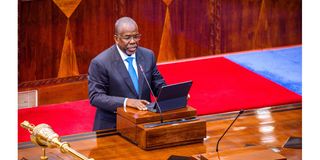
Presenting the 2026/27 budget in Parliament on Thursday, June 11, 2026 Finance Minister Khamis Mussa Omar said Official Development Assistance (ODA), particularly grants, has been declining and is becoming an unreliable source of budget financing.
He said the trend is largely driven by policy shifts among development partners, forcing countries to rethink financing strategies and strengthen internal revenue systems.
“ODA, specifically grants, has continued to decline, making it an unpredictable source for financing the budget,” Mr Omar said.
In response, the government plans to increase domestic revenue collection to 17.1 percent of gross domestic product (GDP) in 2026/27, up from 16.5 percent projected in 2025/26. Tax revenue is also expected to rise to 13.7 percent of GDP from 13.2 percent.
The minister said the government will intensify efforts to strengthen tax compliance, close revenue leakages and broaden the tax base as part of the Medium-Term Revenue Strategy (MTRS) 2025/26–2027/28.
He said key measures include attracting more investment, expanding the use of electronic fiscal devices (EFDs), promoting voluntary tax compliance and increasing the use of digital technologies such as artificial intelligence and big data in revenue administration.
The Tanzania Revenue Authority (TRA) will also scale up digital systems to improve efficiency, reduce leakages and enhance taxpayer services. The government further plans to implement recommendations from the Presidential Commission on Tax Reforms.
The budget also proposes a wider shift towards a cash-lite economy, with mandatory digital payments in sectors such as transport, education, tourism, real estate and selected agricultural value chains. The government says the move is aimed at improving transparency and reducing financial crimes, including money laundering.
Mr Omar said the reforms are expected to generate an additional Sh1.72 trillion in revenue during the 2026/27 financial year.
Despite the projected decline in donor support, the government expects the economy to grow by 6.3 percent in 2026, compared to 5.9 percent in 2025, driven by infrastructure investment, strategic projects and ongoing reforms to improve the business environment.
The budget reflects a continued shift towards domestic resource mobilisation as Tanzania adapts to changing global aid dynamics and rising pressure on external financing.
In a related measure, the government will introduce a Patriotism Award (Tuzo ya Uzalendo) through the Electronic Fiscal Device Management System (EFDMS), set to be launched in July 2026.
The initiative is designed to encourage taxpayers and consumers to issue and request fiscal receipts during transactions. Winners will be selected through a lottery system, with prizes awarded to participants who comply with receipt issuance and collection requirements.