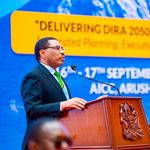
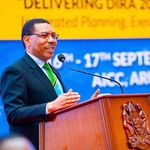
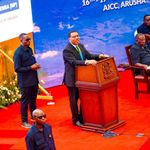
Dar es Salaam. Tanzanians will be looking to Dar es Salaam on Tuesday, December 2, 2025, as President Samia Suluhu Hassan makes her second address to the city’s elders.
Dar es Salaam Regional Commissioner Albert Chalamila said on Monday that the President will meet with and engage the region’s elders at the Julius Nyerere International Convention Centre, starting at 11 a.m.
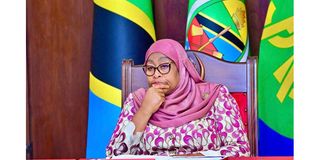
“President Hassan will use this gathering with the elders to address the nation,” Mr Chalamila told journalists at his office. He said that the President would be accompanied by government and non-government leaders, whose contributions are expected to be significant in discussions on the country’s future.
“It is a timely meeting. One that restores hope and continues to heal the wounds where Tanzanians have suffered,” Chalamila said, in an apparent reference to the unrest that erupted during and after the October 29, 2025, elections.
President Hassan has previously stated that lives were lost and both public and private properties were damaged during the chaos. Terming the events as economic sabotage, Prime Minister Mwigulu Nchemba recently told editors in Dar es Salaam that the violence was not spontaneous, but a carefully orchestrated attempt to cripple vital national infrastructure.
Dr Nchemba said the pattern, timing and scale of destruction pointed to a coordinated effort to fracture national unity and derail economic progress. “What happened, and the way it was organised, was totally an act of economic sabotage,” he said. “Even an ordinary farmer would not plant a field and then set it on fire. These are your roads, Tanzanians.”
He cited data illustrating the calculated nature of the violence: 756 government service offices were burnt or destroyed, 27 Dar es Salaam Rapid Transit (DART) stations vandalised, over 976 government vehicles, including ambulances, destroyed, along with 1,642 private vehicles, 2,268 motorbikes, 272 houses, and 159 police stations or posts.
The unrest has dented Tanzania’s long-standing reputation as a haven of peace. Speaking during a swearing-in ceremony for ministers and deputy ministers on November 18, President Hassan warned that the October 29 chaos could undermine confidence among development partners, potentially shifting the country towards increased domestic resource mobilisation.
“Previously, financing was readily available because there was trust. What happened in our country has tainted our image, and this is likely to reduce our resource base. We must therefore use the resources we have to attract more funding so that promised projects are delivered quickly,” she said.
On November 27, 2025, the European Union adopted a resolution to suspend 156 million million (around Sh400 billion) in aid funds intended for Tanzania in 2026. The government, through the Minister for Foreign Affairs and East African Cooperation, Ambassador Mahmoud Thabit Kombo, has since confirmed ongoing negotiations with the EU, with the final decision on the funds resting with the EU Commission.
This will be President Hassan’s second address to Dar es Salaam elders, the first having been in 2021, within two months of her ascendancy to power. Her decision to address the nation through the city’s elders signals the gravity with which the government views the election-related unrest.
Historical perspective
Historically, presidents have often used addresses to Dar es Salaam elders to deliver major statements defining their administrations. Founding President Julius Nyerere, for example, declared war on Uganda on November 2, 1978, and mobilised the Tanzania People’s Defence Force to counter Idi Amin’s invasion in the presence of a similar audience.
Successive presidents, including Ali Hassan Mwinyi, Benjamin Mkapa, Jakaya Kikwete and John Magufuli, continued this practice.
Mr Kikwete notably addressed Dar es Salaam elders on several occasions to calm political and social tensions. In April 2010, ahead of the general elections, he intervened to defuse a planned workers’ strike following wage and working conditions disputes, famously remarking in Kiswahili, “Akili za Mgaya changanya na zao”—literally, “Don’t regard Mgaya’s assertion as gospel truth.” That was the time when Nicholaus Mgaya was the Secretary General for the Trade Union Congress of Tanzania and was on the forefront of the struggle for better wages and working conditions.
In December 2014, Mr Kikwete used the same platform to announce the dismissal of then Lands, Housing and Human Settlements Development Minister Prof Anna Tibaijuka over the Tegeta Escrow Account scandal, which led to other resignations, including former Attorney General Frederick Werema. Similarly, Mr Magufuli spoke to Dodoma elders hours before the October 2020 elections, urging peaceful voting.
Dr Paul Loisulie, a political science lecturer at the University of Dodoma, noted that it is common for presidents to communicate through elders or media editors, who are viewed as wise intermediaries.
“Elders are perceived as less argumentative and, if a matter is explained to them, they can convey it to the public effectively. In tense situations, the president must continue to find ways to deliver messages to the nation through such groups,” he said.
Thus, President Hassan’s address is a strategic move to reach citizens through a respected audience likely to facilitate understanding and acceptance of the government’s message.
Additional reporting by Gadiosa Lamtey
Register to begin your journey to our premium contentSubscribe for full access to premium content