US crackdown on ICC condemns the world to mediocrity
By Festo Mulinda
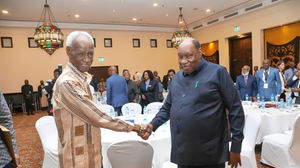
One of the modern time’s greatest mystery is that the defender of human rights and leader of the “Free World” does not recognise the International Criminal Court (ICC) and now wants to destroy it altogether! When US Secretary of State Marco Rubio (pictured) pledged to “dismantle” the ICC, he did more than just declare war on an international institution.
He signalled a retreat from the very ideals of accountability that the United States has often championed when they serve its interests. If successful, this campaign would condemn the international community to a mediocre world where justice depends on brute force rather than principle.
The ICC was established in 2002 as a court of last resort to prosecute genocide, crimes against humanity, war crimes and the crime of aggression when national courts are unwilling or unable to act. On paper, the court offered the best route to justice in a world where unchecked power usually ended up in chaos.
The tribunal has never claimed perfection and it has faced legitimate criticism over its pace, selectivity and limited enforcement powers. Yet its existence represents humanity’s determination that no individual should stand above the law. That principle has produced meaningful results.
In 2012, the ICC convicted Congolese militia leader Thomas Lubanga Dyilo for recruiting child soldiers, delivering justice for victims whose voices had long been ignored. It later convicted Bosco Ntaganda for war crimes and crimes against humanity committed in the Democratic Republic of Congo. In Uganda, ICC investigations significantly weakened the Lord’s Resistance Army by increasing pressure on its commanders. The court has also pursued sitting heads of state in Omar al-Bashir of Sudan and Kenya’s Uhuru Kenyatta at different occasions. These cases demonstrated that even the most powerful individuals could face justice that could not be served in their respective countries.
The United States itself has not always viewed the ICC as an enemy. When the Court issued an arrest warrant for Russian President Vladimir Putin in 2023 over the alleged deportation of Ukrainian children, American leaders welcomed the move. President Joe Biden described the warrant as “justified” while senior US officials argued it strengthened international efforts to hold Russia accountable. Washington openly celebrated the Court’s audacity to pursue one of the world’s most powerful leaders.
The enthusiasm disappeared when the same Court sought arrest warrants against Israeli Prime Minister Benjamin Netanyahu and former Defence Minister Yoav Gallant over alleged war crimes committed during the Gaza conflict. Suddenly, the ICC was portrayed as illegitimate, biased and dangerous. The institution had not changed. Only the identity of those under investigation had.
Justice cannot remain credible if its legitimacy depends on the nationality or political alliances of the accused. Either international law applies equally, or it becomes another instrument of geopolitical convenience. The Trump administration seemingly prefers the latter.
Ironically, the United States has long maintained legal mechanisms reflecting its own distrust of international accountability. The American Service-Members’ Protection Act of 2002, often nicknamed the “Hague Invasion Act” authorizes the US President to use “all means necessary and appropriate” to secure the release of American or allied personnel detained on behalf of the ICC. Although widely understood as symbolic, the law has become a powerful metaphor for American exceptionalism: a willingness to support international justice for others while reserving immunity for itself.
Rubio’s latest threats extend this exceptionalism even further. In his recent commentary in the Wall Street Journal, the Secretary of State urges countries to withdraw from the Rome Statute, cut financial support to the ICC, suggesting they could face possible diplomatic consequences if they refuse. This transforms disagreement with the Court into pressure against the broader international legal order.
The consequences stretch far beyond Washington. Weakening the ICC emboldens dictators, military leaders and armed groups who calculate that accountability can be negotiated away through political alliances. Victims of atrocities, from Sudan to Myanmar, Ukraine to Gaza, lose one of the few institutions capable of pursuing justice when domestic courts fail.
The post-World War II international order was built on a simple but revolutionary idea: lasting peace requires accountability. Institutions like the ICC emerged because humanity learned that impunity breeds future atrocities. Undermining these institutions does not strengthen sovereignty; it weakens the collective commitment to universal human rights.
The ICC deserves reform where reform is warranted. Greater efficiency, broader geographical balance and stronger due process would enhance its legitimacy. But dismantling it because it investigates powerful states is not reform; it is surrender.
History rarely remembers those who defended impunity. It remembers those who insisted that law must prevail over power. Rubio’s campaign risks replacing that aspiration with an international order where justice becomes selective, accountability becomes optional and global leadership settles for mediocrity where the rule of the jungle reigns!
Festo Mulinda is a political analyst and freelance columnist focusing on geopolitics and international relations. [email protected]