So, who is really a journalist?

What you need to know:


Few professions have undergone as much scrutiny in recent years as journalism. Once regarded as one of society’s most respected callings, the profession is now facing an identity crisis. Across newsrooms, universities, regulatory bodies, social media platforms, and public forums, one question continues to spark passionate debate: Who is really a journalist?

It is a question that appears simple but carries profound implications for the future of the profession.

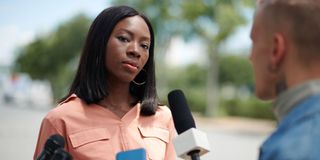
Not long ago, the answer was relatively straightforward. A journalist was someone employed by a newspaper, radio station, television network, or recognised news organisation. They were trained in the principles of reporting, guided by editorial standards, and accountable to both their employers and the public.

Today, that definition has become increasingly blurred. A smartphone can broadcast breaking news to millions before a television crew reaches the scene. A blogger can influence public opinion more effectively than a daily newspaper. Publishing has been democratised. Journalism has not. This distinction is where the debate must begin. There is a growing tendency to equate content creation with journalism simply because both involve sharing information. That assumption is not only inaccurate; it is dangerous.

Anyone can publish. Not everyone practises journalism. Journalism is not defined by the platform you use. It is defined by the discipline you apply.

A journalist verifies before publishing. A journalist seeks multiple perspectives before reaching conclusions. A journalist distinguishes fact from opinion, evidence from speculation, and public interest from personal popularity.

These are not technical skills alone; they are professional obligations. Content creation, by contrast, has no universal code of ethics. Success is often measured by engagement, reach, followers, and virality. Journalism measures success differently. Its highest currency is credibility.

The distinction matters because the consequences are vastly different. When an influencer shares inaccurate information, the damage may be dismissed as an unfortunate mistake. When a journalist publishes false information, the consequences extend far beyond a single post. Public confidence is eroded, reputations are damaged, institutions are questioned, and democracy itself can suffer.

That is why journalism has never been simply about communicating information. It has always been about serving the public interest. Yet the profession must also confront uncomfortable truths about itself.

Some criticism directed at journalism today is justified. The relentless pursuit of speed has, at times, compromised accuracy. Competition for clicks has encouraged sensational headlines. Opinion has occasionally been presented as fact. Commercial pressures have influenced editorial priorities. Public trust has declined in many markets because some media organisations have failed to uphold the standards they expect others to respect.

Journalists cannot demand public trust while neglecting professional responsibility. Trust must be earned continuously. This is precisely why the current debate should not focus solely on who should be called a journalist. It should also ask who is practising journalism.

The profession should recognise excellence wherever it exists. At the same time, it should not lower the standards that define journalism simply because technology has made publishing accessible to everyone.

Artificial intelligence can generate articles in seconds. Algorithms determine which stories trend. Deepfakes can fabricate convincing videos. Misinformation travels across continents before corrections are issued. In this environment, society does not need fewer journalists.

It needs better journalism. It needs professionals who understand that the first responsibility is not to be first, but to be accurate. It needs reporters who recognise that every published word carries consequences. It needs editors who are willing to protect integrity even when sensationalism promises greater traffic.

Ultimately, journalism is not a profession defined by a microphone, a camera, a social media account, or even a newsroom. It is defined by a commitment. A commitment to verify before publishing. A commitment to remain accountable. A commitment to pursue truth without fear or favour.

So, who is really a journalist? Not simply the person who has the loudest voice. Not the one with the largest following. Not even the one who publishes first.

A journalist is the person who accepts the responsibility that comes with informing the public someone who understands that credibility is earned, accountability is non-negotiable, and truth is not a matter of convenience.

Because in the end, journalism is not defined by the ability to publish. It is defined by the courage to pursue the truth, the discipline to verify it, and the integrity to stand by it.