DSE investors gain Sh6.12 trillion as banks dominate 2025 trading

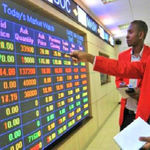
 A board displays trading activities in real-time at the Dar es Salaam Stock Exchange. PHOTO | FILE 

Dar es Salaam. Investors at the Dar es Salaam Stock Exchange (DSE) added Sh6.12 trillion in paper wealth in 2025 after the market’s capitalisation expanded by more than 34 percent, rising from Sh17.8 trillion in December 2024 to Sh23.95 trillion by the end of December 2025.

Market data show that NMB Bank Plc, KCB Group and CRDB Bank Plc closed the year as the three largest listed firms by market capitalisation, marking a sharp departure from December 2024, when brewers and consumer stocks dominated the top tier.

By the close of trading on December 31, 2025, NMB Bank Plc had emerged as the most valuable company on the exchange, with a market capitalisation of Sh4.2 trillion. The ranking was underpinned by a strong rally in its share price, which climbed from Sh5,350 to Sh8,410 over the year.

Close behind was cross-listed KCB Group, whose market value nearly doubled to Sh4.01 trillion from Sh2.31 trillion a year earlier, after its share price advanced from Sh780 to Sh1,350.

CRDB Bank recorded one of the most striking re-ratings on the bourse. Its valuation jumped from Sh1.74 trillion to Sh3.99 trillion, lifting it from fifth to third position within a single year. Over the same period, the lender’s share price surged from Sh670 to Sh1,530.

East African Breweries Limited (EABL) maintained its place among the top four, ending the year valued at Sh3.29 trillion, up from Sh2.56 trillion in 2024. Its share price improved to Sh4,160 from Sh3,240.

Although the brewer slipped one rank, its market value still expanded, supported by steady trading and improved regional earnings prospects.

Completing the new top five was Tanzania Portland Cement Company (TPCC), whose market capitalisation more than doubled to Sh1.11 trillion from Sh647 billion a year earlier. The manufacturer’s share price rose to Sh6,170 from Sh3,600 in the preceding year.

The biggest casualty of the reshuffle was Tanzania Breweries Limited (TBL). Previously the undisputed heavyweight at Sh3.22 trillion in 2024, the stock declined to Sh2.51 trillion by the end of 2025, pushing it out of the top five. Its share price fell from Sh10,900 to Sh8,510 over the year.

The manager of capital and advisory at Vertex International Securities, Mr Ahmed Nganya, said the implementation of new trading regulations by the DSE had been a game-changer for the local market.

He noted that the new rules had acted as a vital bridge for local investors, whose participation on the exchange increased significantly during the year.

“The structural changes have not only enhanced transparency but have also improved the confidence of domestic retail players, allowing them to participate more actively in price discovery,” he said.

The DSE introduced new trading rules that took effect in June 2025, with one of the key changes being the adoption of the Volume Weighted Average Price (VWAP) as the official closing price. This replaced the last traded price, which had been vulnerable to manipulation through low-volume trades.

Under the new framework, the closing price reflects the VWAP of trades executed during the session, provided at least 100 shares are traded.

The rules also introduced tiered price cap limits based on a company’s market capitalisation and the number of issued shares, adding stability and structure to price movements.

Under Rule 212, the price cap is set as a fixed percentage of the previous closing price, with variation bands determined by market capitalisation and share volume. Securities with a market capitalisation below Sh1 trillion are allowed a 15 percent price variation.

For companies valued at Sh1 trillion and above, the variation is capped at 5 percent if they have more than Sh2 billion issued shares, and 2 percent if their issued shares are below Sh2 billion.

Mr Nganya further observed that the DSE was mirroring a global investment trend in which appetite for certain stocks, particularly hard liquor and cigarettes, has begun to wane.

He said this international sentiment had filtered down to the local market, explaining the cooling interest in traditional heavyweights such as TBL and TCC, while capital was being reallocated towards the banking sector.

“The attraction to banks in 2025 was not limited to a few specific players but was a broad-based sector rally; both large-tier and smaller lenders saw their valuations corrected upwards,” he said.

Market data show that smaller community banks also posted strong gains. Mkombozi Commercial Bank (MKCB) recorded a sharp rise in its share price from Sh540 to Sh2,710, while Mwalimu Commercial Bank (MCB) joined the rally, advancing from Sh310 to Sh460.

The advisory and research manager at Zan Securities Limited, Mr Isaac Lubeja, said the dominance of banking stocks was a direct reflection of Tanzania’s broader economic momentum.

“This sustained growth has been supported by increased activity in trade, infrastructure development, manufacturing and services. For banks, a growing economy translates into higher demand for credit, increased transaction volumes and stronger income streams,” he said.

Mr Lubeja added that asset quality across the sector had remained strong, with average non-performing loans (NPLs) standing at about 3.5 percent, comfortably below the 5 percent regulatory threshold.

Lower NPLs, he said, had reduced provisioning costs and strengthened balance sheets, helping banking stocks to dominate the DSE’s upper tier.

“Reduced provisioning has enhanced profitability and reinforced balance sheets, all of which have made banking stocks more attractive to investors,” he said.

He also noted that the rise in market capitalisation had been supported by an increase in the number of investors participating in the equity market.

Greater financial awareness, improved access to trading platforms and a stable macroeconomic outlook encouraged both retail and institutional investors to raise their exposure to equities.

According to Mr Lubeja, the changes to trading rules and market structure introduced in early June last year played a crucial role.

The reforms, he said, improved market efficiency and price discovery, allowing share prices—particularly of actively traded banking stocks—to better reflect underlying fundamentals.

The chief executive officer of Exodus Advisory, Mr Ramadhani Kagwandi, said the year’s performance was driven by a powerful “dual engine” of policy reform and financial performance.

“The first catalyst was the regulatory overhaul that became effective in June last year. For years, many of our blue-chip firms were fundamentally sound but technically stagnant. These new rules acted as a great unlocking,” he said.

The second engine, Mr Kagwandi added, was the strength of corporate fundamentals, particularly in the banking sector.

“The banking sector did not just perform; it dominated. Aggregate industry profitability was nearing the Sh2 trillion mark in 2025. This record-breaking bottom line, combined with clear prospects for further growth, made the DSE an irresistible destination for both local and foreign capital,” he said.

Adding to the analysis, financial consultant Mr Abdallah Ndele said the rapid quarter-on-quarter growth of Tanzanian banks had made them the most attractive asset class in the local market.

“In Tanzania, we have a growing segment of investors who are essentially short-term in their outlook,” he said.

“They are yield-hungry and look for opportunities where they can earn quickly. Because banks consistently report robust growth every three months, they provide the frequent ‘buy’ signals that these investors seek,” he added.

Beyond the numbers, technology and investor awareness also played a pivotal role in broadening participation at the DSE.

Mr Ndele said the digital shift, combined with rising financial literacy, had reduced the intimidation historically associated with the stock market.

“Technology has bridged the gap between the informal economy and the capital market. When a retail investor can see their bank’s profit growth on their phone and buy shares instantly, the market becomes a living part of their financial life,” he said.

As the DSE enters 2026, the structural foundation laid by the July 1 reforms is expected to keep price discovery transparent. With banks continuing to post strong fundamentals and local investor participation at record levels, the centre of gravity of the market has clearly shifted.