Dar es Salaam. AA new research report has presented a mixed assessment of Tanzania’s mining sector, highlighting corporate investment and regulatory compliance while raising concerns over transparency, community engagement and access to grievance mechanisms.
Barrick Gold Corporation disputed some claims in the report saying they do not reflect the operational reality at Bulyanhulu Gold Mine, operated by Barrick Gold Corporation, which was used as case study.
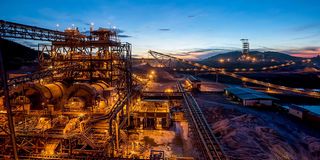
The study, prepared by civil society organisation HakiRasilimali using the international Towards Sustainable Mining (TSM) standards, evaluates responsible mining practices.
According to the report, the mine has supported development projects in surrounding communities, including the construction of schools, health facilities and roads, and has created employment opportunities for local residents.
Monitoring systems for water quality and blasting vibrations are also reported to be in place.
However, researchers say many residents do not receive direct information about the results of such monitoring.
“There has never been a direct meeting between the mine and us as residents,” one villager was quoted as saying. “Meetings are held between the mine and our local leaders, and we do not know what is going on.”
The report argues that reliance on village leaders as the main communication channel has created what it describes as a “bottleneck effect”, where information remains at leadership level without reaching the wider community.
Some residents also complained about dust from mining trucks, linking it to respiratory illnesses, particularly among children.
“We have a serious problem of dust from the mine’s trucks,” another resident was quoted as saying.
Concerns were also raised about blasting activities, with some villagers reporting cracks in their homes that they attribute to ground vibrations.
“Blasting has caused cracks in our houses. Government officials came to measure the vibrations but we were not informed of the results, so we do not know whether our homes are safe,” a resident said.
The report warns that even where technical standards are followed, failure to disclose monitoring results can fuel anxiety and erode public trust.
Water quality transparency
Water management emerged as a sensitive issue. While Tanzanian law requires companies to monitor and report water quality to government authorities, there is no legal obligation to share the information directly with host communities.
Some residents said they had noticed rainwater containing dark particles and feared possible contamination of boreholes.
The report describes this as a “transparency gap” between company data and community understanding, recommending that monitoring results be shared regularly with residents in simple and accessible language.
Grievance mechanism concerns
Researchers also examined the mine’s grievance-handling system, noting that although it is formally established, some residents find it difficult to follow up on complaints.
According to the report, complaints are channelled through village offices to the Community Relations Officer (CRO), whose office is said to be located within the mine’s fenced perimeter.
This arrangement, the study argues, could discourage residents from pursuing grievances or seeking updates on submitted complaints.
The report recommends relocating the office outside the mine fence and introducing a transparent tracking system so that communities can monitor how complaints are resolved.
Broader lessons for Tanzania
The report notes that international frameworks such as those used by the International Council on Mining and Metals and the Global Reporting Initiative have improved corporate accountability but often rely on company self-reporting.
By contrast, the TSM framework requires annual mine-level assessments verified by independent auditors every three years, with results made public.
Researchers argue that adopting similar practices in Tanzania could strengthen accountability at the site level rather than limiting oversight to corporate headquarters.
Among the recommendations are expanding direct engagement meetings beyond village leaders, publicly disclosing environmental monitoring results, improving access to grievance systems and ensuring corporate social responsibility projects reflect genuine community priorities.
“The solution is not merely to replicate external standards,” the report states, “but to translate them into the Tanzanian context and implement them in practice.”
Barrick disputes claims
In response to questions, Barrick said several claims in the report do not reflect the operational reality at Bulyanhulu Mine.
The company said the assertion that heavy mining trucks from the mine cause dust affecting nearby communities is inaccurate.
“Bulyanhulu is an underground mine. There is no open-pit hauling and no fleet of surface haul trucks transporting ore through nearby villages,” the company said in responses from the External Relations and Communications department.
It added that dust management measures and routine environmental monitoring are in place, with results assessed against Tanzanian regulations and relevant international benchmarks and shared with government authorities.
Barrick also clarified that the mine does not use the Kakola Namba Tisa village road for transporting operational materials. Instead, it relies on the main road linking the mine to Kahama, which is currently being upgraded to a paved standard and financed by the company.
On allegations that blasting has damaged houses, Barrick said the claims are not supported by verified evidence. “Blasting is designed, scheduled and executed in accordance with approved technical standards and managed to ensure ground vibration levels remain within applicable limits,” the company said.
The mine operates vibration monitoring systems and reports results to relevant government authorities, which can independently verify compliance through inspections, it added.
Regarding community complaints about access to grievance systems, Barrick said the report’s findings are misleading.
The company said Bulyanhulu operates a grievance office outside the mine area, allowing community members to lodge complaints without needing access to the mine site.
It added that grievance logbooks have been distributed to villages so residents can submit concerns through local government offices, while a toll-free telephone line is also available for reporting issues.
As part of its stakeholder engagement plan, the company said it also holds regular village meetings to inform communities about grievance procedures and how to follow up on complaints.
Barrick said it remains open to a fact-based review through appropriate regulatory channels and emphasised that independent government institutions, including the Ministry of Minerals and the Geological Survey of Tanzania, have oversight authority over mining operations.
Register to begin your journey to our premium contentSubscribe for full access to premium content