Dar es Salaam. Tanzania is expanding vocational education in secondary schools, but the growing demand is increasingly putting pressure on funding and facilities.
The question is no longer whether students want practical education. Increasingly, they do, according to a teacher at Korogwe Girls Secondary School, in Tanga, Ms Catherine Machugu, who teaches the vocational stream, commonly known as Amali in Kiswahili.

“At some point, we are forced to redirect some students to the general stream because we do not have enough space and equipment to accommodate them,” she told The Citizen in an interview.
As such, the more pressing question is whether the country can provide enough workshops, laboratories, kitchens, studios and production spaces for students to learn practically.
Through the Tanzania Education Authority (TEA), schools offering Amali subjects have been equipped with practical learning materials.
TEA’s Project Officer, Ms Kabula Jullu, said 19 schools received about Sh3.2 billion in 2024/25, while 16 schools received Sh3.8 billion in 2025/26.
For 2026/27, about 30 schools have been earmarked for equipment worth approximately Sh4.165 billion.
“Our role is to ensure that these Amali schools receive the necessary equipment. However, all stakeholders should recognise the need to contribute to this area, which has great potential for our country and our students,” she said.
Ms Machugu, responsible for Food Production at the school, said the arrival of equipment has transformed lessons from largely theoretical teaching to practical learning.
“After the project, the children are enjoying it. We have moved from one stage to another because the equipment has come in good numbers,” the teacher said. But the school now faces another problem: space.
She noted that the Food Production workshop can comfortably accommodate only a small number of students at a time because practical lessons require individual working areas, preparation tables and proper arrangements for handling food.
This means that while equipment has improved, the infrastructure needed to use that equipment fully has not grown at the same pace.
“Interest among students in Amali subjects is also increasing, putting further pressure on the available facilities,” she affirmed.
This is precisely where the success of the new curriculum will be tested.
Education policy expert Dr Thomas Jabir said that transformation requires adequate resources and collaboration among different stakeholders. “We have a great policy and curriculum, now we need adequate resource allocation and collaboration between the government and the private sector. This is crucial to achieving the objectives,” he said.
His argument remains relevant as the vocational stream expands.
“The government cannot be expected to carry the entire burden alone,” he emphasised.
He added: “The policy needs government funding, but it also needs employers, industries, development partners, communities and other stakeholders to invest in the learning environment.”
The government itself has recognised that skills development must become central to education reform.
Education, Science and Technology Minister Prof Adolf Mkenda has said reforms are intended to equip young people with relevant knowledge and skills for a changing economy.
He has also previously stressed the need to fully equip vocational and technical schools so that skills-based education can take root and avoid being treated as an inferior pathway.
The message from students is equally clear.
A Form Three student studying Food Production, Najma Songiso, said practical learning has changed her understanding of the subject.
Before equipment arrived, she noted, students could be told how equipment such as a deep fryer or oven worked without actually using it. “After the equipment was brought, I saw a change. We are taught more effectively because what you are taught, you can actually see and do,” she said.
For her, Amali is not simply another school subject. It is part of her plan for life after school.
She wants to establish a cake-making business after Form Four, while keeping open the possibility of continuing to Form Five and Six.
“I want to start my own company. I will ask my mother for capital, do the business and earn money,” she said.
Her thinking reflects the purpose of the vocational stream: giving young people skills they can use, whether they proceed to higher education, seek employment or create their own businesses.
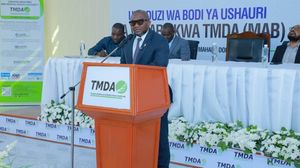
Head of Public Relations and Communication at TEA, Ms Bestina Magutu, said Hotels could support hospitality kitchens; manufacturers could equip engineering workshops and agricultural companies could support school farms and greenhouses.
“Construction firms could help establish practical training spaces; and technology companies could support ICT and creative studios,” she said, adding that such a collaboration would cement what the government is already doing.
Register to begin your journey to our premium contentSubscribe for full access to premium content