Dar es Salaam. Manufacturers have urged the Tanzania Revenue Authority (TRA) to prioritise lower Electronic Tax Stamp (ETS) charges as it selects a new service provider, with the tender application window closing today (September 15, 2026).
TRA invited qualified companies to bid for a new contract to provide ETS services, which are used to monitor and track excisable products manufactured or imported into the country.
The contract with the current provider, Sicpa Tanzania Limited, a subsidiary of Swiss company Societe Industrielle et Commerciale de Produits Alimentaires (Sicpa), expires in January 2027.
Sicpa has been the sole provider of ETS services since Tanzania introduced the system in 2019, but remains eligible to bid for the new contract.
The tender comes amid long-standing concerns from manufacturers over the cost of accessing ETS services and operational challenges associated with the system.
Confederation of Tanzania Industries (CTI) Director of Policy and Advocacy Akida Mnyenyelwa said manufacturers were less concerned about which company won the tender than whether the process resulted in lower charges and a more efficient system.
“Since they are looking for a new service provider, whoever wins the tender is fine. However, our main concern is that the cost of ETS should be reduced. There are also challenges in the operations and management of the ETS, and these issues should also be addressed,” Mr Mnyenyelwa said.
The concerns date back to the introduction of the system, with manufacturers arguing that ETS charges had increased production costs and reduced their earnings.
In response, TRA reduced ETS charges in 2024 under Regulation 6 (2) of the Electronic Tax Stamps Regulations, 2018. The reductions ranged between 14.5 percent and 30 percent, depending on the sector.
Manufacturers of cigarettes received a 30 percent reduction, while those in the soft drinks and beer sectors received cuts of 14.5 percent and 19 percent, respectively.
However, industry players said at the time that they had sought a 75 percent reduction, indicating that the lower rates did not fully address their concerns.
The latest tender seeks to secure a service provider capable of strengthening the monitoring and tracking of excisable products, curbing counterfeit stamps, closing tax-evasion loopholes and improving controls over products manufactured or imported into Tanzania.
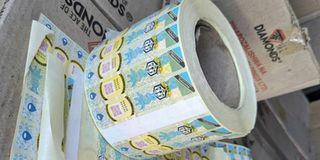
Electronic Tax Stamps are security labels issued and tracked electronically and affixed to specified products subject to excise duty. The system enables tax authorities to identify and monitor products along the supply chain and helps detect counterfeit stamps and products that have not complied with excise-duty requirements.
TRA Commissioner General Yusuph Juma Mwenda said the authority expected the tender to attract capable companies able to offer competitive costs while strengthening controls over excisable products.
Speaking in Dar es Salaam during an event to hand over three-wheel motorcycles to TRA employees with special needs, Mr Mwenda urged qualified companies to participate in the tender before the deadline.
“Qualified companies should come forward and bid for this tender so that they can help me control counterfeit stamps, which have been used by some manufacturers and importers of various products that are required to pay excise duty,” he said.
Mr Mwenda said a capable service provider would also help TRA increase tax revenue by strengthening controls over products entering the market without complying with excise-duty requirements.
He said the new contract should not be viewed simply as a replacement of the existing provider, noting that digitalisation would be an important consideration in the new system.
“I don’t think it is simply a matter of the contract coming to an end. Nowadays, many TRA services are being carried out digitally, so that aspect will also be taken into consideration,” he said.
Mr Mwenda said increased digitalisation had reduced the need for taxpayers to meet TRA officers physically, while the ETS system allowed consumers to verify the authenticity of stamps using their mobile phones.
“With these stamps, it enables a customer or consumer to scan through their phone to know whether the stamp is genuine or counterfeit,” he said.
Register to begin your journey to our premium contentSubscribe for full access to premium content