Mtwara Port expansion opens new trade avenues

Mtwara Port workers and shipping agents watch a vessel carrying a consignment of cement from the port to Zanzibar. PHOTO | COURTESY

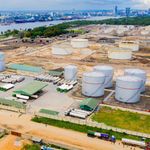
Mtwara. Improvements at the Port of Mtwara are reshaping transport and trade in the southern regions, with rising cargo volumes creating new opportunities for residents, drivers, traders and service providers.

The transformation has been driven by government investment through the Tanzania Ports Authority (TPA), including berth expansion, modern cargo-handling equipment and infrastructure upgrades aimed at improving the efficiency of ship and vehicle handling.
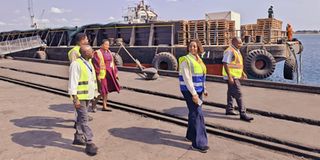
The port now handles fuel, cement, coal, pigeon peas, cashew nuts, heavy vehicles and construction materials for strategic projects. Some of the cargo is transported to neighbouring countries, including Malawi, Zambia, Zimbabwe, Rwanda, Burundi, the Democratic Republic of Congo (DRC) and Mozambique.

Acting Port Manager Hekima Ngezi said Athe Port of Mtwara, established in 1950, had been upgraded to handle larger vessels and increased cargo volumes.

He said the port had previously operated largely on a seasonal basis, first relying on groundnuts and later cashews. The government, under President Samia Suluhu Hassan, had recognised the need to expand its capacity so it could operate more efficiently throughout the year.

The number of berths has increased from three to four. One berth is 300 metres long and has a water depth of 13 metres, allowing larger vessels to dock and handle more cargo.

“So far, the Port of Mtwara handles fuel, cashews, coal, pigeon peas and cement, as well as heavy vehicles. From February this year to date, we have handled 23 vessels and 6,390 vehicles,” Mr Ngezi said.

He said cement from Dangote Cement was being shipped to Zanzibar, Comoros and Mozambique for liquefied natural gas (LNG) projects.

The government is also constructing a new 300-metre berth at Kisiwa Mpangawe/Kisiwa Mgao, with a water depth of 15 metres. Construction is 44 percent complete and is expected to be completed next year.

Mr Ngezi said the berth was designed to handle dusty bulk cargo such as cement and coal, while the Kisiwa Mgao area would have a combined capacity of 100,000 tonnes.

More than 6,000 vehicles handled at the port since February have been destined for countries surrounding Tanzania, including Malawi, Mozambique, Zambia, Zimbabwe, the DRC, Burundi and Rwanda.

Mr Ngezi said TPA would continue expanding the port's capacity and improving efficiency through modern handling equipment.

The Port of Mtwara forms part of the Southern Corridor, linking Mtwara, Lindi and Ruvuma and giving the port a strategic role in domestic and cross-border trade.

Mr Ngezi said TPA wanted the port to become a key link and catalyst for development along the corridor, with cargo moving from Mtwara through Lindi and Ruvuma to Mbamba Bay Port before reaching Malawi.

He said strengthening the corridor would stimulate trade in the southern regions while creating opportunities for residents and businesses. With the Port of Dar es Salaam handling large volumes of cargo, TPA sees Mtwara as an alternative route that could ease pressure on the country's main port and speed up cargo movement.

Mr Ngezi said using Mtwara could reduce the time required to transport cargo to Burundi, Rwanda, Zambia, Zimbabwe and Malawi while stimulating economic activity along the corridor.

The port also has cargo-handling equipment that can be deployed for activities associated with gas projects. Mr Ngezi said inland container depots could be used if cargo and vehicle volumes increased significantly, helping to prevent congestion.

Esthersia Mallya, an agent for Joyous Shipping Service Ltd, said operations at the port had improved, with more vessels arriving and services being provided on time.

“There are no queues here in Mtwara,” she said.

She said improved infrastructure, including roads connecting the port, had facilitated the movement of vehicles, while better cargo storage systems had enabled traders and shipping agents to receive cargo more efficiently.

Ms Mallya urged traders and agents who traditionally relied on the Port of Dar es Salaam to consider Mtwara because of its lower congestion.

Abdulrahman Upete, an agent for Baruti International Limited, said investment in modern equipment had improved operations while helping ease pressure on the ports of Dar es Salaam and Tanga.

He said the improvements had strengthened Mtwara's position as a gateway to neighbouring countries, including Mozambique, Malawi, the DRC and Zambia, with the port increasingly handling vehicles, machinery and construction equipment.

 “Many vehicles are passing through here, so the demand for drivers has increased. There is also demand for support vehicles because sometimes trailers arrive here and need towing vehicles,” he said.

Mr Upete said some vehicles continued to destinations outside Tanzania, creating a need for local drivers to develop cross-border transport skills.

 “There is therefore a need for drivers in Mtwara to enrol in vocational colleges such as Veta to gain more experience and skills because once you cross Tanzania's borders, there are specific procedures to follow,” he said.

For residents living around the port, the increase in activity is already translating into higher incomes.

Rehema Mputa, a food vendor operating near the port, said improvements had transformed her business, allowing her to increase daily production from about one kilogramme of wheat flour for chapatis to four kilogrammes, all of which she sells.

“Business was very difficult here at that time, but with this income I have managed to educate my child, who has completed Form Four,” she said.

Ms Mputa said the additional income had also enabled her to invest in farming, including cashew production, and pay farmers.

Issa Mchika, a leader of bodaboda riders operating near the port's oil tank area, said increased port activity had boosted passenger numbers and earnings for motorcycle taxi operators.

“The port has genuinely helped us as residents, particularly us bodaboda riders,” he said.

He said the presence of depots, cargo trucks and fuel tankers had increased demand for transport, while visitors to Mtwara were also using hotels, restaurants and bodaboda services.

Previously, he said, many residents, including drivers and food vendors, depended heavily on the cashew season. Increased port activity, however, had created business opportunities throughout the year.