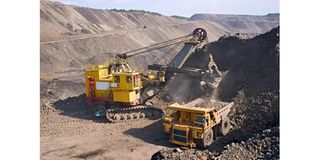
Dar es Salaam. Tanzania’s mining sector is entering a new phase shaped by execution, infrastructure readiness and access to long-term capital as the country seeks sustained value from the industry.
Mining now contributes about 10 percent of Tanzania’s gross domestic product, up from four percent in 2007, and is the country’s leading foreign exchange earner alongside tourism.
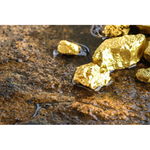
Gold remains the main commodity. Tanzania earned $4.7 billion from gold exports in the year ending November 2025, up from $3.3 billion in the preceding year, according to figures from the Bank of Tanzania (BoT).
This marked the first time gold surpassed tourism in foreign exchange earnings. Tourism generated $4 billion in the year ending November 2025, up from $3.8 billion during the corresponding period the previous year.
The performance helped raise the value of Tanzania’s exports of goods and services by 13.1 percent to $17.562 billion in the year ending November 2025, up from $15.521 billion in the corresponding period of 2024, BoT data shows.
Against this backdrop, as Mining Indaba 2026 opens in Cape Town, Tanzania is being cited as an example of jurisdictions moving from expansion to delivery and long-term investment.
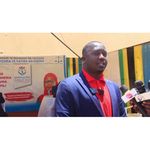
“The conversation around mining has evolved,” said the Head of Client Coverage for Corporate and Investment Banking at Stanbic Bank Tanzania, Mr Elias Ngunangwa. “The focus today is on whether projects can be delivered efficiently, supported by the right infrastructure, financing and operating environment.”
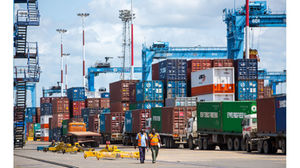
Investment in roads and rail links is improving the movement of minerals and equipment, while stronger power connectivity is reducing operational uncertainty. More mining companies are connecting to the national grid, lowering reliance on diesel generation and stabilising costs.
“Infrastructure and power directly affect timelines, costs and the ability of projects to move into production,” Mr Ngunangwa said.
Financing needs are also changing as the sector grows. Capital is required not only for mine development, but across the wider value chain that supports operations.
The Vice President for Diversified Industries at Stanbic Bank Tanzania, Mr Edgar Mwasha, said growth depends on financing models that reflect how the sector operates.
“Mining functions as an ecosystem,” Mr Mwasha said. “Suppliers, contractors, logistics providers and service companies all need access to capital. Financing must support the full chain.”
While gold continues to anchor output, investment is expanding into minerals such as graphite and nickel. New investors have entered the market in recent years, supported by strategic licences for exploration and development.
“These minerals are important to energy transition technologies,” Mr Mwasha said. “Projects with strong infrastructure, energy and governance are more likely to attract long-term capital.”
Regulatory changes, including clearer licensing processes and stronger engagement between the public and private sectors, have improved predictability for investors.
The Head of Corporate and Investment Banking at Stanbic Bank Tanzania, Ms Esther Manase, said alignment between capital, infrastructure and execution will determine the sector’s impact.
“Tanzania has built a foundation for mining growth,” she said. “The next phase is about aligning investment, infrastructure and financing to support long-term value.”