TBS’ new global status clears the path for Tanzanian exports

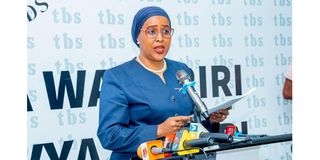
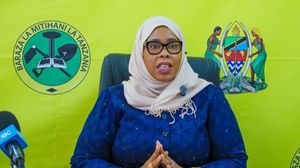
Director General of TBS, Dr Ashura Katunzi,

Dar es Salaam. In a development that could significantly reshape Tanzania’s trade competitiveness, the Tanzania Bureau of Standards (TBS) has become the first institution in the country to receive ISO/IEC 17020 accreditation for inspection services.

This is a milestone widely described by experts as a strategic breakthrough for the nation’s industrial and export ambitions.

The accreditation, granted (handed over) by the Southern African Development Community Accreditation Service (SADCAS) on February 13, 2026, formally recognises TBS as competent to conduct type A inspections under ISO/IEC 17020:2012 in the areas of food products and chemical-related products.

The certificates, announced on October 15 2025, are valid for five years until October 2030 and will remain under continuous surveillance by SADCAS.

For Tanzania, this is not merely a ceremonial recognition. It is a structural upgrade in how the country positions itself within the Southern African Development Community (SADC) and the broader global trading system.

Speaking at the handover ceremony in Dar es Salaam, minister for Industry and Trade Judith Kapinga described the accreditation as “a weapon for Tanzania to win the SADC and international markets.”

“The attainment of international competence accreditation under ISO/IEC 17020 removes technical barriers to trade,” she said.

“It is proof of professionalism and integrity in our national quality infrastructure. This strengthens confidence among both domestic and international stakeholders in products made in Tanzania.”

ISO/IEC 17020 is an internationally recognised standard that specifies requirements for the competence of bodies performing inspection. In simple terms, accreditation confirms that TBS inspectors are technically qualified, to operate under impartial systems, use calibrated equipment and follow globally accepted procedures.

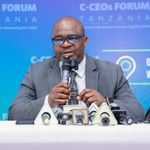
Chief Executive Officer of SADCAS, Ms Eve Christine Gadzikwa, underscored the weight of the achievement.

“Achieving accreditation is no small feat. It is a rigorous and demanding journey,” she said. “Accreditation is a formal recognition by an authoritative body of competence to carry out inspection, testing or certification. In this case, we are celebrating inspection accreditation.” She noted that as of January 13 2026, SADCAS had issued 406 accreditation certificates to 343 facilities across 13 member states, with additional certifications beyond the region.

TBS now joins a select group whose accreditation is internationally recognised through SADCAS’ affiliations with the International Laboratory Accreditation Cooperation (ILAC), the International Accreditation Forum (IAF), and the Global Accreditation Cooperation (GLOBAC).

“The importance of this certificate,” Ms Gozikwa emphasised, “is that it enables Tanzania to gain market access and competitive advantage when trading across borders. Consumers are asking: who has inspected this product? Can I trust it? Accreditation provides that confidence.”

Strengthening Tanzania’s regulatory backbone

TBS operates under the Standards Act No. 2 of 2009 and is responsible for enforcing mandatory product standards, including pre-shipment verification of imports.

The ISO/IEC 17020 accreditation strengthens its regulatory mandate by ensuring its inspections meet globally benchmarked standards.

Director General of TBS, Dr Ashura Katunzi, said the achievement is the result of more than a year of rigorous assessment, completed in October 2025.

“TBS is now the first institution in Tanzania and the second in East Africa to receive this accreditation from SADCAS,” she said. “This confirms that our inspection systems at production sites, ports and border posts meet international requirements.”

She pledged that TBS would continue enhancing professionalism and integrity to maintain the accreditation and ensure Tanzania’s services remain globally competitive.

Trade experts say the accreditation positions Tanzania more favourably within SADC and under the African Continental Free Trade Area (AfCFTA).

A trade and industrial policy expert, Dr Haji Semboja, argues that technical barriers to trade have long undermined African exports.

“Many African countries struggle not because their products lack quality, but because their conformity assessment systems are not internationally recognised,” he said.

“With ISO/IEC 17020 accreditation, Tanzanian inspection reports carry greater weight. This reduces duplication of inspections and lowers transaction costs for exporters.”

He added that sectors such as agro-processing, mineral beneficiation, pharmaceuticals and consumer goods stand to benefit significantly, areas already identified by SADCAS as regional priority value chains.

Similarly, an economist and industrial development analyst, Mr Samuel Wange, views the accreditation as an essential pillar for Tanzania’s industrialisation agenda.

“Industrialisation is not just about factories; it is about systems of trust,” he explained. “When buyers in SADC or Europe see that Tanzania’s inspection body is internationally accredited, they are more willing to source from us. This enhances our reputation as a reliable trading partner.”

Beyond trade facilitation, accreditation sends a strong signal to investors. It demonstrates that Tanzania’s quality assurance systems are credible, transparent and accountable.