Diaspora parenting: Privileges, challenges and prospects future of diaspora children

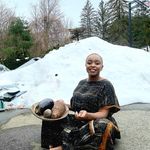
Amani Mahiti and his son Isaiah.  PHOTO | COURTESY

What you need to know:

  • While Tanzanian parents are dreaming of raising doctors, lawyers and other noble professionals, Western parents are more inclinedA to let their children take up sports, music and other talents as their way to a professional career

We instinctively carry through life based on how our parents and the community around us raised us and where we fetch our morals and culture.

Amani Mahiti, born and raised in Tanzania, left the country as soon as he finished his A-level education at Ilboru Secondary School.

That was more than 25 years ago when he settled in the United Kingdom.

His move was premeditated; most of his siblings had left Tanzania when they were much younger.

His integration into the country was remarkably easy.

He had friends and family who welcomed him and taught him about the culture and how to carry himself.

“First thing they taught me is to have discipline with any money I make, to save my money was important,” he said.

The business marketing graduate who grew up under the roof of his Tanzanian parents with their Chagga values and norms would later become a father himself.

He was far removed from his home, raising his children in an environment that was in contrast to what he grew up in.

Reflecting on the differences in parenting between the two countries, Amani insists that these are two distinctly different worlds, living in different timelines.

The contrast is conspicuous.

But one has to decide which parenting is better than the other, between the European and Tanzanian ways of raising children.

Tanzanian culture places great emphasis on respect for the elders and traditional greetings that affirm that respect.

He saw that when he recently visited Arusha.

Whenever children ran past him, they would always say “shikamoo”, a traditional greeting conveying respect to a person older.

In the UK, that culture is non-existent.

Children would pass by you without a care in the world or even acknowledgement, but it doesn’t bother the elders, because that’s how their society is accustomed to.

The fast-paced life in Europe makes children grow up quickly.

Children are forced to toughen up and assume roles at a much younger age compared to Tanzania.

It’s a norm for an 18-year-old to move out of his or her parents’ house, just one example that would be hard to normalize in Tanzania, where children leave their parents’ nest at a much older age.

Amani said, on the positive side, raising his children in the United Kingdom exposed them to much better education opportunities, education is free and higher learning institutions offer abundant scholarships for their youth.

In this technologically advanced world.

Children in Europe have access to facilities and laboratories; most of their learning is practical, he attested.

Reflecting on his own education in Tanzania, where that was never the case.

He has dedicated himself to his children’s extracurricular activities.

“Sports are prioritized in the UK, whereas back home we only had PE once a week,” he added.

But his children take to the field every single day.

It is evidently paying off for children raised in Europe.

The multi-billion dollar football industry in the UK has produced young stars, some still in their early teens.

While Tanzanian parents are dreaming of raising doctors, lawyers and other noble professionals, Western parents are more inclined to let their children take up sports, music and other talents as their way to a professional career.

Amani, to his core, is a Tanzanian parent; he puts his trust in education first, he is a holder of several degrees and hopes his children will have a solid education.

What talents they will have later in life will be backed up by the good education they will attain.

That is very important to him.

He returned to Tanzania for a visit after being away for more than 18 years, visiting his family members and seeing the social cohesion within Tanzanian communities.

He feels that Tanzania is faring much better than most European countries.

In Africa, there is a saying, ‘It takes a village to raise a child,’ meaning that the whole community is responsible for guiding a child through life.

Elders are expected to discipline a child when they see them misbehaving.

It doesn’t matter who the parent is.

The whole society is watchful of children in the community.

Where as in the United Kingdom, Amani says, there is social welfare.

You wouldn’t even dare to shout at your own child, let alone a neighbour’s.

Social welfare is just a phone call away.

And children know this.

They know their rights; depending on the severity of the punishment, child protection services may intervene.

Some African parents who emigrate to the West experience cultural and legal adjustment in child-rearing practices.

Physical punishment is banned and unlawful in many European countries.

Encouraging parents to use time-out, loss of privileges and reasoning when raising children.

In Tanzania, a parent is the moral compass, judge, jury and the final say.

Children know the local government or authority rarely intervenes unless serious harm is brought upon the child.

“Children are even taught in school about their rights, how their parents should speak to them and what to do when a parent shouts, they know everything,” he mentioned.

Amani is raising his biracial children to know their Tanzanian culture, even if they are oceans apart from where he was born, they play with clay, they are taught Kiswahili and all the children’s games Amani grew up playing.

He taught them early, instilling discipline and respect for elders, the Tanzanian way.

He is raising them differently, absorbing the good from both cultures.

Back in Tanzania, Amani was brought up in a seminary school, with catholic values, the values he wants his children to grow up knowing and practicing.

His two children have yet to visit Tanzania.

His firstborn, who is turning 12 years old this year, knows much about his father’s country but has never set foot there.

Amani hopes that they will be able to visit in the coming years.

One of the factors that has delayed their homecoming has been the absence of Amani’s parents, who are both deceased.

Parents tend to encourage and sometimes demand to see their grandchildren, so he unfortunately never had that pressure.

But he hopes they will come to visit and clean their graves.

“Regardless of the situation, showing them their roots is important for me; they have to know where they came from,” he explained.

Amani wants to see his children, taking their Western privileges, like access to quality education, to bring positive change to Tanzania.

Countries like India and China have used their diaspora to bring innovation and technological advancement to their motherland and he hopes his children will do that.

“After I got my business marketing degree, I went back and took an engineering degree as well.

I am a firm believer in education” he said.

And he hopes his children will follow his path and later use that education to help their fatherland.

He wishes his children would become doctors, engineers, or football players.

He envisions that his child, who will become a doctor, will come and work in Tanzania.

“My plan is to come back to Tanzania permanently when I turn 50,” he said.

He constantly tells his children to study hard and they should have plans to invest in Tanzania.

Pointing out the kind of shortage of professionals in health sectors, engineering and other fields and how they can study and join the future workforce to address those shortages.

Amani has spared no effort to make sure his children’s future is better than his.

His son is a talented football player, a talent Amani never had growing up, so he is in awe and very impressed with his son.

Nevertheless, he reiterates, education is the key.

He wants them to know both countries, educate themselves and make sure Tanzania is part of their future.

 For now, they have learned Kiswahili and they are getting better at it and soon their feet will touch the soil that raised their father.