Dar es Salaam. Lawyers have urged Tanzanians to give the newly established commission investigating criminal offences linked to violence surrounding the 2025 General Election time to complete its work, saying its composition and mandate provide a credible basis for establishing responsibility.
The six-member commission, chaired by Court of Appeal Judge Shabani Ally Lila, was launched on August 7, 2026, by President Samia Suluhu Hassan and has five months to complete its work.
The commission includes Petrus Tileinge Damaseb, Namibia’s Deputy Chief Justice, and Cheborion Barishaki, a Judge of Uganda’s Court of Appeal. Other commissioners are retired judges Gad John Mjemmas, Awadh Mohamed Bawazir and Aishieli Nelson Sumari.
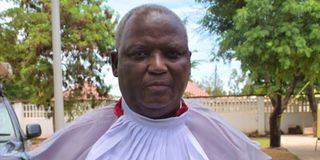
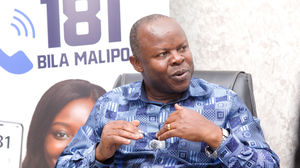
Speaking to journalists in Dar es Salaam today, advocate Sweetbert Nkuba said the commission was legally and constitutionally established under the Constitution and the Commission of Inquiry Act, Chapter 32. “The Lila Commission is legally and constitutionally established, and there should be no doubt about its legitimacy,” he said.
He said its composition also gave it credibility, particularly because most members are serving or retired judges with experience at the highest levels of the judiciary.
Mr Nkuba cited the legal principle nemo judex in causa sua, which means that no person should be a judge in their own case, saying the inclusion of commissioners from outside Tanzania could help address concerns over impartiality.
An advocate based in Mwanza, Mr Steven Kaswahili, said: “The appointment of judges from Uganda and Namibia can strengthen public confidence in the inquiry because they bring perspectives from outside Tanzania.
Their involvement is particularly important given the nature of the allegations and the need to establish the facts without being influenced by local interests.”
On top of that, another advocate from Arusha, Ms Martha Serengi, said: “The new inquiry should be viewed alongside the earlier commission led by retired Chief Justice Mohamed Chande Othman because the two commissions have different mandates. The Chande Commission examined the causes and consequences of the violence and made recommendations, while the Lila Commission has a more specific task of investigating alleged criminal acts and establishing responsibility.”
Mr Nkuba said the difference was significant because the earlier inquiry focused on what happened, while the new commission was tasked with examining who may have been involved.
“The Chande Commission was looking at what happened, but the Lila Commission is going to look at who was involved so that they can be held accountable,” he said.
The lawyers’ views come after President Hassan launched the commission at State House in Dar es Salaam and explained the decision to include foreign judges.
“We decided to involve our colleagues from Namibia and Uganda to get a broader perspective, because this commission will go deeper to find out exactly who incited, participated in and provided funds for those events to happen in our country,” she said.
She also urged Tanzanians to co-operate with the commissioners.
“I appeal to all Tanzanians to provide the co-operation required by the commission to carry out its duties. Let us help this commission do its work and not disturb it,” she said.
The commission implements one of the recommendations of the Chande Commission, whose inquiry into the 2025 election-related violence established that 518 people died, while thousands were injured.
Under its mandate, the Lila Commission will investigate people suspected of committing criminal offences or breaching the law before, during and after the election and make recommendations on possible action.
President Hassan said its five-month mandate could be extended if there were valid reasons for doing so.