Mr Ally believes political upheaval can provide an opportunity for countries to reassess their systems, citing Kenya’s adoption of a new Constitution in 2010.
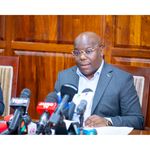
Dar es Salaam. Amini Ally (pictured) has seen Tanzania go through political turbulence before, including the resignation of a vice president.
“I witnessed Aboud Jumbe’s resignation in 1984 while I was in Form Four,” he recalls. “We can all disagree, have different political views, argue and shout, but at the end of the day, Tanzania has to remain united, not for this generation but for the future of the country.”
Popularly known as Kidodi, Mr Ally is a Tanzanian diaspora member based in Washington State, where he runs the Kidodi Media podcast. His pan-Africanist outlook and advocacy for a united Tanzania have sometimes put him at odds with fellow Tanzanians in the United States, but he remains committed to creating a platform where differing views can coexist.
He says the diaspora community has traditionally accommodated people with different political leanings, helped in part by the freedoms enjoyed in the US, where people can express political opinions without fear of reprisal.
But he says recent political developments in Tanzania following the 2025 General Election have intensified divisions among Tanzanians abroad.
“The fragmentation is becoming alarming,” he says, arguing that Tanzanians in the diaspora need candid conversations to rebuild unity.
For Mr Ally, this is important not only for social cohesion but also for Tanzania’s development ambitions. A united diaspora, he says, can contribute skills, technology, investment and foreign exchange to the country.
A platform for all voices Now 60, Mr Ally is embracing new technology to expand his podcast. He has recently bought new equipment, is expanding his studio and preparing to conduct live and in-person interviews.
With his young protégé, Iddy, by his side, he reflects on Tanzania’s political trajectory and the role of the diaspora.
“Every era has its political issues, anywhere,” he says. “And if you look at the state of governance in Tanzania, both in the United Republic of Tanzania and on the Zanzibar side as well, clear changes need to occur.”
Mr Ally believes political upheaval can provide an opportunity for countries to reassess their systems, citing Kenya’s adoption of a new Constitution in 2010.
But he cautions that constitutional reform alone cannot resolve a country’s problems.
“Tanzanians have to be willing to look within and honestly address all matters so that the nation can heal,” he says.
He also believes Tanzania’s political developments have implications beyond its borders, particularly in how the country is perceived internationally.
“The third major issue is the trajectory of Tanzania’s political environment in international affairs,” he says.
This, he argues, is where the diaspora has an important role to play.
How Tanzanians speak about their country abroad can influence perceptions among potential investors, politicians, tourists and other international audiences.
Mr Ally says there is still inadequate public understanding of recent political developments, including the circumstances surrounding the departure of former Vice President Emmanuel Nchimbi.
He believes communication between the Government and the public, both at home and abroad, needs to be improved.
“Better understanding by the public results in a positive response,” he says, adding that opposition parties also have a responsibility to communicate constructively.
He recalls joining a Clubhouse discussion in which a prominent opposition politician verbally attacked him simply because they disagreed.
Divided diaspora Mr Ally says political divisions have increasingly affected Tanzanians in the US, making it difficult to bring people together for discussions about their country.
He points to the Ugandan diaspora in the US as an example Tanzania could emulate.
“Every year they meet in Dallas here in America, even those in the opposition. Everyone meets up to discuss the strategic path of their country,” he says.
By contrast, he says, some Tanzanians avoid meetings they perceive to be associated with CCM, while others shun gatherings linked to the opposition.
“That doesn’t build up. It stagnates all efforts for unity,” he says.
He believes Tanzanians abroad need reconciliation as much as those at home.
“We shouldn’t be pointing fingers at each other. We have to build our country,” he says.
Mr Ally is particularly concerned about narratives that emphasise separate identities such as Zanzibari or Tanganyikan at the expense of a broader Tanzanian identity.
“Look at your passport. Isn’t it Tanzanian? Then build your Tanzanian identity,” he says.
He points to the unity Tanzanians demonstrate when a member of the diaspora dies, when communities come together to raise money for burial expenses and support bereaved families.
“That same unity should be applied when it comes to nationhood,” he says.
With greater unity, he argues, Tanzanians abroad could collectively support development projects, including hospitals and other community initiatives.
“You will build a proper diaspora. You will build hospitals back home through your unity. You will donate items through your unity,” he says.
He urges Tanzanians to preserve the Union, warning that separating two countries is far more complicated than ending a marriage between two individuals because political, economic, social and historical interests are intertwined.
National interest first Looking at the political environment in the US, Mr Ally says Tanzanian politicians could learn from the way Democrats and Republicans sometimes put national interests ahead of partisan differences.
He believes Tanzania needs a similar approach.
“In Tanzania, there is the hegemony of the ruling party. The party holds state power, but you also have the framework of running an inclusive government that aligns with the needs of the country,” he says.
He argues that Parliament should be viewed as an institution serving national rather than partisan interests.
“What is discussed here should be discussed in the national interest, not party interest,” he says.
Mr Ally also believes young people, both in Tanzania and the diaspora, are demanding political and economic change.
He points to Tanzania’s Vision 2050 and the reforms outlined in the ruling party’s policies as evidence that the country itself recognises the need for change.
He suggests that differences within the ruling party over constitutional reform may partly explain recent political tensions.
Beyond criticism Through his podcast, Mr Ally regularly discusses Tanzanian politics and the economy. He says his approach is to challenge both those in power and those seeking power.
“We want political parties with a national outlook,” he says.
He cautions that replacing one group of leaders with another will achieve little if the new leaders simply repeat the mistakes of their predecessors.
“If we elect new people, if they take power and end up doing the same thing, we don’t want another set of cronies,” he says.
He says criticism should be constructive and should apply equally to those in government and those in opposition.
“As an analyst and host, I issue a warning: critique those you criticise so they correct themselves. And those of you criticising, when you take over, you will also be subject to criticism,” he says.
For Mr Ally, neutrality is central to responsible political commentary.
“You make sure what you say addresses both those outside power and those in power, without bad intent,” he says.
Defining democracy Mr Ally also challenges the idea that democracy has one universal model.
“No country can claim that the definition of democracy is identical in every country worldwide,” he says.
For him, democracy should deliver freedom, justice, constitutionalism and national development.
“British democracy is not German democracy. And both are European,” he says.
He believes Tanzanians should therefore develop a political and constitutional model that reflects the country’s own circumstances rather than simply copying another system.
“People who specialise in the interpretation of law should help formulate what kind of Tanzania we want to build,” he says.
Kenya’s experience, he adds, should be studied but not automatically replicated.
“Our democracy is different from Kenya’s democracy,” he says.
Ultimately, Mr Ally says Tanzania’s political differences should not become a source of permanent division.
With political reconciliation, better communication and a stronger sense of shared national identity, he believes Tanzanians at home and abroad can turn their differences into a force for development.
“With all the differences people have, they should choose progress, not chaos,” he says.