This is how far they are willing to go, just for us in the diaspora, including Tanzanians, to purchase a piece of their land.
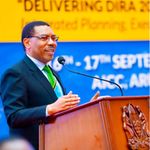
But unfortunately, in our own country, land ownership for the diaspora is still contentious,” said Hassan Saudin, a Georgia-based prime realtor in the US.
Hassan is part of the Tanzanian diaspora.
A growing economic force, those investments in Tanzania are in the tune of billions of dollars, stretching further than the initial remittance.
This hasn’t gone unnoticed by the Tanzanian government, which targets having $1.5 billion worth of remittances and investment coming from the diaspora community.
With all that in place, a conspicuous barrier to increased investment is that the Land Act of 1999, Section 20, restricts land ownership by non-citizens, with exceptions only for investment purposes.
This throws them into the same group as any other foreign investor.
Recent court rulings have reinforced the restrictions; even inheritance by non-citizens is not allowed as a form of land acquisition.
“This is a huge obstacle for those who changed their citizenship.
If you have a green card, you are still technically a Tanzanian, but for the rest, it’s not looking good,” he added.
In the past, the law allowed for a non-citizen to inherit land or property, but that High Court ruling was recently overridden by the Court of Appeal.
“Once you change your citizenship, you can’t even inherit your father’s land or property,” he said.
A Tanzanian lady born in France to two Tanzanian parents has been lamenting what will happen to their family property when her ailing parents join the ancestors.
She speaks Kihaya and Kiswahili fluently; she also frequently visits her home in Tanzania.
Her family considers her Tanzanian just like them, except the law of the land doesn’t.
Hassan urges people in similar situations not to risk it and to immediately seek legal help before their parents’ demise.
“I am a firm believer in seeking expert opinions in all matters, and this needs legal help as soon as possible,” he said.
Lawyers have ways to navigate the technicalities and make sure that they find ways to maintain ownership.
Even if it’s not outright inheritance, there are legal ways to go about it.
The roadblocks and ambiguity have discouraged diaspora investment at home.
The law has been a deterrent.
Some countries as small as Rwanda still allow their diaspora to own land; even a Tanzanian can own land in Rwanda, but you can’t do that in Tanzania without coming in as a foreign investor.
“I hope they will ease that for native Tanzanians who changed their citizenship but are still inherently Tanzanians.
I don’t think the government would lose anything,” he added.
“In my experience in finance and as a former civil servant in Tanzania, I am sure that the more land deeds are given, the more the country expands its tax base,” he mentioned.
The government’s hesitation is still not understood by the diaspora.
Tanzania has a huge landmass that is not developed.
He hopes the government will be able to sit down with the diaspora and address their concerns.
“There could be concerns that we are not aware of,” he chimed in.
Evidently, there is a need for a dialogue on what should be done.
The diaspora has for years lobbied and talked with decision-makers in Tanzania.
Efforts were made; the government was willing to grant special status, with promises that it would come in the near future, but that didn’t come to fruition.
“I once heard a minister saying that the diaspora population is small, so maybe they do not deem it a priority,” Hassan said.
Maybe the numbers do not add up to deem it necessary to change the law, but he hopes the discussion will be revived and a solution found.
Hassan primarily operates as a realtor in Georgia State but has considerable knowledge of how the real estate business is conducted by the diaspora who buy property in the motherland.
He has, on occasions, acted as an advisor to a few who sought to buy or sell property in Tanzania.
In the past, buying property or building a home for the diaspora was a family affair.
They would entrust their close kin to oversee it; the process was prone to a lot of family tension and money squandering.
Though that is not as prevalent now, “the majority of Tanzanians in the diaspora are refraining from delegating; they choose to be directly involved when it comes to purchasing or building a property back home,” Hassan said.
“There are many opportunities to buy ready-made houses that require minimal refurbishment to their liking, and many are choosing that option,” he added.
It is natural for humans to seek close ties to their native homes. Even with available opportunities to acquire properties in different countries, most Tanzanian diaspora seek to have a piece of their home country.
It’s not because it has a high value or great returns; it is simply because it is home, out of patriotism, and out of love for the country.
This, Hassan said, the government can leverage because the zeal to invest at home is already there—they do not need to cultivate it.
Still, Tanzanian developers and real estate companies are eyeing the diaspora with optimism for the future. Last year, they convened in Atlanta for a convention and expo aimed at urging the Tanzanian diaspora to buy property back home.
“Tanzanian developers are now well established, and most diaspora are more inclined to buying properties that are already finished, not like in the past where one had to build from the ground up,” he said.
For a diaspora member who would like to acquire property in Tanzania, Hassan advises that one should first and foremost get a trusted lawyer who understands the ins and outs of Tanzanian law in that regard.
The lawyer must be involved every step of the way.
“There are things one should never delegate.
Any kind of transaction should be solely handled by the buyer; the money should come straight from your account to the seller and not involve relatives’ bank accounts,” he advised.
He said that exposes one to unnecessary risks.
Recently, the news has been flooded with stories of property disputes and court cases involving land or house ownership.
He reiterated that is the main reason why lawyers are necessary throughout the whole process.
They can help verify ownership with the relevant government ministry before one buys to avoid getting scammed while being thousands of miles across the ocean.
“They do a title deed check to see if there are any encumbrances to ensure everything is clean and the property is in no legal dispute,” he said.
This happens more times than is reported.
Some members of the diaspora have seen their hard-earned dollars go down the drain, being victims of con men. On the good news for the diaspora, at least the government passed a directive instructing that all property sales and purchases should be conducted in Tanzanian shillings.
This will give dollar earners an upper hand on how far their dollars will take them in acquiring prime property.
Register to begin your journey to our premium contentSubscribe for full access to premium content