INSIGHT: Tanzania doing well in war on leprosy: Official
Left untreated, leprosy can be progressive, causing permanent damage to the skin, the nerve system, limbs, the face and eyes. PHOTOS | FILE
What you need to know:
Although the number of new leprosy cases occurring each year is important as a measure of transmission, it is difficult to measure due to leprosy’s long incubation period and delayed diagnosis
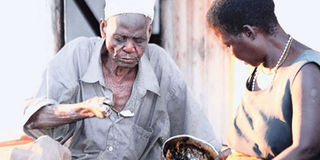
Dar es alaam. Tanzania has made notable progress in the fight against leprosy. The disease, which once seemed to be a curse by many and left them with lifetime body deformation, is now a story with only few cases remaining. According to data, 1:10,000 people (only 1 in 10, 000 people) may be diagnosed with leprosy.
Leprosy is a chronic infection caused by bacterium Mycobacterium leprae and Mycobacterium lepromatosis. It is spread from person to person in nasal droplets and if left untreated leprosy can be progressive, causing permanent damage to the skin, nerves, limbs and eyes.
Data from the World Health Organisation (WHO) shows that almost 182 000 people, mainly in Asia and Africa, were affected at the beginning of 2012.
It shows that although the cases have been reduced, Tanzania is still among the countries named to have higher cases of leprosy together with Brazil, Indonesia, Philippines, Democratic Republic of Congo (DRC), India, Madagascar, Mozambique and Nepal.
But experts warn that if an initiative to control new infections will not be taken, it is possible that like some of the diseases that Tanzania has managed to eliminate like polio...leprosy too may come back.
In an interview with The Citizen on Saturday ahead of marking the World Leprosy Day, which is internationally marked on January 30 or its nearest Sunday, the coordinator of the National Tuberculosis and Leprosy Programme (NTLP), Dr Ibrahim Mteza, said although Tanzania had done a recommendable job in eliminating leprosy, it needed to continue sensitising people on the signs of the disease so that they could be reached and treated.
“Since treating leprosy can be very expensive especially during its last stages, it takes three years to treat a patient. Not only that, but also we have been receiving cases of new infections especially children. Recently, we received a case from Kariakoo in Dr es Salaam,” he said adding that the cases that had been reported to Muhimbili Hospital were coming mainly from Mbagala and Mkuranga.
Dr Mteza said it takes many years for someone to show signs of leprosy and, therefore, if the initiative to control new infections stalls it would reach a time when there would be many new cases of leprosy.
He said records showed that in 2012 Muhimbili National Hospital received seven cases, but last year the facility received five more patients. This makes the number of patients on treatment to reach 12. These are being followed up for three years treatment.
“That can be regarded as a slight increase, but it is clearly indicating that more people could have been infected. So, I encourage that we improve our primary hospitals so that we make early diagnosis and education to raise public awareness that the disease is indeed still there and it needs attention to maintain the 1:10,000 ratio,” he explained.
On the other hand, Dr Mteza said since leprosy was being transmitted through air, good town planning would help the country control the disease.
“Take, for example, in the 1980s the US had a TB epidemic, but what they did because the disease is spread through air, they didn’t invest in constructing many health centres. They only prevented it by having good city plans to enable people to have good space for ventilation, a good movement of air and here they are,” he noted.
He explained that in Tanzania many people infected with leprosy were from areas with low socio-economic status - with no access to health facilities even when they sometimes see the signs of the disease,” he said.
Elsewhere, The Citizen on Saturday has also talked to the then Leprosy Centre of Dodoma, Nunge Mission Hospital, which was in the 1980s the main centre for leprosy. A Roman Catholic nun, Mary Kiwaya, the registered nurse of the centre also cautioned that fighting against leprosy should be an ongoing control measure.
She said increased public awareness had made many people go to hospital for diagnosis and treatment. She said although the number at the centre had been going down drastically, more efforts are needed to sustain the progress.
She said at the centre, for example, there were 46 patients in 2011, 28 in 2012 and 21 last year, but insisted that education on the disease should continue.
“Nurses should be trained on how to control leprosy because the majority of them only know the treatment, but don’t offer patients therapy to control their body from going numb,” she said adding that if there was control from a primary level there would be no need for surgery.
Treating leprosy is free through the NTLP, which was established in 1977. The programme is charged with the responsibility of facilitating early diagnosis, treatment and cure of as many TB and leprosy patients as possible to reduce the incidence and prevalence of these diseases until they are no longer a major public health problem in the country and reduce physical disability and psycho-social suffering caused by the two diseases.
With this programme, Tanzania is the first country in the world to successfully combine the control of TB and Leprosy into a single programme.