When courage meets power: The leadership story of Zakia Meghji

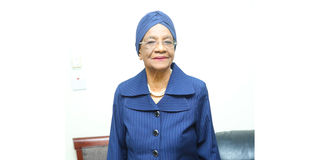
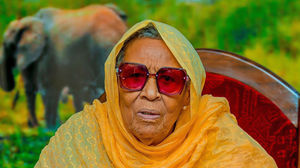
Zakia Meghji

Dar es Salaam. This year marks the 20th anniversary of Tanzania appointing its first female Minister of Finance, the Honourable Zakia Meghji.

Her story stands as a living testament to the long and demanding journey of women in leadership in Tanzania.

Yet her story did not begin or end with that appointment. Before assuming the finance portfolio, she served as Minister of Health and later as Minister for Natural Resources and Tourism. She still holds the record as the longest-serving Tourism Minister in the country’s history.

She was also the first female Regional Commissioner for Mbeya, a position that tested her resilience. She faced resistance and scepticism rooted in deeply held attitudes towards women in authority.

Some doubted her ability to lead. Others questioned her presence in a traditionally male-dominated space. She responded not with confrontation, but with work.

Within six months, she had visited all districts and many villages in the region. She listened to citizens, engaged local leaders, and addressed practical problems. Her commitment, humility, and discipline slowly dismantled the doubts around her leadership.

Honourable Meghji’s political journey began with a presidential appointment as Moshi District Commissioner. It was not an easy decision to accept.

The responsibility felt heavy. The transition from professional life into public office was daunting. It was her husband who persuaded her to take the step.

He encouraged her to accept the appointment and to serve. That decision marked the beginning of a long and defining public career.

“My appointment as Minister of Finance from 2006 to 2008 was a historic breakthrough,” she recalls. “The corridors of the Ministry of Finance had always been walked by men. I had not expected it, and Tanzanians did not expect it either. But it happened.

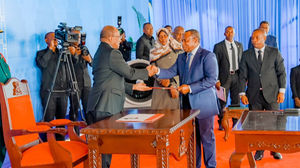
President Jakaya Kikwete appointed me the first woman Minister for Finance. That single act broke deeply rooted gender barriers in government leadership.”

Before entering politics, her career path was grounded in education and community development. She began as a secondary school teacher.

She later joined the Cooperative College, where she worked as a training officer for women and youth in cooperatives under the International Cooperative Alliance.

Her work focused on empowerment, skills development, and economic participation. She later established her own consultancy, working in development and training, before her appointment as Moshi District Commissioner.

Asked about the sacrifices required to become the first female Minister for Finance, Meghji speaks with honesty and clarity.

She describes long hours, relentless discipline, and constant learning. She arrived at the office early and left late. She read extensively.

She travelled widely to understand the depth and complexity of her ministry. She took files home and continued working long into the night.

“My husband, Ramadhan, often told me, ‘Zakia, do not do that. It is not good for your health,’” she recalls. “But I did not listen. I wanted to prove that as a woman I could do as much as men, and perhaps even more.”

Managing a nation’s economy, she explains, is pressure for any leader. But for her, the pressure was heavier. She was the first woman to carry that responsibility.

She dealt with the national budget, inflation, taxation, donor relations, and sectoral allocations. Every decision carried national consequences.

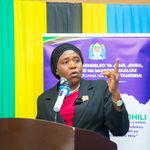
“I worked closely with my team, but the results were always associated with me,” she says. “My love for reading helped me in meetings with institutions such as the World Bank and the International Monetary Fund. But when anything went wrong, it was my face on the front pages.

As a woman, I felt more scrutinised. Sometimes the media was too harsh. I endured public criticism and even cartoons in newspapers.”

Her ability to assert herself at the highest decision-making tables was shaped by earlier leadership roles. Her experience in ministries and her service as National Treasurer of the ruling party, CCM, built her confidence.

She learned how to speak with courage, respect authority, and defend her convictions. She listened carefully to professional advice.

She remained humble, but firm. She absorbed diverse views, then made her own decisions.

“At one time I was nicknamed the Iron Lady,” she says. “When I joined the Ministry of Natural Resources and Tourism, the ministry was tainted with corruption. I kept myself away from it. That is one reason I stayed in the ministry for so long.”

As the Minister for Natural Resources and Tourism she served for two terms under President Benjamin William Mkapa. She worked without a deputy minister for nine years, an unmatched record. Her leadership brought stability, policy direction, and institutional confidence.

“I played a major role in reviving the tourism sector,” she says. “Tourism was at a low point and depended mainly on traditional markets such as the United Kingdom, Germany, and France. I opened new markets through road shows and international promotion. I travelled with teams from the Tanzania Tourist Board, Tanzania National Parks, and the Ngorongoro Conservation Area Authority to China, Japan, the United States, and Australia. Tourists began to flow into Tanzania, and revenue increased steadily.”

She introduced Wildlife Management Areas to ensure communities around game reserves benefited from conservation.

25 percent of collected revenue was returned to local authorities. This information was shared transparently during budget sessions. She also promoted domestic tourism, encouraging Tanzanians to visit national parks through subsidised entry and accommodation fees.

“I strengthened the fisheries sector,” she says. “Fish exports to Europe increased. We controlled illegal fishing while protecting livelihoods. I promoted historical tourism and mobilised funds from France to rehabilitate the ruins of Kilwa. I also supported beekeeping and forestry as sustainable livelihoods.”

Among the decisions she values most are the promotion of low-volume, high-yield tourism, coordination with the Vice President’s Office under the late Dr Omar Ali Juma to make tree planting a national priority, and the declaration of December 1 as National Tree Planting Day.

She also highlights the formation of the Maasai Pastoralist Council to bridge relations between Ngorongoro communities and the Ngorongoro Conservation Area Authority.

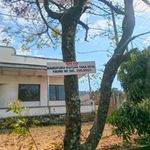
Reflecting on her legacy, Meghji says she hopes Tanzanian women will see her journey as proof that women can hold powerful positions for long periods and shape national development. She cites the Zakia Meghji Secondary School in Chato, a government school named after her, as a symbol of that legacy.

“I hope to be associated with breaking gender barriers, serving with integrity, and inspiring women. I want people to see that women can lead major national sectors successfully. In a humble way, I believe my journey helped change how the country views women in power.”

Balancing family life with a demanding public career was never easy. She remains deeply grateful to her late husband and her late mother for their understanding, patience, and support.

Their faith in her sustained her through long days, public pressure, and private sacrifice.

Her story is not only one of political achievement, but of discipline, service, resilience, and quiet courage.