The novel does not romanticise the dangers of leaving an abusive relationship. When Jane reaches out to the system that should protect her, Matteo discredits her to the police officers she calls for help.
He assures them she is suffering from postpartum depression and that she is a danger to their child. Wiesner shows how easily systems can be manipulated by men who know how to appear credible.
When you hear about someone being in an abusive relationship, the first question is often, why don’t they just leave? The second thought is more confident: that would never be me. I would walk away immediately.
It is easy to believe this when you are standing outside the situation, untouched by its emotional and psychological grip.
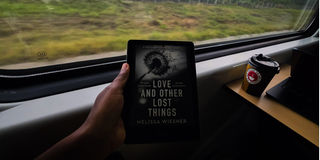
These are the thoughts Jane carries about her own mother in Love and Other Lost Things by Melissa Wiesner. Sharing her name made the story feel personal, as though I was being asked the same uncomfortable questions.
After years of witnessing her mother’s abuse, Jane could never understand how a woman could remain in a marriage that felt so unsafe. She believed she would choose differently. She had never been physically abused by her father, not until one night.
When he discovered she was “tarnishing” his image by seeing Nik, a boy he considered beneath her, he pushed her down the stairs, just as he had done to her mother many times. That was the night she decided she would save herself, and Nik, too.
“Dad derived a sick pleasure from withholding the things Mom wanted most. Jane had no doubt he would do the same to her.”
Jane’s father is a police chief, publicly entrusted with protecting others. At home, he is the source of harm. Wiesner pulls readers into a reality many would rather ignore. How can someone respected and powerful also be abusive? What does accountability mean when the system protects him?
Determined to build a different life, Jane leaves her small town, hoping to save Nik from her father but also to save herself. She realises that no one is coming to rescue her, not even her mother, who also needs saving. But will distance help her escape the patterns she grew up watching?
Alone in a big city, with no money and no stable place to live, Jane moves from one job search to another. That is where she meets Matteo. At first, he feels like a rescue. A job. A place to stay. Stability. Their relationship moves quickly. The affection is intense. Jane thinks, finally.
Then the temper begins to appear in flashes. Yelling at other staff in the club he owns. A sharp word. A door slammed too hard. Jane tells herself this is different from her parents’ marriage. That Matteo could never hurt her because he loves her.
The abuse begins after she discovers she is pregnant at 18.
Jane starts making the same calculations she once judged her mother for. When Matteo’s mood shifts, she adjusts hers. After Scarlett is born, every decision is filtered through one question: how do I keep my child safe?
She left home determined not to repeat her mother’s life. Yet here she is, shrinking herself to survive.
An opening comes when her father dies of a heart attack. Jane persuades Matteo to let her and her daughter return home temporarily. He agrees, unaware that she does not intend to come back.
The novel does not romanticise the dangers of leaving an abusive relationship. When Jane reaches out to the system that should protect her, Matteo discredits her to the police officers she calls for help. He assures them she is suffering from postpartum depression, that she does not know what she is saying, and that she is a danger to their child. Wiesner shows how easily systems can be manipulated by men who know how to appear credible.
“So far, Matteo had never been violent with Scarlett. But then, for most of Jane’s life, Dad hadn’t been violent with her. Until one day that had changed.”
Back home, Jane reconnects with Hannah, Nik, and Ali. Through these friendships, Wiesner shows that survival needs more than courage. It requires community. Matteo ensured Jane depended solely on him. She could not work. She had no access to money. Isolation was part of the control.
It is during this time that hope begins to return. Reconnecting with Nik reminds Jane that love can feel steady, safe, and at home. Love that allows you to simply be. Love that stays.
In choosing to welcome Nik back into her life, Jane begins to understand that healing is not only about leaving abuse. It is about recognising safe love when it appears and accepting that you are worthy of care and protection.
It is easy to judge from a distance. Harder to understand how fear, love, and survival intertwine. Love and Other Lost Things is a reminder that leaving is not a single act of courage, but a process that requires safety, support, and the belief that something better is possible.
Jane Shussa is a digital communication specialist with a love for books, coffee, nature, and travel. She can be reached at [email protected].