‘60pc of children miss out on pre-primary education’
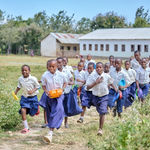
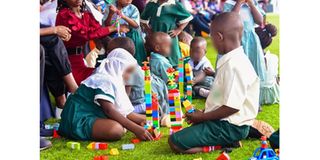
Kitintale Muslim Nursery and Primary School pupils play during the National Play Day celebrations at Kololo Ceremonial grounds in Kampala on April 30th, 2024. PHOTO | NMG
Kampala. A new study has revealed that the majority of young children in Uganda are missing out on early childhood education, raising concerns about long-term learning outcomes.
The report, titled Promoting Pre-Primary Education to Strengthen the Right to Education for All Children in Uganda, shows that more than 60 percent of children aged between three and five years do not attend any form of pre-primary school. Only about 9 percent are enrolled in licensed nursery schools.
Conducted by the Initiative for Social and Economic Rights (ISER), the study highlights inequalities in access to early learning, with most pre-primary schools concentrated in urban areas and largely serving children from wealthier families.
In contrast, children in rural and low-income households remain excluded. The report also pointed out the wide disparities in school fees. In Kampala, pre-primary education can cost as much as USh1.75 million per child per term, while in Nakapiripirit District in Karamoja Sub-region, fees can be as low as USh5,000 per term.
Speaking during the release of the findings in Kampala on March 31, ISER Executive Director Angella Nabwowe Kasule said the lack of access to nursery education is undermining children’s ability to succeed later in school. “Pre-primary education is foundational. Many children, especially in rural areas, start school late and struggle to keep up with those who attended nursery,” she said. She added that children who fail to cope often lose interest in school, increasing their risk of dropping out, engaging in child labour, or entering early marriages.
Ms Kasule attributed the situation to gaps in the Education Act, which leaves the financing of pre-primary education largely to parents and its provision to private actors. “We need to amend the law so that the government takes a leading role in funding and providing pre-primary education,” she said. The findings echo concerns raised by the Education Policy Review Commission, which is currently reviewing Uganda’s 1992 education framework. The Commission has proposed increasing education funding to at least seven percent of GDP to improve competitiveness and learning outcomes.
The report also notes that neighbouring countries such as Kenya and Tanzania have made significant strides, with Kenya offering free and compulsory pre-primary education and Tanzania attaching pre-primary classes to public primary schools. (NMG)
Officials in the Ministry of Education say they are planning to improve access. Dr Safinah Mutumba, the assistant commissioner for basic and pre-primary education, said many Universal Primary Education (UPE) schools have already established community-based pre-primary centres.
“We are working on scaling up affordable pre-primary services and strengthening coordination to ensure more children access early learning,” she said. She added that government plans include providing subsidies for Early Childhood Care and Education (ECCE) in underserved communities, improving teacher training, and strengthening inspection and regulation of pre-primary centres.
Dr Mutumba also revealed that discussions are ongoing to formally attach pre-primary sections to all government primary schools, although this will require amendments to the existing law.
Education stakeholders have urged government to prioritise investment in early childhood education. Mr Maxwell Odongo, a senior planner at the National Planning Authority, said the poor handling of pre-primary education has led the country into grappling with the quality of human resource.
“The biggest problem that we are grappling with as of now is the quality of the human resources that we have in the country. And this quality is embedded in our productivity. Our productivity is just 38 percent," he said.
He added: “Right from childhood up to the time we are dying, we only utilise 38 percent of our potential. Our capacity as a country to produce goods and services is very, very low.
Across the region, I think in terms of investment in human capital, we are the lowest.” He called for a phased approach targeting underserved regions such as Karamoja, Bukedi, Kisoro and parts of Teso. “If we cannot roll it out nationwide immediately, we should start with the most disadvantaged areas and expand gradually,” he said.
Buikwe District Education Officer Julius Musasizi also emphasised the importance of early learning in improving progression and completion rates across the education system.