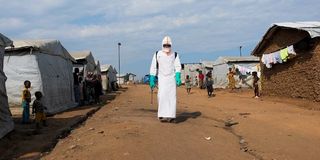
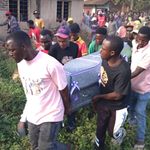
Dakar. The number of deaths in Democratic Republic of Congo's Ebola outbreak has surpassed 3,000, government data showed on Wednesday, as the country's worst-ever epidemic continues to spread across its northeast.
The outbreak, caused by the Bundibugyo species of Ebola, became the largest and deadliest in Congo's history after surpassing the 2018-2020 epidemic.
It is now second only to the 2014-2016 West African outbreak, which infected over 28,600 people and killed more than 11,000 across Guinea, Liberia and Sierra Leone.
Government figures showed the death toll had risen to 3,007, while confirmed cases reached 6,186.
The outbreak was formally declared in Ituri province on May 15, though some health officials and experts say it may have started as early as January.
It has since spread to six provinces, despite efforts by Congolese authorities, the World Health Organisation and aid groups to contain it.
Health experts say weak surveillance systems, insecurity and community resistance have hampered efforts to identify and treat patients early.
The World Health Organisation estimates that around 60% of deaths happen outside treatment centres, highlighting the challenges of detecting cases before patients succumb to the disease.
Bundibugyo has no approved vaccines or treatments, but several vaccines are under development, including candidates from the University of Oxford and the International AIDS Vaccine Initiative (IAVI).
Congolese authorities recently began vaccinating frontline health workers with Merck's Ervebo vaccine, which is licensed against the Zaire species of Ebola, and is believed to offer some cross-protection against Bundibugyo.