EAC liquidity crisis deepens as states default on dues, MPs go unpaid

Dar es Salaam . A worsening financial crisis is threatening the operations of the East African Community (EAC), with internal documents revealing that the regional bloc is struggling to pay salaries and implement planned activities.

A leaked internal memo from the East African Legislative Assembly (Eala), dated February 24, 2026, shows that the Community is facing “dire liquidity challenges” that have made it difficult to pay February salaries and settle outstanding arrears.
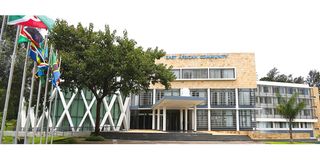
The memo, signed by the Assembly Clerk, Mr Alex Obatre, warns that the financial situation has deteriorated to the point where even routine activities are at risk.

“As you are aware, the Community is facing dire liquidity challenges to the extent that we are facing challenges in convening activities or paying the February 2026 salaries and the settlement of previous salary obligations,” the memo states.

The crisis has left many Eala Members of Parliament struggling financially, as allowances and other payments have reportedly been delayed for months.

Tanzanian Eala MP, Dr Abdullah Makame, confirmed that the situation is worsening and affecting the functioning of the Assembly.

“The financial difficulties are real. Members are struggling and some activities cannot proceed as planned. Without stable funding, the Assembly cannot operate effectively or survive,” he said.

Growing arrears

Financial tables prepared for the EAC Council of Ministers indicate that the Community’s budget deficit is widening due to unpaid contributions by partner states.

As of January 28, 2026, total arrears to the EAC main budget stood at $54.78 million, while partner states were expected to contribute $56 million for the 2025/26 financial year. However, only $21.4 million—equivalent to 38 percent—had been remitted.

The outstanding balance reached $89.37 million, underlining the scale of the crisis.

Some partner states have not made any contributions during the current financial year, while others have only paid partially.

Tanzania and Kenya are among the few countries that have settled their full annual contributions, while Uganda has paid about 81 percent of its obligation.

Rwanda has paid only a quarter of its expected contribution, despite remitting $875,000 in February.

Burundi, South Sudan, Somalia and the Democratic Republic of Congo have not made any payments this financial year, leaving the regional bloc heavily exposed.

The crisis has also affected specialised institutions.

At the Inter-University Council for East Africa, partner states had paid only 39 per cent of expected contributions, leaving an outstanding balance of more than $18 million.

At the Lake Victoria Fisheries Organization, only 68 per cent of expected contributions had been received.

The worsening situation has prompted Kenyan President William Ruto, the current EAC chairperson, to convene an emergency summit scheduled for March.

The summit is expected to focus on restoring financial stability and addressing long-standing structural weaknesses in the bloc’s funding model.

Analysts say the financial crisis reflects deeper structural challenges within the Community, particularly the overreliance on partner states’ contributions and the absence of sustainable, alternative revenue streams.