Kenyan President calls for emergency EAC summit as $89 million gap threatens to paralyze the bloc

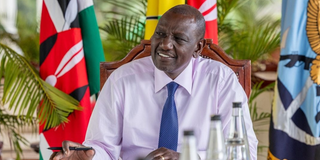
The President of Kenya and Chairperson of the East African Community (EAC) William Samoei Ruto

Kenya’s President William Ruto has called for an emergency summit of Heads of State of the East African Community (EAC) to attempt to deal with mounting financial crisis at the regional bloc.

The March 7 event, due in Arusha, Tanzania will be the first formal meeting by the EAC’s topmost organ in over a year where leaders will deliberate on a new funding formula and measures to put logic to expenditure.
President Ruto expects all the 8 heads of state to show up because partner states have failed to remit more than$89.3 million in contributions, crippling the Secretariat’s day-to-day operations and threatening the regional integration process.

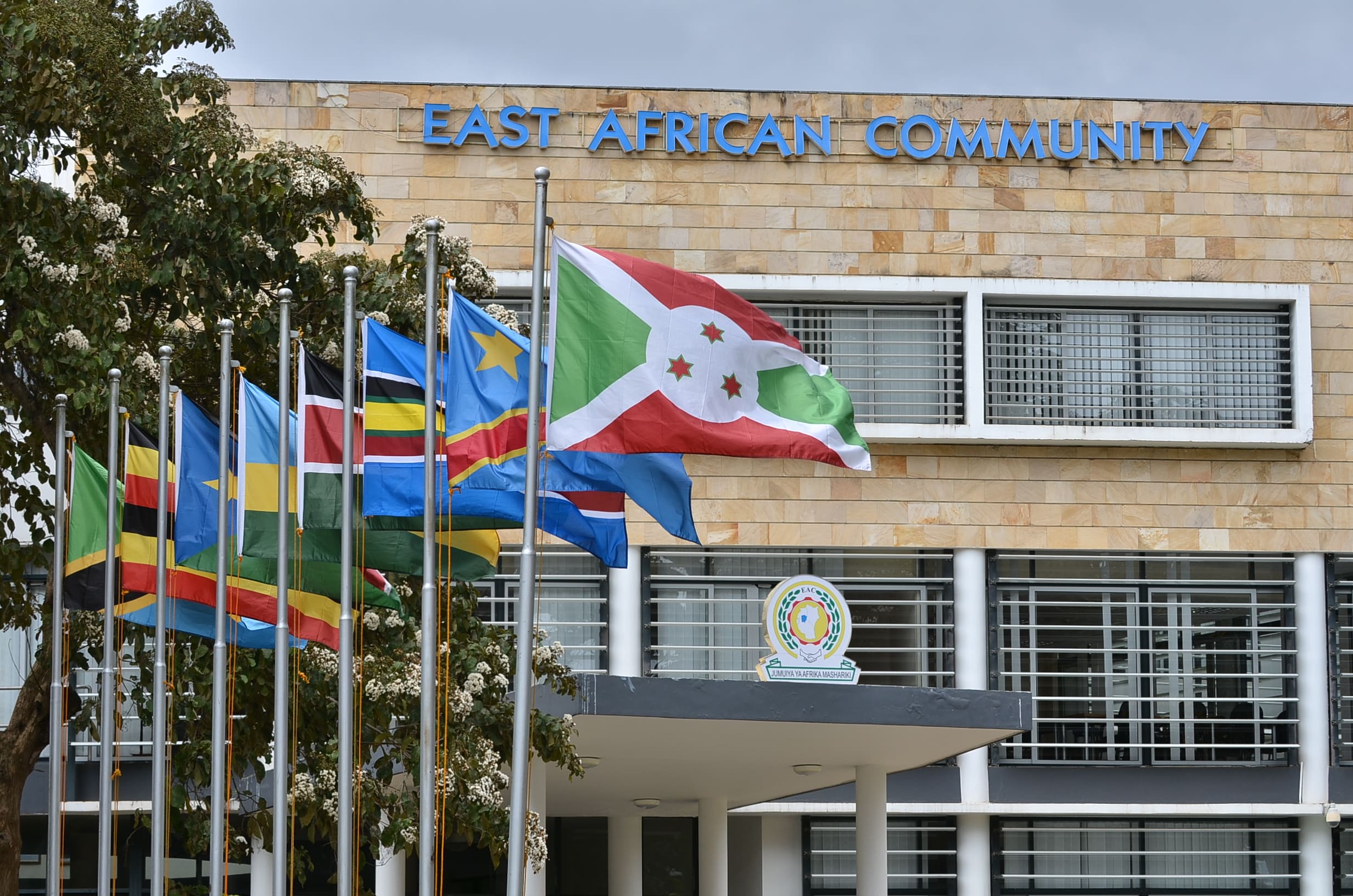
The East African Community headquarters in Arusha, Tanzania.

Photo credit: File | Nation Media Group

The summit is scheduled to address the funding shortfall, adopt a new financing formula proposed during the 48th Ordinary Council meeting, and agree on a mechanism for rationalising expenditure.

“That matter is part of the agenda that the Heads of State must deliberate on, because they are the final decision-making organ within the EAC structures, and the final say rests with them,” said Beatrice Askul, Kenya’s Cabinet Secretary for EAC Affairs, Arid and Semi-Arid Lands, and Regional Development, in an exclusive interview with The East African.

“The President of Kenya, who chairs the Heads of State Summit, is keen on this issue. He wants the Heads of State to pronounce themselves on it in their capacities as Presidents.”

EAC organs and institutions are currently facing financial challenges that are significantly affecting their ability to discharge their mandate under the Treaty. Should these constraints persist, the EAC may be unable to meet its obligations, resulting in operational paralysis and potential litigation.

Ms Askul, who also chairs the EAC Council of Ministers, said her office has written to all partner states urging them to pay their annual contributions of $7 million each to ensure the smooth running of EAC affairs.

“You are aware that when we called for a Heads of State Summit last year, several countries were engaged in elections, including Tanzania and later Uganda, so we were unable to meet,” she said. “But this time we have invited them all for the summit at the beginning of March 2026.”

Paralysed operations

As at 31 January 2026, the EAC was owed $89,372,865 by partner states. The Democratic Republic of Congo owes $27 million, Burundi $22.7 million, South Sudan $21.8 million, Somalia $10.5 million, Rwanda $5.2 million, and Uganda $1.1 million. Only Kenya and Tanzania have remitted their full $7 million contributions for the 2025/26 financial year.

The funding crisis has paralysed operations at the East African Legislative Assembly (EALA), the East African Court of Justice, and other institutions. The Inter-University Council of East Africa is owed $18.4 million and cannot operate fully. The Lake Victoria Fisheries Organisation is owed $2.1 million, while the Civil Aviation Safety and Security Oversight Agency, based in Kampala, is owed $3.1 million.

EALA MPs have not been paid since November, undermining their statutory obligations and slowing their oversight role. This disruption has raised concerns from financial institutions such as KCB Bank Tanzania.

“We are currently experiencing major liquidity challenges due to delayed remittances from partner states. As of 9 February, we have received only 38 per cent of the budget,” said Alex Obatre, Clerk of EALA, in a memo to MPs and staff.

“The lack of funds has negatively impacted implementation of the 2025/26 budget, resulting in salary and gratuity arrears, postponement of EALA and Audit Commission activities, and delays in settling statutory obligations.”

In a separate memo dated 27 January, EAC Secretary General Veronica Nduva asked the Clerk to explain why members’ salaries had not been paid since November 2025, following complaints from KCB Bank Tanzania that it could not recover unpaid loan instalments.

EACJ

East African Community Secretary-General Veronica Nduva at the opening of the East African Court of Justice (EACJ) Judicial Conference.

Photo credit: Pool

The Clerk informed members that partner states had failed to remit sufficient funds to cover salaries and sittings, and urged MPs to lobby their home governments.

Kenya’s EALA MP David Sankok confirmed that members had not been paid and that sittings had stalled. “It has been difficult to receive our salaries regularly. We have now gone some time without pay, so it is a challenge,” he said.

Sankok blamed member states for failing to honour their financial obligations, singling out the Democratic Republic of Congo as having “never paid a coin” and South Sudan for significant arrears.

“One very notorious case is the Democratic Republic of Congo. They have never paid a coin. South Sudan has been trying, but much remains pending. Yet staff and MPs depend on these funds,” he said.

He suggested establishing an EAC economic bloc to end dependency and delays in salaries. Under such a system, each member state would directly cater for the salaries and allowances of its representatives, with the remainder of the budget sent to EALA.

Currently, the 63 EALA MPs earn more than $7,000 each month in salaries and allowances.

“We have MPs from eight member states. It’s the money from four states that is supposed to pay all MPs and staff, even from non-remitting states. That is the problem—some states are not honouring their financial obligations.”