What Uganda’s general election outcome means for Tanzania

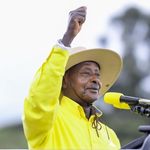
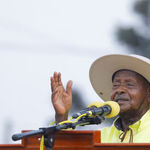
A photo combo of President Museveni (left) and Kyaddondo Robert Kyagulanyi. PHOTOS | FILE

Dar es Salaam. As Ugandans head to the polls today, the election is being closely watched not only in Kampala but also in Dar es Salaam.

For Tanzania, Uganda’s vote is more than a domestic political exercise; it is a critical moment with direct implications for trade, regional stability and flagship bilateral projects that bind the two neighbours within the East African Community (EAC).

Uganda is currently Tanzania’s largest export destination within the EAC, a position it has maintained in recent years.

Official trade data show that Tanzania exports goods worth over Sh1.5 trillion annually to Uganda, ranging from manufactured products and cement to food items, fuel and construction materials.

Thousands of Tanzanian traders, transporters and small businesses depend on smooth cross-border movement through Mutukula and other entry points.

“Any instability in Uganda immediately affects Tanzania’s economy,” said a trade economist at Mzumbe University, Dr Godbertha Kalokola.

“Uganda absorbs a significant share of Tanzanian exports in the region. Disruptions during elections translate into delays, higher transport costs and losses for traders on both sides.”

Beyond trade figures, Uganda is a vital transit partner. Tanzania ports, especially Dar es Salaam Port, handle a large volume of Ugandan imports and exports.

A peaceful election ensures continuity in logistics, customs clearance and transport corridors linking the coast to Kampala.

Several ongoing bilateral projects hinge on stability in Uganda. The most prominent is the East African Crude Oil Pipeline (EACOP), running from Uganda’s oil fields in Hoima to Tanzania’s port of Tanga.

The multibillion-dollar project, jointly backed by the two governments and international investors, requires a stable political and security environment in both countries to stay on schedule.

“Investors are extremely sensitive to political risk,” noted a regional governance analyst based in Dar es Salaam, Abdalla Otieno.

“Any prolonged unrest in Uganda would raise red flags, potentially slowing projects like EACOP and affecting Tanzania’s long-term energy and revenue expectations.”

Analysts also warn that election-related chaos has historically come at a high cost elsewhere in Africa. Countries that have slipped into post-election violence often experience capital flight, tourism decline and stalled development programmes.

“Look at the economic scars left by disputed elections in parts of West and Southern Africa,” said Mr Otieno. “Growth slows, jobs are lost, and it takes years to rebuild confidence. Uganda and Tanzania cannot afford that, especially at a time when the EAC is pushing for deeper integration.”

Some commentators draw cautious parallels with tensions witnessed in parts of Tanzania during last year’s general election cycle, where isolated unrest disrupted business and public services. While the contexts differ, the lesson, they argue, is the same: political competition must not be allowed to undermine economic stability.

“We have seen how even limited political tension can scare investors and affect livelihoods,” said a Dar es Salaam-based policy analyst, Ms Rehema Mushi. “Uganda’s leaders and institutions have a responsibility to ensure the process is peaceful, transparent and accepted.”

Campaigns, controversy and regional concern

The Ugandan election has been marked by a highly charged campaign, pitting long-serving President Yoweri Museveni, in power since 1986, against opposition figure Robert Kyagulanyi Ssentamu, known as Bobi Wine.

The race has attracted attention for its sharp rhetoric. According to the local reports, heavy security presence and controversy over possible internet restrictions ahead of polling today, made headlines.

For Tanzania, such controversies matter because information flows, digital trade and cross-border business increasingly depend on connectivity.

“An internet shutdown, even temporary, disrupts payments, logistics and communication for traders operating across borders,” Dr Kalokola explained. “This is no longer just a political issue; it is an economic one. We also experienced this in Tanzania and we witnessed the cost.”

Civil society groups in the region have urged Ugandan authorities to safeguard freedoms and ensure transparency, warning that mistrust during elections can spill over borders through refugee movements, trade disruptions and diplomatic strain.

Some Tanzanian commentators emphasise that Uganda’s election outcome is less important than how the process is managed.

“For neighbours, predictability matters,” said economist, Mr Charles Mbuke. “A credible, peaceful election reassures partners that policies, contracts and cooperation frameworks will be respected.”

As Uganda votes, the stakes extend beyond its borders. Peaceful polls would reinforce confidence in the EAC’s vision of economic integration, free movement and shared prosperity.

Turmoil, by contrast, would test not only Uganda’s institutions but also the resilience of regional cooperation.

For Tanzania, a stable Uganda is a strategic partner, a major market and a neighbour whose political health directly affects livelihoods at home.

As analysts put it, Uganda’s election is Uganda’s choice, but its consequences will be felt across East Africa.