Venezuela frees prominent opposition members as prisoner releases continue

Venezuelan opposition politician Juan Pablo Guanipa speaks to the media outside the Helicoide detention center during a visit to the relatives of political prisoners, after he was released from the Bolivarian National Police (PNB) Mariperez detention center, as rights group Foro Penal says some political prisoners were freed on Sunday and it is checking more cases, in Caracas, Venezuela, February 8, 2026.
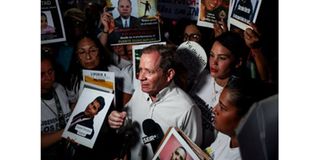
Venezuelan opposition politicians Juan Pablo Guanipa and Freddy Superlano, along with prominent lawyer Perkins Rocha, have been freed from jail, their families and human rights organizations said on Sunday, marking the latest high-profile releases by the government in Caracas.

Under mounting pressure from the U.S. to free political prisoners, rights group Foro Penal said some 35 political prisoners were released on Sunday and that it was verifying additional cases.

The organization previously confirmed that 383 political prisoners had been let go since the Venezuelan government announced on January 8 that it would begin a new series of releases.

Guanipa, Rocha and Superlano are close allies of Nobel Peace Prize winner and opposition leader Maria Corina Machado. Rocha, a lawyer for the Vente Venezuela opposition movement, was detained in August 2024 on terrorism and related charges. Guanipa was arrested last May after months in hiding for allegedly leading a terrorist plot.

Venezuela's opposition and human rights groups have said for years that the country's socialist government uses detentions to stamp out dissent.

Leader of the Voluntad Popular Party, Freddy Superlano, was arrested after the 2024 presidential elections. He was captured on video being pushed into the back of an unmarked car surrounded by armed security agents and according to his wife, spent many months in isolation. Foro Penal confirmed he was among those released on February 8.

All three men have denied all the allegations against them, either directly or through family members and supporters.

"Ten months in hiding and almost nine months detained here," Guanipa said in a video posted on X on Sunday following his release. "There's a lot to talk about regarding the present and future of Venezuela, always with the truth front and center."

Machado on Sunday celebrated the latest releases in a statement on X, calling for all political prisoners to be released.

Venezuelan opposition politician Juan Pablo Guanipa waves a Venezuelan flag as he rides on a motorcycle outside the Helicoide detention center, where he went to meet relatives of prisoners waiting there, after he was released from the Bolivarian National Police (PNB) Mariperez detention center, in Caracas, Venezuela, February 8, 2026.
The government denies holding political prisoners and says those jailed have committed crimes. Officials say nearly 900 of these people have been released, but they have not been clear about the timeline and appear to be including releases from previous years. The government has not provided an official list of how many prisoners will be released or revealed their identities.

Others released so far include Rafael Tudares, the son-in-law of former opposition presidential candidate Edmundo Gonzalez. Tudares was jailed for more than a year, during which he was sentenced to 30 years on terrorism charges that his family has roundly denied.

AMNESTY LEGISLATION UNDER CONSIDERATION

Venezuela's interim President Delcy Rodriguez has announced a proposed "amnesty law" for hundreds of prisoners in the country, and said the infamous Helicoide detention center in Caracas, which rights groups have long denounced as the site of prisoner abuse, will be converted into a center for sport and social services in the capital.

The legislation, which would grant immediate clemency to people jailed for participating in political protests or criticizing public figures, return assets of those detained and cancel Interpol and other international measures previously issued by the government - passed in an initial vote at the National Assembly this week. It will need to be approved a second time to become law.

Rodriguez took office after the U.S. captured and deposed Venezuelan leader Nicolas Maduro last month.

Venezuela's authorities have been releasing the political prisoners and complying with U.S. demands on oil deals since Maduro's capture.