Mara. What began as a simple request at a medical camp in northern Tanzania has grown into a remarkable story of compassion, resilience and global solidarity that is transforming the lives of vulnerable girls in Mara Region.
Several years ago, when the Give a Future Foundation was conducting one of its free medical outreach camps, representatives from the Hope for Girls Centre approached the organisers with a modest question.
Could the girls at the shelter also receive medical services?
For Rishen Patel, founder of Delaware Investments and the Give a Future Foundation, the answer was immediate.
"Bring everyone," he said.
At the time, few could have imagined that those two words would spark a partnership that would eventually attract international philanthropists, local volunteers, business leaders and conservation tourism operators, all rallying around a common cause: protecting girls from female genital mutilation (FGM), child marriage and other harmful practices.
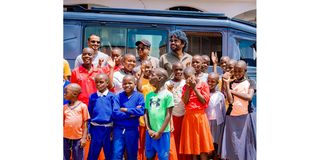
Today, the Hope for Girls Centre in Mugumu is home to more than 100 girls who have escaped or are at risk of abuse. The centre provides shelter, education and emotional support, helping them rebuild lives that many feared would be defined by trauma.
Yet what struck Patel most during his first visit was not their hardship.
"Despite everything they had been through, they were smiling, studying, dreaming and planning their futures," he recalled.
"I left knowing we had a responsibility to do more."
As the centre's reputation spread, more girls sought refuge there. The growing numbers soon stretched the facility beyond its limits, with many girls living in crowded rented accommodation.
The challenge was clear: the centre needed a permanent home.
A major breakthrough came in 2025 when renowned Indian actor and philanthropist Nagarjuna Akkineni learned about the project during a visit to the Serengeti. After meeting the girls and hearing their stories, he pledged to cover food costs for the entire centre for a year.
He later committed substantial financial support towards the construction of a permanent safe house complex.
The planned Serengeti Safe House Complex is expected to provide far more than accommodation. The facility will include modern dormitories, classrooms, vocational training workshops, a library, healthcare services, recreational facilities and agricultural projects aimed at improving food security and sustainability.
For Hope for Girls and Women founder Rhobi Samwelly, herself a survivor of FGM, the project carries deep personal significance.
"I was cut because when I was a girl, no safe house existed for me to run to," she said.
"That pain is why I build safe houses today. Because of the support we have received, construction of the modern Serengeti Safe House Complex will start soon."
She credits a growing network of supporters, including Mapito Safari Camp Serengeti, whose staff regularly volunteer at the centre, offering mentorship, life-skills training and practical support to the girls.
What makes the initiative unique is the diversity of people behind it. From local community members and tourism operators to international donors and philanthropists, the project has evolved into a global movement built on a shared belief that every girl deserves safety, dignity and opportunity.
In a region where harmful traditional practices continue to threaten the futures of many young girls, the Hope for Girls Centre stands as a powerful reminder that change often begins with a single act of kindness.
And in this case, it all started with one simple request and one simple answer: "Bring everyone."