Chadema Central Committee to decide fate of ‘No Reforms’ campaign

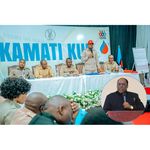
The Secretary General of the party, John Mnyika (standing), speaking during the opening of the party’s Central Committee meeting

Dar es Salaam. Over 33 years, opposition party Chadema has endured bitter challenges and achieved notable successes, struggles its leaders say have strengthened the party and earned it widespread recognition across Tanzania.

As one of the country’s 19 permanently registered political parties, Chadema is currently the most politically influential, with policies and strategies supported by a large segment of the population, particularly in urban centres.

In recent years, however, the party has weathered bans on political activity and the freezing of funds it is legally entitled to receive.

The Citizen’s sister newspaper Mwananchi spoke to Chadema’s Head of Communications, Mr Gervas Lyenda, who discussed the fate of the party’s “No Reforms, No Election” campaign and other key issues.

‘No Reforms’ Campaign

Chadema launched the campaign to pressure for electoral reforms, especially within the National Electoral Commission as the party’s Chairman Tundu Lissu lading nationwide visits to engage citizens, but the campaign was disrupted after his arrest and a legal dispute over party assets.

On the campaign’s future, Mr Lyenda said the Central Committee has yet to convene, “The agenda remains alive, but implementation depends on official meetings and a unified position.”

He stressed that the reforms Chadema seeks have not yet been implemented, and the party believes elections cannot be free and fair without them, therefore subsequent actions will await formal decisions.

Furthermore, he said while running various initiatives, the party’s main goal remains holding power, asserting that it is now stronger and enjoys greater citizen support than ever.

“That is why we say Chadema is Tanzania’s main opposition. Despite upheavals, we have stood firm,” he said.

He questioned why the ruling party, with its large support base, chooses election arbitrators rather than competing on a level playing field, “Why not play fairly? Transparency must guide elections.”

Mr Lyenda noted that Chadema has demonstrated transparency internally, citing the 21 January 2025 elections broadcast live on media and social networks.

“Transparency ensures fairness. Even the defeated candidate can see the entire process,” he said.

Determined to hold power, the party remains undeterred by challenges, confident that hard times do not last forever.

Furthermore, Mr Lyenda described the No Reforms, No Election campaign as more successful than anticipated, calling it the largest operation since Chadema’s founding.

“Previous operations like Sangara and Movement for Change (M4C) strengthened the party; this campaign continued that tradition,” he said.

He said through such campaigns, Chadema engages citizens to gain support, noting that while the campaign caused internal divisions, it achieved significant outreach.

“It began officially on 23 March, 2025, with party Chairman Lissu addressing those aspiring for parliamentary, council, and presidential positions. He made it clear that without reforms, we would not participate in elections,” said Mr Lyenda.

According to him, the campaign then moved to the Nyasa Zone, covering Mbeya, Njombe, Songwe, Rukwa, and Katavi regions before reaching the southern zone.

“During the southern tour, meetings continued until our chairman was arrested and charged with treason. The aim was to limit us because we were educating citizens to think independently,” he said.

Despite Mr Lissu’s arrest, other leaders continued until the party was barred from political activity, effectively ending the campaign.

“Within two months, the message reached Tanzanians, educating people about their rights,” Lyenda said.

He said internally, the campaign caused divisions, “On a crocodile’s journey, some cannot keep up. Opportunists and deal-seekers left because they realised they could not get what they wanted.”

Mr Lyenda said some members moved to other parties, prioritising personal gain over the party’s goals, “They did not want democracy to prevail.”

Bitter struggles, sweet achievements

Mr Lyenda said for the last 33 years, Chadema has driven political reforms and emerged as a strong opposition challenging CCM.

He said Chadema has developed alternative policies popular among citizens and that its resilience keeps the ruling party alert, knowing the opposition will scrutinise and compete in elections.

“Our presence forces the ruling party to act cautiously because failure means a strong opposition stands ready,” he said.

Furthermore, he said Chadema has contributed to national development through alternative policies, some later adopted by the government, though implementation has not always matched the original vision.

“For example, free education policy was a Chadema idea in the 2010 General Election manifesto under presidential candidate, Dr Wilbrod Slaa. We planned to implement it once in power,” he said.

In 2020, he added, the ruling party proposed free education, but it did not align with the systems Chadema had envisaged.

According to him, the party also promoted universal health insurance, which the government is now considering.

“Chadema has done much to build the nation, proposing ideas, fighting for them, and seeing them adopted by the government,” he said.

The pain of political struggle

Mr Lyenda said Chadema has faced many challenges, including losing frontline leaders, some abducted, others killed.

“Some survived assassination attempts, including Chairman Tundu Lissu, who was shot multiple times. He still suffers physically and cannot walk properly,” he said.

He noted that the party has faced restrictions on political activity, frozen accounts, and bans on using its assets, therefore, complicating operations.

“It affects us. Staff used to receive salaries at headquarters, but now we cannot pay them,” he said.

Despite these difficulties, Mr Lyenda noted that the party continues operating on member contributions, noting that citizens are informed when financial constraints arise.

“Even then, we cannot receive funds through official accounts, so people donate via one leader’s number,” he said.

He said mobile network restrictions have further complicated matters, with numbers blocked without explanation.

“We are constantly restricted; even personal numbers are blocked. How is this justified?” he asked.

A school for leaders

Mr Lyenda said Chadema has trained many skilled leaders, noting that even those who defected have excelled in government and other political parties.

He cited the founder of ACT Wazalendo, Mr Zitto Kabwe, as a leading national figure, saying other notable alumni include Minister of State in the President’s Office for Planning and Investment, Prof Kitila Mkumbo, and Home Affairs Minister and former Bavicha Chairperson, Mr Patrobas Katambi.

He also mentioned Deputy Minister of Agriculture, David Silinde, Halima Mdee, Peter Msigwa, Juliana Shonza, and Mwita Waitara, all of whom have made significant contributions inside and outside Parliament.

“Over 33 years, Chadema takes pride in producing skilled, courageous, and hardworking leaders for our nation,” he said.