Iringa. Residents of Wotalisoli and Lulindi villages in Udekwa and Ukwega wards, Kilolo District, Iringa Region, are beginning to reap tangible benefits from a community-based environmental conservation project aimed at protecting the Lukosi River while strengthening climate-resilient livelihoods.
The initiative is being implemented under the Community Engagement in Climate Change Adaptation and Mitigation in the Kilombero Nature Forest Reserve (KNFR) project. It supports smallholder farmers undertaking agricultural activities along the Lukosi River and its feeder streams, promoting climate-smart agriculture as a pathway to sustainable livelihoods and environmental protection.
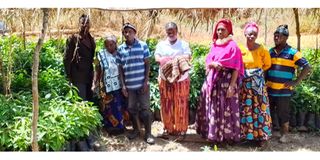
One of the beneficiaries, Ms Hellen Lazaro Chitima, a farmer from Wotalisoli village in Udekwa Ward, said the project has significantly boosted her household income after she adopted avocado farming introduced through the initiative.
“After planting and properly managing the avocado trees, I harvested my first crop and earned Sh700,000 from sales,” Ms Chitima said. “This achievement has given me confidence and motivation to expand my avocado production.”
She added that she has embraced agro-ecological practices, including intercropping multiple crops on the same plot—an approach that has earned recognition from the Ward Executive Officer and representatives of Tanzania Grassroots Oriented Development (TAGRODE).
In Lulindi village, Ukwega Ward, another beneficiary, Ms Jane Kaywanga, said she initially received 50 avocado seedlings from the project before purchasing an additional 30 using her own resources.
“I planted a total of 80 avocado seedlings after seeing the potential of the project,” she said.
During a recent project evaluation, the implementing team observed notable local innovation. A group member independently established an avocado seedling nursery using skills gained through TAGRODE-facilitated training. The nursery currently holds about 4,500 seedlings awaiting grafting and is expected to supply planting materials to other farmers in the area.
The project is implemented by Tanzania Grassroots Oriented Development, a non-governmental organisation headquartered in Iringa, with funding from the Eastern Arc Mountains Conservation Endowment Fund (EAMCEF), based in Morogoro.
Speaking to The Citizen, TAGRODE Executive Director Mr Zubery Mwachulla said the Sh20 million project was implemented between July and 31 December 2022, covering Wotalisoli and Lulindi villages.
“The main objective of the project was environmental conservation, particularly reducing pollution and soil erosion that contributes to sedimentation in the Lukosi River,” he said. “We supported the planting of avocado and other environmentally friendly tree species along the riverbanks to prevent soil erosion and protect the water source.”
Mr Mwachulla noted that, beyond environmental protection, the project has delivered direct economic benefits, with some beneficiaries already harvesting produce, earning income and improving their living standards.
Although the initiative initially targeted 100 beneficiaries, its impact extended further as additional community members adopted the promoted practices, bringing the estimated number of beneficiaries to around 250 people.
Despite the gains, avocado farming faces challenges, including pest infestations and crop diseases, compounded by limited access to agricultural extension services due to staffing constraints.
Stakeholders have recommended that future projects incorporate advocacy efforts to encourage local government authorities to integrate such initiatives into development plans and allocate budgets to sustain interventions introduced by development partners.
Nevertheless, there is optimism that with continued support, knowledge-sharing and improved extension services, climate-resilient farming along the Lukosi River can be sustained while safeguarding the fragile local ecosystem.