Josephine Christopher is a senior business journalist for The Citizen and Mwananchi newspapers
Mwananchi Communications Limitted
Dar es Salaam. Stakeholders in Tanzania's creative industry have called for the major overhaul of the systems governing access to finance, insurance, intellectual property protection and taxation to support sector’s into sustainable businesses and jobs.
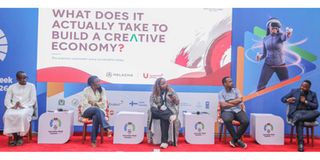
The call was made at the MELACHA Creative Economy Summit 2026, held in Dar es Salaam on Friday as part of Innovation Week 2026.
The summit, hosted by Unleashed Africa, brought together creatives, policymakers, investors, businesses and other players to discuss how Tanzania can build a more investable creative economy.
MELACHA Director Ms Khalila Mbowe said many of the systems currently in place were not designed with the creative industry in mind, creating barriers for people whose incomes often do not follow the conventional employment model.
“The system has been created for other things and not the creative industry. That needs to change,” she said.
Ms Mbowe said Tanzania’s creative workforce is predominantly young, with the majority aged between 19 and 25 years. Men account for 69 percent of the workforce, compared with 31 percent women, while 85 percent of creative workers lack insurance.
She said the figures highlight the vulnerability of a workforce that is increasingly carrying economic responsibility but remains largely outside systems designed to provide social and financial protection.
“Creatives know they need more than craft. They need communication, personal branding, time management and financial management,” she said.
She added that creative entrepreneurs also need practical business skills covering pricing, contracts, intellectual property, bookkeeping, negotiations and business modelling.
For Afiki Designs co-founder Ms Theocabrini Mwakyusa, however, changes in the wider system must be matched by changes among creatives themselves.
He urged creatives to recognise that building value begins with how they view and manage their own work.
“Before the system, change begins with you. The value begins with you,” he said.
Mr Mwakyusa said creatives could increase their earnings by learning how to monetise their talent, protect their intellectual property, build networks and diversify their skills.
He also shared his experience of building his own brand, stressing that creatives should protect their work regardless of how small their businesses may appear.
“Protect your creative work no matter how small it gives you,” he said.
The challenge of converting visibility and popularity into sustainable income was also raised by PesaDrop VAS and PesaTalks chief executive Eberhard Osward, popularly known as Ebe Nation.
He said one of the sector’s biggest challenges was translating fame into money, partly because creative work continues to be treated as informal economic activity.
“The challenge is to translate famous status to money,” he said.
Mr Osward said access to credit remained difficult for creatives because conventional lending requirements, particularly collateral, often do not reflect the nature of creative businesses.
He said the lack of formal employment arrangements also meant many creatives missed benefits such as insurance and pension contributions.
“Formal employment includes insurance payment, pension payments unlike creative people who just get paid and go…without considering these additional and important factors,” he said.
He called for the development of a system that recognises the specific needs of creative workers while improving financial literacy within the sector.
Journalist and filmmaker Ms Tulanana Bohela of ONA Stories said taxation was another area where creatives faced challenges.
She pointed to withholding tax and value-added tax (VAT) obligations as examples of issues that many creatives only learn about after entering the industry.
“Issues of withholding tax, VAT and the like, you don’t learn at school; you come to learn it on the street,” she said.
Ms Bohela said reform should begin with education so that young people entering the creative industry understand the financial and regulatory obligations associated with running a creative business.
The issue of intellectual property protection emerged repeatedly during the summit, with Breakthrough Attorneys associate Evans William also urging creatives to protect their work.
The discussions come as Tanzania seeks to expand innovation and entrepreneurship beyond traditional sectors, with the creative economy increasingly viewed as a potential source of employment, enterprise and investment.