Cross-border lessons on regional urban displacement: Takeaways from Tanzania, Kenya and Uganda

Dar es Salaam. Tanzania was hosting 164,901 refugees and other people of concern by the end of March 2026, according to government and UNHCR data.

Data shows that 87,163 people, or 52.9 percent of the total, came from the Democratic Republic of Congo, while 77,033, or 46.7 percent, came from Burundi.

A further 705 people came from other countries. Nyarugusu camp carried the largest share, with 109,277 people. Kigoma villages hosted 21,507, Nduta 14,467, Katumba 10,844, Ulyankulu 4,907, Mishamo 3,199, Dar es Salaam 550 and Chogo 150.

The figures place Tanzania within a wider East African displacement picture linked to instability in the Democratic Republic of Congo and Burundi.

They also raise a policy question for refugee-hosting areas: how can protection, assistance and livelihoods be planned in a way that also reflects pressure on host communities?

Kigoma has carried that question for decades. Refugee-hosting areas in the region interact with local markets, schools, health services, roads, forests and land-use pressures.

Camp-based assistance still plays a central role, but the debate around refugee response across East Africa has been moving gradually towards livelihoods, self-reliance, documentation and host-community support.

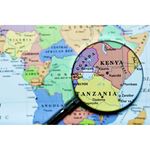
UNHCR’s regional dashboard for the EAC region, published in May 2026 and based on 30 April 2026 data, places Tanzania alongside Kenya, Uganda, Rwanda, Burundi, South Sudan, Somalia and the Democratic Republic of Congo in a wider picture of refugees, returnees and internally displaced people.

Evidence from Re:BUiLD, a program implemented by the International Rescue Committee and partners with financial  support from the IKEA Foundation, offers one comparison point for that policy discussion.

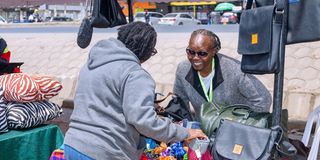
The program has worked in Nairobi and Kampala to test which livelihood interventions help urban refugees and host communities improve economic outcomes through enterprise, employment, finance, mentorship and skills support.

Re:BUiLD’s work took place outside Tanzania, but its findings speak to a question facing refugee-hosting countries in the region: which forms of support help displaced people and host residents build income, and which groups require more targeted approaches?

In Nairobi, a Randomized Controlled Trial involving Kenyan and refugee microentrepreneurs evaluated cash grants and cash grants combined with mentorship.

Cash was foundto improve business outcomes in the short and medium term. Monthly business profits rose by about $34 relative to the control group, a 77 percent increase from the control mean, while productive assets rose by 56 percent, or about $250 on average.

In Kampala, Re:BUiLD evaluated cash grants and mentorship among refugees and Ugandan hosts involved in, or seeking to enter, microenterprise through a Randomised Controlled Trial.

The intervention involved 2,000 inexperienced and prospective entrepreneurs aged 18 to 35 and 600 experienced entrepreneurs aged 25 and above who served as mentors.

Participants assigned to the cash-grant intervention received $540, while cash-plus-mentorship groups met weekly for six months.

The Uganda findings showed large and persistent effects from cash grants on business outcomes. Monthly profits increased by about $23 on average, while participants improved household well-being across food security, assets and savings.

Business operation, enterprise time and productive assets also increased.

For Tanzania, the figures from Nairobi and Kampala offer useful evidence, though the country’s refugee setting differs. Tanzania’s caseload remains largely camp-based and concentrated in Kigoma, while the Re:BUiLD trials focused on urban refugees and host communities.

That difference calls for caution when drawing lessons. Still, the results point to a broader livelihoods question: when capital forms the main barrier, direct financial support can help some people invest in business assets, inventory and household stability.

The same evidence also shows limits. Mentorship produced uneven outcomes, with modest additional benefits for some participants in Nairobi, especially Kenyan men. Refugee women in Nairobi recorded weaker business outcomes than other groups, even where productive assets increased.

Re:BUiLD’s Securing Documentation Campaign adds another regional lesson.

The campaign found that refugees in Kenya and Uganda face long and unpredictable documentation processes, centralised services, rejection of refugee IDs by service providers, weak data links between refugee and national systems, language barriers, discrimination and limited legal aid.

The broader lesson applies across refugee-hosting systems: livelihoods depend on documentation, movement, service access and administrative recognition.

A Congolese refugee in Nyarugusu, a Burundian refugee in Nduta, a Tanzanian farmer near a camp, a small food trader and a young person seeking wage work face different constraints. Capital may help one group quickly.

Another group may need documents, market access, mobility, childcare, language support, safety, skills recognition or stronger business networks.

The Tanzania data gives the debate a local frame. With 164,901 refugees and other people of concern as of 31 March 2026, and more than 109,000 people in Nyarugusu alone, the next layer of planning turns on how livelihoods, documentation, host-community support and local development can be designed together.