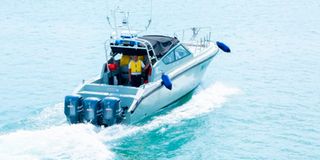
Dar es Salaam. Prime Minister Dr Mwigulu Nchemba has reaffirmed the government’s commitment to strengthening national security after launching two modern patrol boats aimed at improving surveillance, rescue operations and the fight against maritime crimes along Tanzania’s coastline and major lakes.
Dr Nchemba said security was a key foundation for the country’s development, noting that citizens could only participate fully in economic activities when they lived and worked in a safe and peaceful environment.
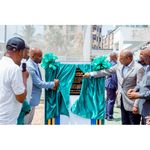
Speaking during the handover and commissioning of the two patrol boats, BP Sailfish No. 2 and BP Sailfish No. 3, he said the vessels were part of government efforts to strengthen maritime security and protect people and resources in Tanzania’s waters.
“None of our development plans, including our national vision, can be achieved without ensuring peace and security in our country. Security is the foundation that enables Tanzanians to participate fully in production activities with confidence,” he said.
The Prime Minister said the boats would enhance the country’s capacity to conduct surveillance, respond to emergencies and address security and environmental challenges in coastal and lake areas.
He identified piracy, illegal fishing, drug trafficking, human trafficking, smuggling of natural resources and theft of fishermen’s property as some of the threats facing Tanzania’s waters.
“These patrol boats are among the measures being taken by the government to assure citizens that we will end these criminal activities and enable them to conduct their livelihoods safely,” he said.
Dr Nchemba commended President Samia Suluhu Hassan for prioritising national security, saying the acquisition of the vessels demonstrated the government’s commitment to protecting citizens and their property.
He also thanked development partners, particularly the Government of Japan and the United Nations Development Programme (UNDP), for supporting the project.
Beyond the acquisition of the patrol boats, Dr Nchemba said the project had delivered additional benefits, including guidelines for combating maritime crimes, strengthening of the National Joint Operations Centre, capacity building for security personnel and support for seaweed farmers in Mkinga District, Tanga Region.
He urged ministries and institutions using the vessels to allocate adequate funds for fuel, maintenance and operations to ensure they remained effective.
Minister of State in the Prime Minister’s Office (Policy, Parliament, Coordination and Persons with Disabilities), Palamagamba Kabudi, also stressed the importance of maintaining the boats.
“We have many areas where we receive good equipment, but we face challenges in maintaining them. These are modern patrol boats and they must be properly supervised, maintained and serviced according to technical instructions,” Kabudi said.
He said the vessels would strengthen Tanzania’s ability to respond to maritime security threats and emergencies.
UNDP Resident Representative Shigeki Komatsubara said the partnership with Tanzania demonstrated the value of combining national leadership with UNDP’s global expertise, experience and networks.
“Together, we can achieve challenging and complex tasks even when a very tight timeline is provided. This project arrives at a pivotal moment as Tanzania continues to harness the transformative potential of the blue economy while safeguarding marine resources and protecting its vast coastline,” he said.
Komatsubara added that maritime security was closely linked to economic development and livelihoods.
“Security at sea is not only about safety; it is about enabling trade, businesses and livelihoods, while protecting the natural wealth that sustains communities and the country,” he said.