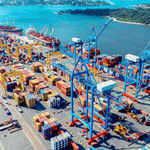
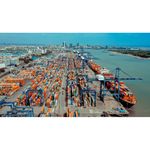
Dar es Salaam. Dar es Salaam Port handled nearly 14 million tonnes in just five months, a jump that has pushed clearance, evacuation and predictability to the centre of its performance test as volumes rise faster than the logistics chain can absorb errors.
Tanzania Ports Authority (TPA) data show the port processed 13.97 million tonnes between July and November 2025, up from 10.40 million tonnes over the same period in 2024.
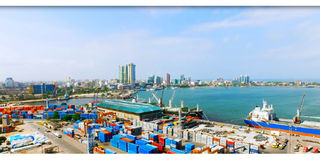
The 2024/25 financial year closed at a record 27.7 million tonnes, compared with 23.7 million tonnes a year earlier, a 15 percent increase and the highest annual throughput ever recorded at the port.
The surge reflects stronger vessel calls and higher discharge volumes, but it also intensifies pressure on yards, gates and clearance systems.
Each additional tonne tests whether gains at berth can be matched inland. When the system holds, traders benefit from smoother flows and lower costs; when it strains, delays quickly multiply.
Capacity upgrades have reshaped vessel operations. Under the Dar es Salaam Maritime Gateway Project, the entrance channel and berths have been deepened to 14.5 metres, enabling larger vessels to dock with heavier loads.
TPA says average container vessel time in port has fallen from about 10 days to around three, a reduction that helps shipping lines protect schedules and limits time-related costs for cargo owners.
Bulk cargo handling has also shifted scale. Some grain vessels are now discharging up to 65,000 tonnes per call, compared with about 15,000 tonnes previously. While this improves national supply resilience, it pushes far larger volumes into the clearance and evacuation system in a shorter time.
TPA director general Plasduce Mbossa said the port’s performance is judged beyond the waterfront. “A port succeeds when the whole chain moves,” he said. “Fast vessel handling matters, but customers experience the port through clearance and evacuation. The focus is on removing time across the entire chain.”
Operationally, Dar runs a split terminal model. DP World manages berths 0 to 7 under a performance-based arrangement, while Tanzania East Africa Gateway Terminal Limited operates the container terminal at berths 8 to 11.
Public investment in cranes and ICT systems underpins the terminals, while performance contracts set expectations on productivity and consistency.
For shipping lines, the introduction of Fixed Berthing Windows has added discipline. The system provides pre-defined berthing slots, improving schedule reliability for carriers and allowing terminals to plan yard and equipment use more effectively.
The gains flow downstream to transporters, forwarders and warehouses through more predictable cargo release timelines.
Despite faster vessel turnaround, post-discharge delays remain the main risk. Containers dwell when customs processes slow or when evacuation capacity cannot keep pace with arrivals.
To counter this, TPA is pushing capacity inland through the Kwala Inland Container Depot, linked by rail to the port. Kwala covers 502 hectares and is designed to handle about 3,500 containers a day, or more than 300,000 containers a year, roughly 30 per cent of Dar’s container traffic.
The depot is intended to ease quay congestion, keep the port fluid during seasonal peaks and shift storage away from the waterfront.
Inland evacuation is what determines the quality of the port experience.”
Looking ahead, TPA is targeting throughput of around 30 million tonnes by 2030, supported by plans to add 10 new berths and expand automation.
The authority is also working with customs and transport stakeholders to reduce clearance times and hinterland bottlenecks, with rail evacuation seen as central to sustaining growth.For the market, the message is clear.
Dar has delivered a sharp volume surge in five months. Whether that growth translates into lower costs and greater confidence will depend on how well clearance and evacuation keep pace as throughput continues to rise.
Register to begin your journey to our premium contentSubscribe for full access to premium content