Dar es Salaam. The East African Legislative Assembly (Eala) has tabled a motion seeking leave to introduce the East African Community Counter-Trafficking in Persons Bill, signalling renewed efforts to combat human trafficking across the region.
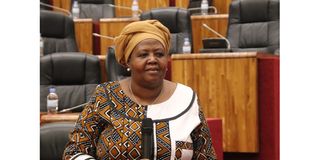
Moving the motion, Rwandan legislator Ms Fatuma Ndangiza said the proposed law aims to establish a comprehensive legal framework for preventing and combating trafficking, while strengthening the protection, assistance and reintegration of victims. “This Bill seeks to provide a harmonised regional response that addresses prevention, prosecution and protection in a more coordinated and effective manner,” she said.
She noted that the initiative is anchored in key provisions of the EAC Treaty and regional protocols, reflecting the urgency of tackling human trafficking as a growing transnational crime affecting Partner States.
The EAC region continues to serve as a source, transit and destination for trafficking networks, with victims—mostly women and children—subjected to forced labour, sexual exploitation and other abuses.
Recent data shows an increase in detected trafficking cases between 2019 and 2022, with women and girls accounting for the majority of victims, while children remain particularly vulnerable. At the same time, cases of forced labour are rising, highlighting evolving trends in trafficking operations.
Experts attribute the increase to factors such as technological advancements, increased labour mobility, humanitarian crises and conflicts, all of which have expanded opportunities for traffickers.
Despite commitments by EAC Partner States to international instruments such as the Palermo Protocol, enforcement gaps persist due to fragmented national laws and weak coordination. Ms Ndangiza said the absence of a unified legal framework has allowed traffickers to exploit differences between jurisdictions. “The lack of harmonisation in our legal and institutional frameworks continues to undermine efforts to effectively combat trafficking across borders,” she said.
A previous attempt to introduce similar legislation in 2016 failed to come into force after it did not receive assent, leaving the region without a binding framework.
The proposed Bill seeks to close these gaps by strengthening prevention strategies, enhancing cross-border investigations and intelligence sharing, and improving victim identification and protection systems.
It also adopts a victim-centred, gender-responsive and child-sensitive approach to ensure survivors are protected from re-victimisation and stigma, while supporting their reintegration.
“This legislation represents a critical step towards strengthening regional integration, promoting human security and upholding human dignity,” Ms Ndangiza said.
She said that, if adopted, the Bill is expected to significantly enhance the region’s capacity to combat human trafficking and protect vulnerable populations.
Register to begin your journey to our premium contentSubscribe for full access to premium content