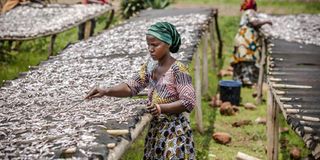
Rukwa. Fishing exhibitions are opening new markets for small-scale fishers and women involved in fish processing and trade, while helping them build links with buyers, investors and financial institutions, according to fisheries and community development expert Prof Esther Ishengoma.
Prof Ishengoma said the exhibitions were designed to give groups that have traditionally had limited visibility in the fisheries value chain direct access to markets and other industry players.
“Our main objective was to give fishers, particularly women involved in processing and selling fish products, an opportunity to display their products directly to buyers, investors and other processors without relying on middlemen,” she said in an interview with The Citizen.
She said women and small-scale fishers were prioritised because of their contribution to food security and sustainable fisheries.
“When a woman gets a good market, she improves the nutrition of her entire family. When a fisher secures a good contract, they are less likely to engage in illegal fishing because they have a reliable source of income,” Prof Ishengoma said.
The exhibitions have already produced early results, with some participants securing hotel customers and supply agreements with shops, while others have established links with financial institutions and organisations offering value-addition training.
Prof Ishengoma said some women had also acquired skills in packaging and product quality, enabling them to compete in larger markets.
“We have started seeing changes in packaging, hygiene and even pricing. Some participants have also formed groups so they can work together and access larger markets,” she said.
The initiative has received support from FISH4ACP, a programme of the Organisation of African, Caribbean and Pacific States (OACPS), implemented by the Food and Agriculture Organisation (FAO) and partners with funding from the European Union and Germany's Federal Ministry for Economic Cooperation and Development (BMZ).
The programme seeks to make fisheries and aquaculture value chains more sustainable while increasing the economic benefits reaching local communities.
In Tanzania, FISH4ACP has supported women and young people in Rukwa, Katavi and Kigoma to improve fish processing, packaging and hygiene, with some beneficiaries receiving assistance to meet requirements for exporting their products.
Fisher Mgeni Lubinsha, fishing equipment owner and fish processor from Kabwe Ward in Nkasi District, Rukwa, said the programme had helped him expand his market.
“We used to depend on the local market. After the training and participating in exhibitions through FISH4ACP, I now have orders from different countries, including Kenya. This is a major change for us,” he said.
He said participants were increasingly moving from selling raw or traditionally dried fish to value-added products.
“Fishing is no longer just about selling raw fish. It can support small industries capable of competing in international markets,” he said.
The programme also promotes sustainable fishing practices, including discouraging illegal fishing, encouraging environmentally friendly equipment and protecting aquatic resources.
Prof Ishengoma said such platforms were essential to realising Tanzania's blue economy ambitions.
“These exhibitions are not only about selling; they are about learning, building networks and improving standards. The Government and other stakeholders should make them sustainable and hold them every year,” she said.
Chairman of the Federation of Fishers' Associations, Mr Francis Lubavu, said members who participated in last year's exhibition recorded a 40 percent increase in income, while some women secured capital and families were able to return children to school.
Prof Ishengoma said the results showed that improving market access could generate more than sales for small-scale fishers.
“It creates jobs, improves household incomes and contributes to the growth of the blue economy,” she said.