Tanzanian lawyer challenges Nyerere Bridge tolls in constitutional case


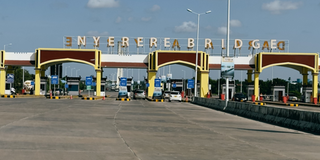
Dar es Salaam. A Tanzanian lawyer has taken legal action challenging the long-standing imposition of user fees on motorists crossing the Julius Nyerere Bridge in Dar es Salaam, setting the stage for a constitutional battle over infrastructure financing and public toll collection.

In Constitutional Case No. 20632 of 2026, filed at the High Court of Tanzania, Dar es Salaam Sub-Registry, Advocate Mohamed Majaliwa asks the court to declare all tolls collected at the landmark bridge null and void.

He argues that the toll collection system breaches fundamental provisions of the Constitution of the United Republic of Tanzania by failing to accord citizens equal treatment under the law.

The suit names five public institutions as respondents: the Board of Trustees of the National Social Security Fund (NSSF), the Tanzania National Roads Agency (Tanroads), the Tanzania Revenue Authority (TRA), the Controller and Auditor General (CAG), and the Attorney General (AG).

A three-judge bench comprising Justices Amir Mruma, who is presiding, Biswalo Muganga and Suleiman Hassan is scheduled to begin hearing the petition on Wednesday, August 19, 2026.

Alleged unconstitutional discrimination

At the heart of Mr Majaliwa’s constitutional challenge is his assertion that residents of Kigamboni Municipality and motorists using the cable-stayed bridge face unlawful discrimination compared with road users elsewhere in the country.

In his supporting affidavit, the petitioner notes that several major bridges across Tanzania have been built using public resources but remain free to users.

He cites the Tanzanite Bridge, which links Aga Khan and Coco Beach along Toure Drive in Dar es Salaam, and the Magufuli Bridge (Kigongo-Busisi), which spans the Gulf of Mwanza and links Mwanza and Geita regions.

Mr Majaliwa argues that charging motorists to cross the Nyerere Bridge while allowing free passage on other state-funded infrastructure amounts to geographical and economic discrimination.

According to the petition, the arrangement violates constitutional guarantees of equality before the law and provisions prohibiting discriminatory laws or actions by public authorities.

The petition also alleges violations of constitutional provisions relating to civic obligations and rights, taxation, public financial oversight and the duty of every citizen and institution to respect and uphold the Constitution.

Questions over PPP and toll operations

The Nyerere Bridge, built across Kurasini Creek, was constructed under a joint Public-Private Partnership (PPP) between NSSF and the Central Government.

Mr Majaliwa alleges that the partnership was established for an indefinite period, enabling NSSF to establish toll plazas, install payment booths and continuously collect fees from motorists.

He argues, however, that decisions and administrative actions by the respondents to establish the toll plazas and impose user charges were made arbitrarily, without statutory authority and in breach of the law.

While bridge tolls are regulated under the Roads and Fuel Tolls Act, the petitioner argues that the specific arrangements governing the Nyerere Bridge lack adequate legal backing and administrative transparency.

He further contends that the TRA Commissioner General has the sole statutory responsibility for supervising road and fuel tolls and appointing authorised collection officers.

Despite this mandate, the petition alleges that TRA delegated toll collection to NSSF personnel, despite knowing, or having reason to know, that the collection centres and payment arrangements lacked valid legal authorisation.

Audit oversight questioned

The petition also raises concerns over financial accountability and the auditing of public revenue generated at the bridge toll plazas since the infrastructure was commissioned.

Mr Majaliwa alleges that, despite collecting significant amounts of money from the public over the years, the joint PPP entity has never undergone an independent and comprehensive audit by the CAG.

He argues that the alleged failure violates the Constitution, which mandates the CAG to audit public revenue and expenditure, as well as provisions of the Public Audit Act.

The petition further alleges that the CAG has failed to discharge his statutory duty to audit the revenues and publish reports on the bridge’s financial operations.

Reliefs sought

Mr Majaliwa, who says he is a resident of Kigamboni Municipality and a daily user of the bridge, argues that he is exercising his constitutional right to challenge what he considers administrative overreach that affects both his finances and the wider public interest.

Among the reliefs sought, he wants the High Court to declare all tolls, user fees imposed on motorists using the Nyerere Bridge unconstitutional, illegal, null and void.

He also seeks an order directing the respondents to immediately stop collecting tolls and user fees at the bridge.

The petitioner further wants a permanent injunction restraining NSSF, Tanroads, TRA and their agents from continuing to operate toll collection plazas in breach of the Constitution.

He is also asking the court to compel the CAG to conduct a comprehensive financial audit of all toll revenue collected from the bridge since operations began.

Mr Majaliwa further asks that each party bear its own legal costs, together with any other orders or remedies the High Court may deem fit and proper.

The hearing before the three-judge bench is expected to examine wider questions surrounding PPP governance, the legal basis for state-mandated user charges and the constitutional guarantee of equal treatment under Tanzanian law.