Fikira Ntomola makes the case for women in executive roles

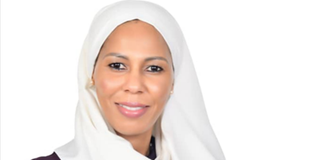
Founder and Managing Director of FBN Insurance Brokers and President of Tanzania Women in Finance Fikira Ntomola. PHOTO | COURTESY

What you need to know:

  • Fikira’s desire is to see a generation of women who are not asking for seats at the table, but confidently occupying them as executives, regulators and board leaders

Dar es Salaam. With over 15 years of experience in Tanzania’s insurance industry, Fikira Ntomola has learnt a fundamental truth: leadership must combine technical precision with fairness and empathy.

Her career has been shaped by responsibility, integrity, and service, and by a deep understanding of the impact that her decisions have on businesses, jobs, and families.

Fikira’s desire is to see a generation of women who are not asking for seats at the table, but confidently occupying them as executives, regulators, and board leaders. “Representation must move from symbolism to influence,” she says. This vision has guided her professional journey, from her early experiences to her current leadership roles.

Speaking with The Citizen Rising Woman Initiative ahead of International Women’s Day, marked on March 8 under the theme “Give and Gain,” Fikira is currently the Founder and Managing Director of FBN Insurance Brokers and President of Tanzania Women in Finance (Tawifa). Her roles place her at the forefront of efforts to improve insurance penetration and build inclusive leadership in the financial sector.

Holding her LL.M in International Commercial Law from the University of Salford and an Associate Diploma in Insurance, two experiences shaped her profoundly. One was working in underwriting and claims early in her career, where she came face-to-face with the human side of insurance. “Insurance is often viewed as a technical field, but when you sit across from clients facing losses, you understand that your decisions affect businesses, jobs, and families.”

“That responsibility stays with you. It shaped my belief that leadership must combine technical precision with fairness and empathy,” she said.

These early experiences instilled in her the importance of ethical decision-making and grounded leadership. She recalls challenging moments where careful judgment, empathy, and technical knowledge were all required to provide solutions that safeguarded clients’ businesses and livelihoods.

Sharing her journey, Fikira said: “Governance is not paperwork. It is culture, discipline, and decisions that can withstand regulatory scrutiny.”

When she founded FBN Insurance Brokers 15 years ago, she understood that governance would determine survival. The insurance sector operates under the oversight of Tanzania Insurance Regulatory Authority (Tira), with clear compliance, reporting, and capital expectations. From inception, she prioritised structured compliance systems, internal controls, transparent financial reporting, and ethical conflict-of-interest management. Many businesses wait until they scale before formalising governance structures. “We built ours early. Governance is not an administrative function. It is strategic protection. In financial services, reputational risk can undo years of growth.”

Her work in governance also highlighted the importance of embedding strong ethics and accountability into organizational culture. Fikira emphasizes that financial leadership carries public responsibility and that every decision affects economic stability and public trust.

For Fikira, the values that guide her success always stand at integrity, accountability, and service. “I hope to leave an insurance industry that is stronger, more trusted, and more inclusive,” she says, reflecting her long-term vision for the sector.

During her career, experience has taught her discipline and how to navigate high-pressure decisions. “I rely on three filters: compliance, ethics, and long-term impact. First, does the decision align with regulatory requirements? Second, is it ethically sound? Third, will it withstand scrutiny five years from now?” Pressure often pushes leaders toward short-term fixes. Sustainable leadership requires restraint and clarity.

Speaking about why there are a small number of women in the financial sector globally, Fikira points to statistics that highlight persistent gaps. Women hold approximately 28 percent of senior management roles in financial services, according to the 2023 Deloitte Women in the Boardroom report.

The World Economic Forum’s Global Gender Gap Report 2023 further shows that while women make up a significant share of professional roles in finance, representation declines sharply at executive and board levels. In many markets, women occupy between 25 percent and 30 percent of board seats, but executive leadership representation often lags, particularly in emerging economies.

In Tanzania, the imbalance is formally documented. A 2024 study by the Bank of Tanzania revealed that the ratio of men to women on the boards of banking institutions stands at 75:25, while senior management representation is 70:30, with some institutions having no female board representation at all.

“The gap persists not because of capability, but because leadership pathways have historically relied on informal networks, sponsorship patterns, and structural biases that limit visibility and advancement. The issue is not competence. It is structured access, sponsorship, and intentional pathways to leadership,” Fikira notes.

What we are now seeing, globally and in Tanzania, is growing recognition that diversity is not merely a social consideration. It is a governance and performance imperative. Institutions that build inclusive leadership structures tend to demonstrate stronger oversight, better risk management, and greater institutional resilience.

As President of Tawifa, Fikira focuses on preparation, exposure, and structural engagement.

The mentorship programme is deliberately structured. They have built a strong pool of experienced mentors drawn from across the financial sector, including banking, insurance, pensions, and capital markets. Importantly, mentors include both male and female senior leaders. Inclusion requires partnership.

“Our focus is: we are not mentoring for comfort. We are mentoring for competence and readiness. We also engage institutions to ensure that when board seats open, there is a visible, qualified pipeline of women prepared to serve,” she said.

Looking ahead, Fikira shared her vision for how Tanzania’s insurance industry will evolve over the next three years, saying three forces will shape the sector: digital transformation, inclusive and microinsurance growth, and regulatory strengthening.

Tira’s supervisory evolution and the Bank of Tanzania’s governance directives signal deeper emphasis on board competence, diversity, and risk oversight.

“I believe growth must move together with governance. Innovation without oversight creates fragility,” she said.

Fikira’s career and vision reflect a commitment not only to technical excellence but also to building trust, fostering inclusivity, and empowering the next generation of women leaders. Through governance, mentorship, and advocacy, she is shaping a stronger, more resilient insurance sector that benefits both clients and the broader economy.