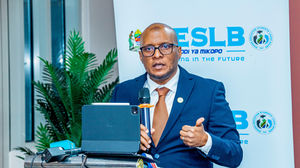
Dar es Salaam. The government has moved to deepen local participation in the mining sector by reserving 20 categories of goods and services exclusively for companies fully owned by Tanzanians. The move forms part of a broader strategy to expand value addition and ensure that a greater share of mining benefits remains within the domestic economy.
Presenting the 2026/27 his portfolio’s budget in Parliament yesterday the minister for Minerals, Anthony Mavunde, said the measure is intended to ensure that sector growth translates into Tanzanian-owned contracts, sustainable employment, skills development and increased public revenue.
He said strengthening local content requirements is central to the government’s ambition to build a resilient supply chain linked to the country’s mineral wealth.
He explained that the Mining Commission will continue publishing an updated list of goods and services that must be supplied strictly by companies owned 100 percent by Tanzanians.
He emphasised that non-Tanzanian firms are not permitted to operate within these reserved areas, in line with existing local content regulations.
The categories identified include services and supplies that are fundamental to daily mining operations. These include transport and haulage, logistics management, warehousing, clearing and forwarding, catering and camp management, and cleaning and laundry services.
The list also covers the supply of personal protective equipment, cement and building materials, vehicle hire, civil works and construction of access roads.
Other reserved activities include legal services, rental of power equipment, ground-based surveys and selected operational supplies.
According to the minister, these areas were selected because they present strong opportunities for local entrepreneurs to expand and participate meaningfully in mining operations without requiring excessive capital investment.
Mr Mavunde said the policy is designed to strengthen the domestic supplier base that supports mining activities. He added that greater participation by Tanzanians in procurement processes will ensure that wealth generated from minerals circulates more widely within the national economy.
“The sector must continue to generate exports and public revenue, while expanding opportunities for Tanzanians through procurement, services, employment and enterprise development,” he said.
He stressed that local businesses must be adequately prepared to meet required standards of quality, safety and efficiency in order to remain competitive.
The policy comes as the government intensifies its focus on strategic minerals as part of its long-term industrialisation agenda. These minerals are considered essential for advanced manufacturing and emerging technologies.
Among the projects attracting attention is the niobium development in Mbeya Region.
Mr Mavunde said the Mbeya niobium project is expected to generate approximately Sh2 trillion in government revenue over its operational lifespan.
The projected earnings will arise from royalties, corporate taxes, levies and dividends tied to the government’s 16 percent free-carried interest in the project.
He noted that the development agreement for the project was signed on March 24, 2026.
He added that the project is also expected to generate about $1.77 billion in local procurement opportunities.
This level of spending is expected to create significant business openings for Tanzanian firms when major projects are linked to clear local content obligations. According to ministry projections, the niobium project is expected to create about 1,600 direct jobs and 6,336 indirect jobs across related sectors.
These positions will span construction, logistics, services and operational support. The project is also expected to position Tanzania among recognised global producers of niobium, a mineral widely used in specialised steel production and advanced electronics.
Mr Mavunde further observed that global demand for several minerals continues to rise steadily.
These include lithium, graphite, helium, nickel, cobalt, titanium, copper, aluminium, niobium and rare earth elements.
He said demand is driven by their extensive use in modern technologies, including electric vehicles, renewable energy systems and digital infrastructure associated with the global transition towards cleaner energy sources.
Mining remains one of Tanzania’s most significant economic sectors. The minister reported that mineral exports increased to $5.401 billion in 2025 from $4.119 billion in 2024.
This represents an increase of 31.1 percent within a single year. The figures underline the growing influence of mining on the country’s export earnings.
He added that the sector accounted for 52.57 percent of total goods exports in 2025, compared with 45.17 percent in the preceding year. This upward trend reflects the expanding importance of mineral commodities in Tanzania’s external trade structure.
Mining’s contribution to gross domestic product also recorded steady growth. The sector contributed 10.1 percent in 2024, compared with 9.1 percent in 2023. By the third quarter of 2025, the contribution had reached an average of 11.9 percent, reinforcing the sector’s position as a major pillar of economic growth.
Investment inflows into mining have also remained strong. Foreign direct investment stock in the sector reached $9.79 billion in 2024. This compares with $9.15 billion in 2023 and $8.64 billion recorded in 2022. Mr Mavunde attributed this upward trend to improvements in the investment environment and stronger regulatory oversight.
To support implementation of sector priorities, the minister requested Parliament to approve Sh174.98 billion for the Ministry of Minerals in the 2026/27 financial year Of this amount, Sh71.51 billion has been allocated to development projects, while Sh103.48 billion is earmarked for recurrent expenditure.
The government has set a target of collecting Sh1.406 trillion in revenue from the mining sector during the financial year. This target will be supported by improved monitoring systems, wider use of digital technologies and strengthened compliance mechanisms aimed at minimising revenue leakage.
Mr Mavunde said the ministry will continue expanding geological surveys and strengthening mineral resource management systems. These measures are intended to improve sector performance and enhance investor confidence. He added that accurate geological data remains critical for identifying new mineral prospects and supporting sustainable resource planning.
The government also plans to increase coverage of high-resolution geoscientific surveys from the current 16 percent to 34 percent. A longer-term objective seeks to expand coverage to 50 percent by the year 2030. This expansion is expected to improve understanding of the country’s mineral potential and guide future exploration.
In addition, programmes designed to increase participation of women, youth and people with special needs in the mining value chain will continue. Support will also be extended to small-scale miners through improved access to markets, geological information and financing opportunities.
State participation in mining projects will be reinforced through institutions such as the State Mining Corporation (Stamico). The goal is to increase national returns from mineral resources and strengthen government oversight in strategic projects.
However, the Parliamentary Committee on Energy and Minerals raised concerns regarding a decline in development spending. The committee noted that development allocations had fallen to Sh71.51 billion from Sh124.60 billion in the previous financial year.
Members of the committee said the reduction was largely attributed to decreased external financing. They cautioned that continued reliance on external funding sources could slow implementation of key projects.
The committee urged the government to strengthen domestic financing mechanisms and ensure more predictable investment flows into the mining sector.
Such measures, it said, would support long-term development objectives and sustain the sector’s contribution to national economic growth.
Register to begin your journey to our premium contentSubscribe for full access to premium content