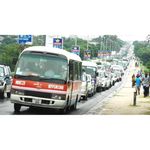
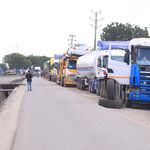
Dar es Salaam. Efforts to decongest Dar es Salaam Port are set to gain momentum following government plans to upgrade the strategic Nelson Mandela Road, a vital corridor linking the harbour area to Morogoro Road.
Morogoro Road serves as a primary gateway to upcountry regions and neighbouring landlocked countries, including the Democratic Republic of Congo (DRC), Rwanda, Burundi, Zambia, Uganda, Malawi and Zimbabwe.
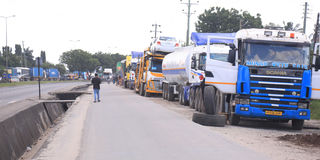
The Tanzania National Roads Agency (Tanroads) has unveiled plans to upgrade Mandela Road from the Kijazi Interchange to the Nyerere (Kigamboni) Bridge, while strengthening access to Dar es Salaam Port.
Under the plan, the road will be expanded to eight lanes: six mixed-traffic lanes — three in each direction, and two dedicated Bus Rapid Transit (BRT) lanes, one per direction.
Officials say the project will ease chronic congestion that has long delayed the movement of cargo from the port to domestic and regional destinations.
Persistent traffic jams have imposed high social, economic and environmental costs, including lost working hours, longer commuting times and reduced rest for city residents. Prolonged congestion also undermines global efforts to curb pollution, as idling vehicles emit higher levels of carbon dioxide and other pollutants.
According to the March 2025 Traffic Time Index (TTI) report, a trip that should take 30 minutes in Dar es Salaam can stretch to 70 minutes during peak periods. On average, commuters lose about 2.5 hours daily, nearly three full working days every fortnight.
Travel between Kijazi Interchange and Uhasibu in Temeke can take up to two hours instead of the usual 15 minutes in free-flow conditions.
In 2021, President Samia Suluhu Hassan warned that traffic congestion was costing the country about Sh4 billion per day, roughly Sh1.44 trillion annually, through lost productivity, wasted fuel, and environmental damage.
Speaking exclusively to The Citizen, Tanroads acting chief executive officer, Mr Ephatar Mlavi, said it was finalising internal procedures and expects to advertise a tender for prospective contractors between late February and March. Mr Mlavi described Mandela Road as one of Dar es Salaam’s most critical transport arteries.
“We expect to sign a contract for the construction of BRT Phase V and the expansion of Mandela Road to three lanes on each side, similar to Morogoro Road,” he said.
Mr Mlavi added that the Morogoro Road section from Ubungo Kijazi to Kimara is now about 80 percent complete, with remaining work focusing on service roads, pedestrian facilities, drainage, and the final asphalt layer.
Morogoro Road update
He said the expansion of Morogoro Road to eight lanes, including the BRT, is expected to be completed in May, with an official inauguration planned for September. “Currently, congestion on Morogoro Road is largely caused by reckless driving rather than inadequate capacity,” Mr Mlavi said, urging motorists to observe traffic rules.
He noted that the government is investing heavily in modern infrastructure that must be protected by all road users.
According to him, the upgrade from Ubungo to Kimara has significantly reduced travel time, which previously exceeded two hours during rush hour.
“The improvement is particularly beneficial to lorries transporting cargo from Dar es Salaam Port to upcountry regions and neighbouring landlocked countries, supporting smoother economic activity,” he said.
Other BRT phases
On the progress of other BRT projects, Mr Mlavi said Phase III is about 90 percent complete, while Phase IV has reached 60 percent.
BRT Phase III runs from Dar es Salaam Central Business District, covering Kariakoo and Posta to Gongo la Mboto, while Phase IV connects Tegeta to Posta and Ubungo to Mwenge.
He noted that BRT Phases I and II are already operational, with ongoing efforts to improve service quality and reliability.
Afcon 2027
Tanzania will co-host the 36th Africa Cup of Nations (Afcon) alongside Kenya and Uganda in 2027, as Tanzanian authorities are keen to ensure mobility ahead of the tournament.
Stakeholder views
Upcountry bus driver Mr Musa Lipembe welcomed the upgrades, saying reduced congestion on Nelson Mandela and Morogoro roads would ease pressure on alternative routes.
“This corridor is often dominated by heavy trucks, some of which break down. With three lanes, other vehicles can overtake more safely, saving time for buses and private motorists,” he said.
A private-sector employee, who requested anonymity, said upgrading Mandela Road would transform urban mobility and accelerate economic growth.
“To reach a $1 trillion economy by 2050, Tanzania needs fast and efficient movement of goods. Removing bottlenecks that slow transport is essential to achieving this goal,” he said.
Tanzania Bus Owners Association (Taboa) secretary-general, Mr Joseph Priscus, said the completion of works on the Morogoro Road section between Ubungo and Kimara, and the start of construction on Mandela Road, would significantly cut fuel costs that bus operators have been incurring because of congestion and excessive wear on vehicles.
He noted that the expansion to eight lanes would also prolong the lifespan of the carriageway, as stationary heavy vehicles in traffic jams create depressions on asphalt, “This is a positive step that will support economic growth.”
Mr Priscus urged the government to prioritise a solution for the Chalinze–Morogoro stretch, which currently has only two lanes and is prone to gridlock and accidents.
As Morogoro Road serves as a key corridor for five neighbouring countries, upgrading the Chalinze section is critical to ensuring timely cargo delivery and regional trade.
Officials also expect higher revenues at Dar es Salaam Port, as improved access reduces transport delays and boosts cargo efficiency.
The Tanzania Medium and Small Truck Owners Association (Tamstoa) chairman, Mr Chuki Shabaan, welcomed the measures but said a lasting remedy requires full operationalisation of Kwala Dry Port in line with the president’s directives.
He warned that severe bottlenecks along the Kibaha–Morogoro section have forced some trucks to remain on the road for up to 17 days.
Register to begin your journey to our premium contentSubscribe for full access to premium content