Josephine Christopher is a senior business journalist for The Citizen and Mwananchi newspapers
Mwananchi Communications Limitted
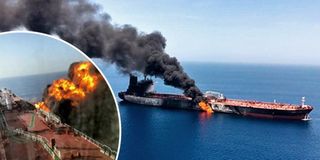
Dar es Salaam. The sharp military escalation in the Middle East over the past two days, involving confrontations between Iran on one side and the US-Israel coalition on the other, has injected fresh uncertainty into global markets.
Analysts in Tanzania warn that the economic impact will first appear at the fuel pump before filtering into food prices, trade flows and household budgets.
Tanzania imports nearly all its refined petroleum products from the Middle East, leaving the country structurally exposed to geopolitical instability in the region.
Executive Director of the Tanzania Association of Oil Marketing Companies (Taomac), Mr Raphael Mgaya, said the nation’s supply chain is closely linked to Gulf producers.
“Almost 100 percent of our petroleum products originate from the Middle East corridor,” Mr Mgaya told The Citizen. “Any prolonged conflict will significantly affect local pump prices.”
However, he noted that Tanzanians should not expect an immediate spike.
“Fuel consignments for March and April were already procured under earlier pricing arrangements. The immediate impact is therefore limited,” he said.
“But from May and June 2026, we anticipate upward price adjustments if disruptions persist.”
Mr Mgaya stressed that oil is a globally traded commodity. “When global prices rise, it affects everyone. Even if you source from another market, such as the United States, benchmark pricing reflects the same global reality.”
The disruption is already being felt among small and medium-scale traders. Chairperson of the Kariakoo Traders Association, Ms Severine Mushi, said business operations are being affected.
“At the moment, some traders who travelled to Dubai for procurement are stranded. We do not know how or when they will return,” she said.
She warned that the Gulf is one of Tanzania’s most important trade partners for retail goods.
“The region we trade with heavily is the same region now entering conflict. The effects will be significant.”
Even trade with China is indirectly exposed, she added, as many supply chains transit through the Middle East.
“We expect delays in cargo and higher freight costs,” she said.
Shipping reroutes, increased marine insurance premiums, and longer transit times could raise the landed cost of goods ranging from textiles and electronics to spare parts and household items.
Independent financial analyst, Mr Oscar Mkude, said rising fuel and commodity prices hit fixed-income earners the hardest, including salaried workers and pensioners.
“When fuel goes up, transport costs increase. That affects food distribution, manufacturing, and retail prices,” Mr Mkude explained.
“People with fixed incomes, especially employees and pensioners, feel the pressure fastest because their earnings do not adjust automatically.”
Beyond immediate market reactions, Mr Mkude cautioned that Tanzania’s expanding diplomatic and economic engagement with Middle Eastern countries could face indirect strain.
“In recent years, Tanzania has strengthened economic cooperation with several Gulf states,” he said.
“If the region enters prolonged conflict, those countries may shift priorities internally. That could slow or delay bilateral economic agreements and investment flows.”
He also warned that the economic fallout could intensify if compounded by other global shocks.
“If this escalation coincides with other crises — such as renewed global health alerts, including Covid-19 resurgence — the combined impact could be significantly larger,” Mr Mkude said.
Multiple shocks tend to amplify currency pressure, tighten liquidity, and dampen investor confidence in emerging and frontier markets.
Call for diversification
Analysts say the unfolding crisis underscores structural vulnerabilities in Tanzania’s economy, particularly its heavy reliance on imported petroleum.
“We must diversify the economy,” Mr Mkude said. “We also need to invest seriously in alternative energy sources such as electricity and natural gas. This would reduce dependence on imported oil and lower long-term costs.”
Tanzania possesses significant natural gas reserves and has expanded power generation capacity in recent years.
Accelerating the shift towards domestic energy sources could cushion the economy against future external shocks.
Register to begin your journey to our premium contentSubscribe for full access to premium content